How to Run a Business With Claude and Notion
TL;DR
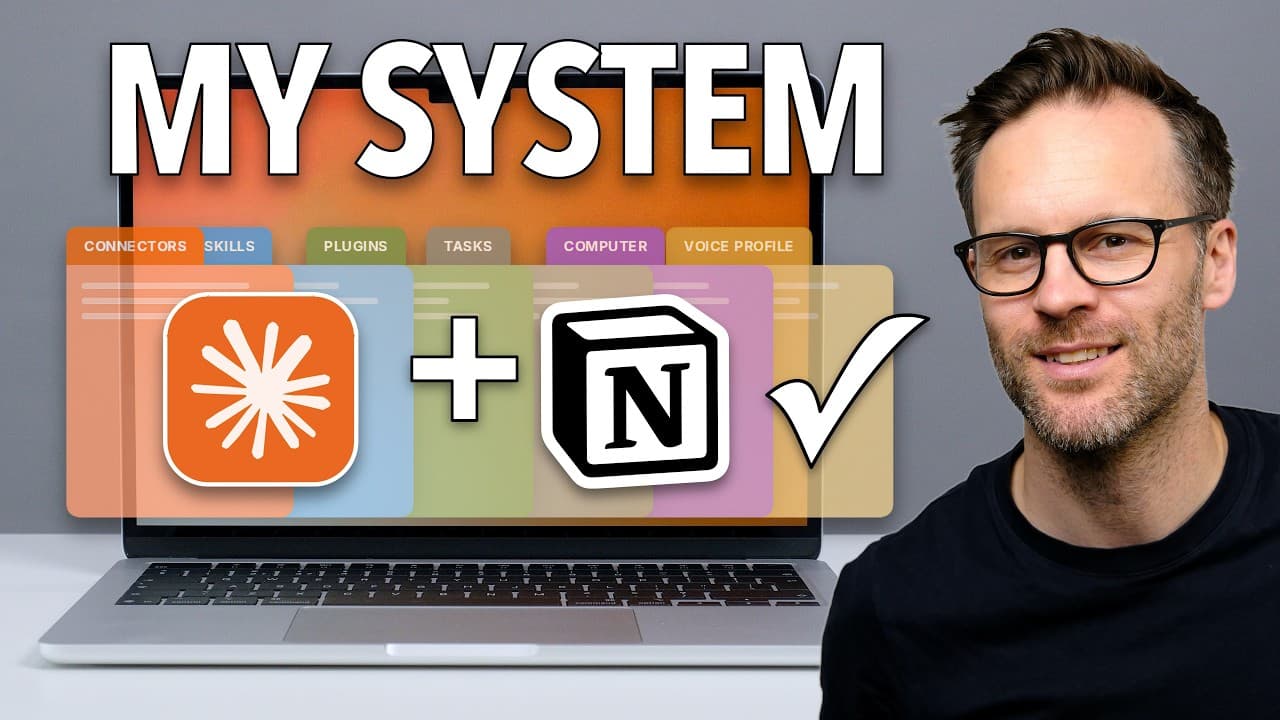
Use Notion to manage shared business context, databases, teamwork, and high-value automated agents, while using Claude Co-work for thinking, writing, strategy, and work across local files. Give both systems a similar architecture built from specialist modes, knowledge bases, reusable skills, and clear instructions, then reserve credit-based automation for repetitive tasks with measurable returns.
Transcript
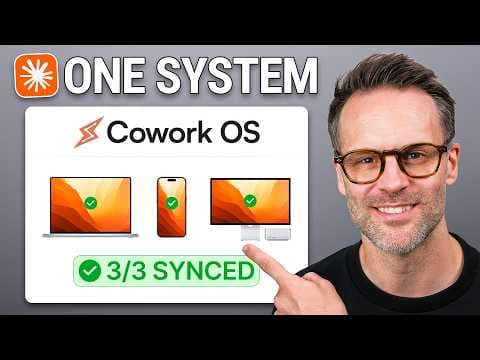
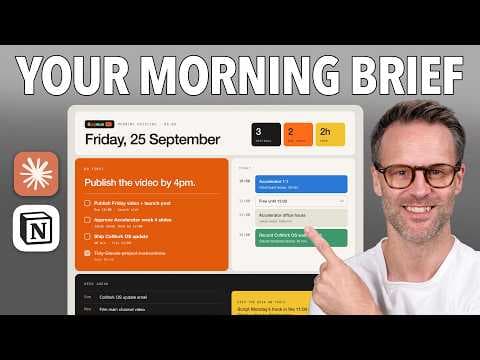
Oh, wow. Love this. How about that? Since I released my Claude Co-work video, the question I've had more than any other is, "Are you still using Notion? And if so, how do you use them together?" Well, this video answers that question. Short answer, yes. And I'm using them together every day. I got to say, the results are absolutely awesome, includi... Read More
Key Insights
- Notion is the shared context layer for the business, bringing databases, projects, content, meeting notes, goals, team resources, and reporting views into one workspace where people and agents can inspect the same operational information.
- Claude Co-work is the preferred environment for thinking, writing, strategy, and cross-file work on the desktop, complementing Notion instead of replacing the workspace where the business and its collaborative context already live.
- The Notion setup has three layers: a business operating system, a personal agent with specialist modes, and custom agents that perform selected background jobs using their own instructions, triggers, or schedules.
- A solid database system is the foundation of the workspace because it consolidates business information in one place and supports clear views of projects, processes, content, meetings, tasks, goals, and team resources.
- The personal agent is one entry point that automatically chooses a relevant specialist mode, such as productivity coach, decision coach, content strategist, or business strategist, according to the request and its associated instructions.
- The orchestration layer controls agent behavior through a voice profile, beliefs, non-negotiable principles, personality structures, writing guidance, specialist playbooks, and a skills library that connects each agent mode with relevant procedures.
- A dedicated knowledge base can constrain a specialist agent to answer from seeded strategies in a database, helping its recommendations remain connected to the organization's selected methods and existing body of work.
- Custom agents are best reserved for repetitive, structured, high-leverage jobs with measurable returns, such as curating customer-support playbooks, preparing weekly team briefings, or automatically filling information within Notion databases.
Install to Summarize YouTube Videos and Get Transcripts
Explore YouTube Video Summarizer or Get YouTube Transcript Extractor
Questions & Answers
Q: How should a business use Notion AI and Claude together?
Use Notion as the shared business environment for databases, projects, content, meetings, team resources, goals, reporting, and context-specific agent work. Use Claude Co-work on the desktop for thinking, writing, strategy, and tasks spanning local files. Both systems can follow a similar architecture of specialist instructions, knowledge bases, skills, and reusable operating procedures.
Q: What are the three layers of the Notion business system?
The first layer is a business operating system containing dashboards, databases, projects, content, meetings, goals, processes, and team resources. The second is a personal agent that selects among specialist modes for interactive assistance. The third consists of custom agents with their own page instructions, triggers, and schedules for carefully chosen background or database tasks.
Q: Why should Notion databases form the foundation of an AI business system?
Notion databases consolidate operational information in one place and make it available through useful human-readable views. They can organize videos, projects, processes, meeting notes, goals, resources, tasks, strategies, and product plans. This shared structure allows team members to review the business directly while giving Notion's agents relevant context for planning, reporting, and structured database work.
Q: How does a Notion personal agent use specialist modes?
A personal agent uses a mode protocol to interpret a request and select the specialist instructions most applicable to it. One chat can therefore behave as a productivity coach, decision coach, content strategist, business strategist, or another configured role. Each mode can follow its own playbook and use related skills without requiring a separate conversational entry point.
Q: What instructions should be included in an AI agent orchestration layer?
The demonstrated orchestration layer includes a voice profile, beliefs and stance, non-negotiable principles, personality structures, and a writing-style guide designed to avoid generic AI prose. It also defines the available specialist modes and a skills layer. Together, these elements guide how the personal agent communicates, chooses a role, and applies relevant procedures to each request.
Q: How can a knowledge base improve a specialist business agent?
A knowledge base can store selected strategies in a structured database and require a related specialist mode to base its answers on that material. In the example, an online business and marketing knowledge base supports an online business strategist. This arrangement connects recommendations to seeded organizational knowledge instead of allowing the agent to respond without that defined context.
Q: When is a custom Notion agent worth its credit cost?
A custom agent is worth considering when its job is repetitive, structured, and high leverage. Two qualifying questions are whether the work would still be completed every week without the agent and whether it has a clear, measurable return on investment. If both answers are yes, the task is a stronger candidate for credit-based automation inside Notion.
Q: What business tasks can custom Notion agents automate?
The examples include a customer-support playbook curator that reviews support material and drafts reusable procedures or proven responses, plus a weekly briefer that prepares information about upcoming work for the team. Database agents can also autofill information inside databases. These uses focus on structured recurring work rather than open-ended thinking or occasional requests.
Summary & Key Takeaways
-
The business system has three Notion layers: a central operating workspace, a personal agent with specialist modes, and selected custom agents that run through triggers or schedules. Databases consolidate projects, content, meetings, goals, resources, and processes so both team members and AI tools can work from shared, visible context.
-
The personal agent acts as one conversational entry point that selects the most relevant specialist mode for each request. Its orchestration instructions include a voice profile, beliefs, personality structures, writing rules, specialist playbooks, and a skills library. Dedicated knowledge bases can further constrain responses to approved strategies stored inside Notion.
-
Claude Co-work complements Notion by handling thinking, writing, strategy, and work across local files. Notion remains the preferred environment for teamwork, reporting, database actions, and contextual business operations. Custom agents should be used sparingly for structured recurring jobs that would otherwise happen every week and produce a clear, measurable return on investment.
Read in Other Languages (beta)
Share This Summary 📚
Summarize YouTube Videos and Get Video Transcripts with 1-Click
Try YouTube Summary with ChatGPT & Claude or YouTube Transcript Generator
Explore More Summaries from Systems Made Better 📚

Summarize YouTube Videos and Get Video Transcripts with 1-Click
Try YouTube Summary with ChatGPT & Claude or YouTube Transcript Generator