Why Do I Blame Myself for Everything and How to Stop
TL;DR
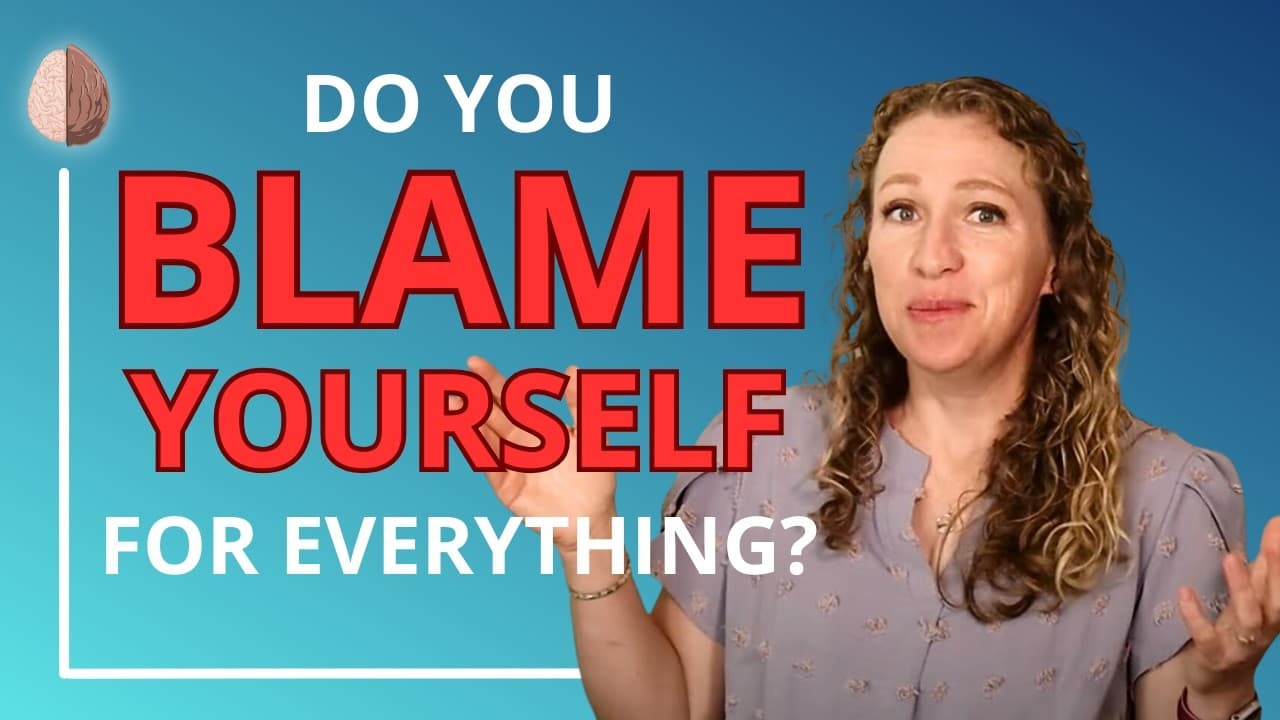
Self-blame is a mental shortcut the brain takes when overwhelmed, often formed in childhood trauma, because thinking 'it's all my fault' is easier than understanding why others do harm. It can offer a false sense of control or keep peace, but over time it brings guilt, shame, depression, or anger. Stopping it means recognizing the distorted thought, questioning it, and replacing it.
Transcript
In this video you'll learn why you might blame yourself for everything, how this can be a trauma response from your childhood, and how to stop doing it. And we're going to use Batman as an example. I'm Batman. But first, have you ever taken a shortcut even though you weren't really supposed to? I mean, it seems like way too much effort to walk ... Read More
Key Insights
- Self-blame is a cognitive distortion and one of its most common forms. It is an automatic thought, a mental shortcut the brain takes to save time and energy, and it often goes unnoticed even though it is not an accurate reading of events.
- Children often blame themselves because it is the easier route. When a parent yells over spilled milk, thinking 'it's all my fault' takes far less effort than understanding the nuance of adults who are good people yet make many mistakes.
- Trauma leads to self-blame because it overwhelms our capacity to cope. It floods the emotional centers with fear or anger, which leaves no capacity for nuanced assignment of accountability, so the brain takes the easy shortcut of blaming itself.
- People blame themselves in three common ways: taking full responsibility for every situation, believing they should have seen it coming, and attributing outcomes to personal deficiencies such as being lazy, stupid, inconsiderate, or clumsy.
- Self-blame can feel rewarding because it gives a sense of control. Believing a different choice would have prevented a bad outcome creates a false feeling of power and security, as in fretting over dating profile tweaks to stop harassment the person could not control.
- Taking the blame can protect relationships we depend on. A child apologizing to an angry parent keeps the peace, and in an abusive relationship the fawn response may take the blame to prevent retaliation from a dangerous person.
- Blaming oneself is also easier than acting against someone else's wrongdoing, and it can be a learned habit from a victim-blaming society or one's family of origin. Because it was learned, it can be unlearned.
- The way to stop self-blame is to recognize the distorted thought, question it, and replace it with something more helpful. A quick test is asking whether you would blame a friend for the same thing; if not, you are using emotional reasoning.
Install to Summarize YouTube Videos and Get Transcripts
Explore YouTube Video Summarizer or Get YouTube Transcript Extractor
Questions & Answers
Q: Why do I blame myself for everything?
Blaming yourself for everything is often a mental shortcut your brain takes to save time and energy, especially when overwhelmed. As a child, thinking 'it's all my fault' is far easier than understanding why adults do harmful things. This pattern can start as a trauma response in childhood and continue into adulthood as beliefs like 'I'm never good enough.'
Q: How does trauma lead to self-blame?
Trauma is when a situation overwhelms our capacity to manage it. It floods our emotional centers with fear or anger, so we lack the capacity to make nuanced assignments of accountability. The brain then takes the easy shortcut of self-blame. People are more likely to blame themselves when stress is high or their resources are diminished, much like taking a grassy shortcut when exhausted.
Q: What are the three common ways people blame themselves?
First, people take full responsibility for every situation, such as 'It's my fault my parents got divorced.' Second, they believe they should have seen it coming, like 'I should have known it would rain on my wedding day.' Third, they make it about personal deficiencies, filling in the blank with words like lazy, stupid, inconsiderate, idiotic, or clumsy. All three are distorted thinking.
Q: Why does self-blame feel rewarding even though it hurts?
Self-blame can give a false sense of control: believing a different choice would have prevented a bad outcome makes us feel more secure. It can also keep peace in relationships we depend on, feel safer than blaming a dangerous person, and be easier than taking action against someone else's wrongdoing. It may also simply be a habit learned from society or family.
Q: What are the signs that you are blaming yourself?
Six signs of self-blame are: feeling guilty, helpless, or worthless; thinking or saying 'it's all my fault,' where the word 'all' is an exaggeration; apologizing too much; downplaying other people's responsibility; believing you are irreparably flawed or never good enough; and thinking you should have been able to see the future. Noticing these helps you catch the distortion.
Q: How can I stop blaming myself?
Get out of autopilot and process events more honestly in three steps: identify the distorted thinking, question it, and replace it with something more helpful. Remember that thinking something does not make it true. When you catch yourself, say out loud, 'I'm self-blaming again.' This practice, called decentering or cognitive defusion, lets you step outside the thought and detach from it.
Q: How does Batman illustrate self-blame from childhood trauma?
In Batman Begins, young Bruce Wayne got scared and asked his parents to leave the theater, and they were then killed in an alleyway. His 10-year-old brain needed an explanation, so he blamed himself, telling Alfred, 'It was my fault. I made them leave the theater.' Alone and lacking context about crime and violence, he took the shortcut and held that wrong story into adulthood.
Q: What is a quick test to recognize distorted self-blame?
Ask yourself, 'Would I treat a friend this way? Would I blame them for what happened?' If the answer is no, you are using emotional reasoning, an illogical approach that is unfair to yourself. This comparison exposes the double standard in self-blame, such as the woman Aaron Beck described who blamed herself for a picnic ruined by a thunderstorm she could not control.
Summary & Key Takeaways
-
Self-blame is a common cognitive distortion, an automatic thought the brain uses as a shortcut to make sense of the world. Like catastrophizing and overgeneralizing, it feels true but is often inaccurate, and repeated over time it can leave people feeling guilty, ashamed, depressed, or angry.
-
Trauma overwhelms our capacity to cope, flooding emotional centers with fear or anger, so the brain defaults to self-blame. Young Bruce Wayne in Batman Begins blamed himself for his parents' deaths because he asked to leave the theater, and he carried that wrong story into adulthood.
-
Self-blame persists because it offers a false sense of control, keeps peace in relationships we depend on, feels safer than blaming a dangerous person, is easier than acting against wrongdoing, and is often a learned habit. To stop, recognize the distortion, question it, and replace it with healthier thinking.
Read in Other Languages (beta)
Share This Summary 📚
Summarize YouTube Videos and Get Video Transcripts with 1-Click
Try YouTube Summary with ChatGPT & Claude or YouTube Transcript Generator
Explore More Summaries from Therapy in a Nutshell 📚

Summarize YouTube Videos and Get Video Transcripts with 1-Click
Try YouTube Summary with ChatGPT & Claude or YouTube Transcript Generator