How to Build Plots with Promise and Payoff
TL;DR
Strong plots hold attention by making clear promises, showing meaningful progress, and delivering satisfying payoffs. A novel usually becomes richer when several compatible ideas about plot, character, setting, and conflict combine, but the writer's practiced ability to construct compelling scenes matters more than possessing a supposedly brilliant premise.
Transcript
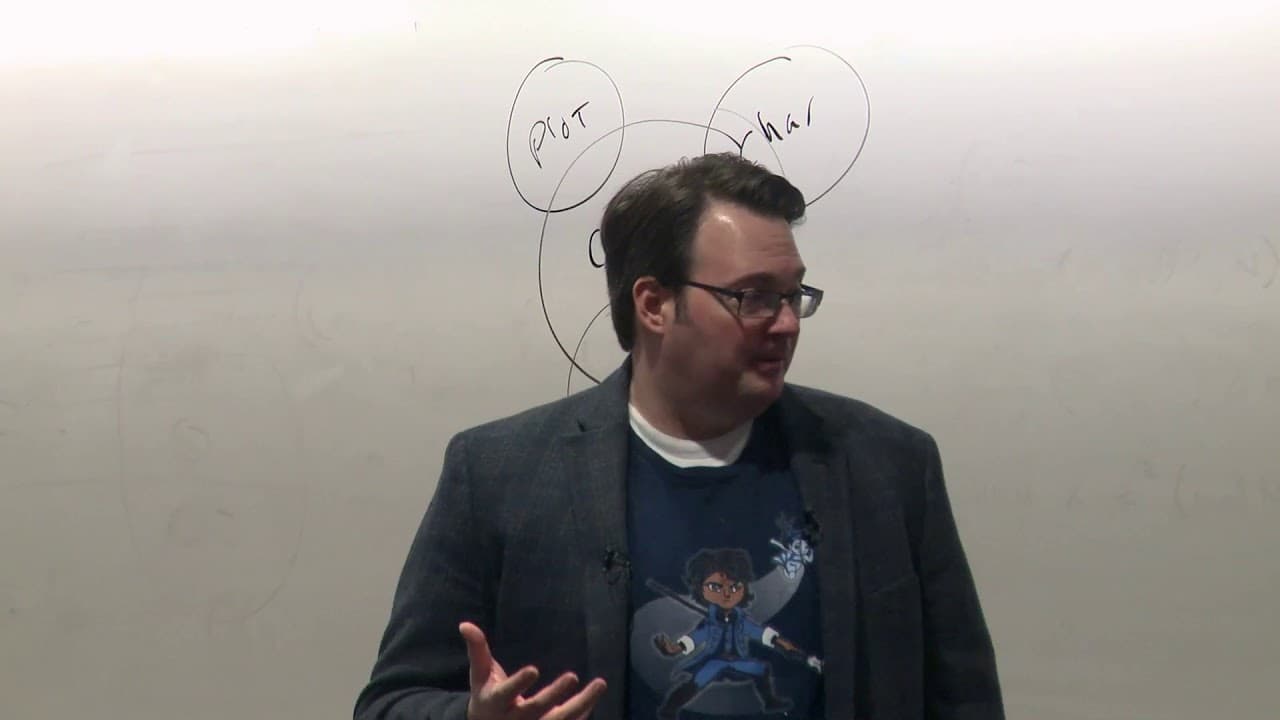
Let's get started actually talking about sci-fi/fantasy. I'm going to start us off this year with plot. I do it randomly. Sometimes I start with character. Sometimes I start with setting. People often ask me, "Where does a book begin for you?" It's really different for every book, and sometimes, in many ways, it's kind of a chicken or an egg sort o... Read More
Key Insights
- Plot, character, and setting are the three central components of a story, while conflict connects them. A book may originate from any of these components, and the initial concept can change categories as the writer discovers what kind of story it implies.
- A novel usually grows from several ideas that combine into a stronger whole. Writers can record isolated concepts in a notebook or computer file, identify combinations that fit together, and add further ideas when outlining reveals gaps that need to be filled.
- Mistborn combined independently developed concepts rather than emerging from one complete premise. Its ingredients included a world where the prophesied hero failed, a fantasy heist team with magical abilities, living mist, illuminated cathedrals, Kelsior, and magic systems originally designed for separate stories.
- Ideas are cheap compared with the skill required to execute them. The Codex Alera example supports the claim that an experienced writer can combine incongruous concepts, such as the lost Roman legion and Pokémon, and develop them into a distinctive epic fantasy series.
- Writing skill becomes visible within only a few pages, much like the difference between a relatively new pianist and a concert pianist becomes audible immediately. Editors and readers can recognize whether prose and scenes are working even when they cannot formally explain every craft principle involved.
- A strong opening scene is necessary because readers may never reach a compelling premise if the early writing fails to hold their attention. Practicing the craft means learning to grab an audience quickly and demonstrate that continuing with the story will be worth the reader's time.
- Setting is less important than character when the three major story components must be ranked. A strong setting paired with terrible characters generally remains a bad book, while great characters can make a story successful even when its setting is cliched or comparatively weak.
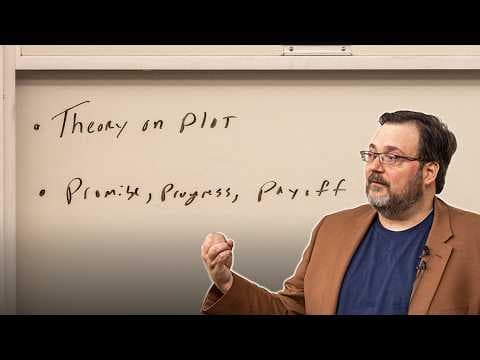
- Promise, progress, and payoff form a practical framework for constructing plots that keep readers engaged. Writers should identify the expectations established near the beginning, control those expectations during planning or revision, show movement toward them, and ultimately provide an appropriate resolution or twist.
Install to Summarize YouTube Videos and Get Transcripts
Explore YouTube Video Summarizer or Get YouTube Transcript Extractor
Questions & Answers
Q: How do you build a plot from multiple story ideas?
Build a plot by recording separate ideas about characters, settings, conflicts, magic systems, or events, then looking for combinations that reinforce one another. Once a promising group forms the seed of a novel, review the remaining ideas for compatible additions. Organize the combined material into an outline, identify holes, and brainstorm new components specifically designed to fill those gaps.
Q: What are promise, progress, and payoff in plotting?
Promise, progress, and payoff are a framework for understanding how a story attracts and retains attention. The beginning makes promises about the experience and direction of the story. The plot must then show progress connected to those expectations. Finally, the story provides a payoff, including twists where appropriate, that answers or fulfills what the earlier material led readers to anticipate.
Q: Why does a novel usually need more than one idea?
A single good idea can often support a short story, but a novel generally needs several hooks and concepts working together. Combining ideas creates more material for plot, character, setting, and conflict, while also producing relationships that did not exist in the separate concepts. The result can feel more exciting and substantial than any one of its ingredients alone.
Q: How did separate ideas combine to create Mistborn?
Mistborn developed from concepts that initially existed separately. These included a world where the prophesied hero had failed, a fantasy version of a heist, team members with different magical powers, an almost living mist, illuminated cathedrals shining through darkness, and the character Kelsior. Two magic systems were also designed for other stories before being combined, with a third added later.
Q: Why is writing skill more important than a brilliant premise?
A premise does not automatically create an effective book because the author must turn it into convincing scenes, characters, conflict, and narrative movement. A practiced writer can make seemingly bad or incongruous ideas work, while an inexperienced writer can mishandle an excellent concept. Readers and editors therefore look for demonstrated craft, not merely an idea that sounds impressive in summary.
Q: Why can editors reject a story after only a few pages?
Writing skill is often recognizable very quickly, just as listeners can immediately hear a difference between a relatively inexperienced pianist and a concert pianist with extensive practice. Editors can evaluate whether the opening scenes engage, whether the prose functions effectively, and whether the author appears in control. A promising later concept cannot help if the opening fails to persuade them to continue.
Q: What is a tone promise at the beginning of a story?
A tone promise uses the introductory chapter to signal the tone and style of the story that follows. The opening should prepare readers for the kind of experience the book intends to provide. For example, a wacky comedy should not casually begin with a deeply tragic death designed to make readers weep, because that opening may establish conflicting expectations.
Q: Which matters more in fiction, setting or character?
Character generally matters more than setting when those elements must be ranked. A story with an impressive setting but terrible characters will usually remain a bad book. A story with great characters can still be successful even if its setting is cliched or comparatively weak. The strongest result uses plot, character, and setting effectively, with conflict binding them together.
Summary & Key Takeaways
-
Stories are built from plot, character, and setting, with conflict acting as the glue that connects them. A novel can begin with any one of these elements because ideas frequently overlap. Sanderson describes gathering independent concepts, combining the ones that reinforce one another, and developing the resulting core into an outline.
-
A novel generally needs multiple ideas, while one strong idea may be sufficient for a short story. Mistborn grew from separate concepts involving a failed prophesied hero, a fantasy heist, unusual mist, illuminated cathedrals, a developing character, and independently designed magic systems. Their combination produced something more exciting than the individual parts.
-
Ideas alone do not make fiction successful because readers and editors quickly recognize differences in writing skill. A compelling premise may never receive attention if the opening scenes fail to engage. Plot craft therefore depends on controlling the story's promises, demonstrating progress toward them, and eventually providing payoffs that justify the reader's investment.
Read in Other Languages (beta)
Share This Summary 📚
Summarize YouTube Videos and Get Video Transcripts with 1-Click
Try YouTube Summary with ChatGPT & Claude or YouTube Transcript Generator
Explore More Summaries from Brandon Sanderson 📚



Summarize YouTube Videos and Get Video Transcripts with 1-Click
Try YouTube Summary with ChatGPT & Claude or YouTube Transcript Generator