How to Write Compelling Characters: Sanderson's 3 Traits

TL;DR
Compelling characters are built from three sliding attributes: proactive, relatable, and capable. Most strong characters aren't high in all three; a useful rule of thumb is one trait high, one moderately low, and one where the character grows over time. Proactivity, moving the plot forward, is the single most important element for making a character readable.
Transcript
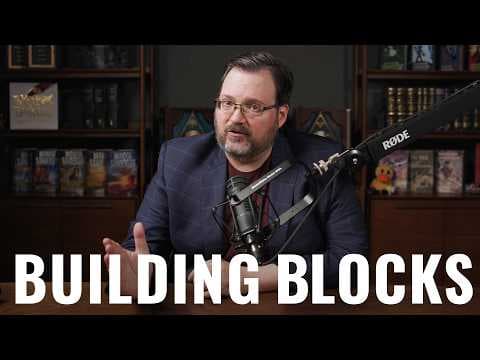
BRANDON: Hello. Welcome to Brandon Sanderson's Writing Science Fiction and Fantasy lecture series. This is lecture number five. We're going to talk about character today, how to make your characters interesting, a question that most of my classes in college never answered. I want to answer it to you. And I think that we do that by having char... Read More
Key Insights
- Compelling characters come from a mixture of three key elements: they are proactive, relatable, and capable, a framework Brandon Sanderson made rhyme so the lesson holds together.
- Most characters do not have all three attributes at once; as a rule of thumb one is high, one is moderately low, and one is where the character is growing and learning over time.
- Proactivity is the single thing that most makes a character readable, because readers bond to characters who make the story happen and move the plot forward.
- Readers get frustrated by characters who are obstacles, who slow or stall the progress they expect, and get excited by characters who advance the story.
- The classic proactive hero is someone an external conflict happens to, who jumps up and starts solving the problems, and readers bond to that proactivity.
- Different stories pursue different goals, so slow-progress books like Jonathan Strange & Mr. Norrell work differently than fast-progress ones like The Bourne Identity, yet still succeed.
- 'Write what you know' does not mean strictly your own life; if it did, no one could write about dragons. It means building narrative around what you are passionate about.
- University creative writing courses rarely teach how to create a compelling character, despite it being a core reason people want to read, focusing instead on prose styles, feedback, and workshops.
Install to Summarize YouTube Videos and Get Transcripts
Explore YouTube Video Summarizer or Get YouTube Transcript Extractor
Questions & Answers
Q: What are the three traits that make a character compelling according to Brandon Sanderson?
Brandon Sanderson believes compelling and interesting characters come from a mixture of three key elements: they are proactive, they are relatable, and they are capable. He deliberately made these three words rhyme, joking that alliteration is how you can tell he is a professional. This is his personal framework, and he acknowledges there are many other ways to talk about and present the same ideas about character.
Q: How should a writer balance proactive, relatable, and capable in one character?
Most characters do not have all three attributes at once. As a rule of thumb, never followed exactly one to one, a character is very high in one attribute, moderately low in another, and growing and learning in the third. The writer picks where the character needs to learn, where they are already strong, and where they are not very good in a way that continues to characterize them over time.
Q: Why is proactivity the most important trait for a character?
Proactivity is probably the single thing that makes a character readable in a story, and the number one thing you can do to make a character interesting is to make them proactive so they move the plot forward. Readers naturally bond to such characters because they make the story happen. Readers want the story to progress, so they get excited by characters who advance it and frustrated by those who stall it.
Q: What is a proactive hero?
The classic proactive hero is somebody an external conflict happens to, and who is the person who jumps up and starts solving the problems. Readers bond to that proactivity. Sanderson describes it as a bit of a hack for starting a story: if you instantly want someone to be readable, you give them an external conflict and have them immediately take action to address it, which pulls the reader toward the character.
Q: What does 'write what you know' actually mean for fiction writers?
Sanderson says 'write what you know' is an old adage that does not necessarily mean strictly writing your own life experience. If you could only write what you know literally, none of us could write about dragons. Instead it means taking what you are passionate about and constructing narrative around it. Whatever hobby, life experience, or odd passion you or a family member has can translate into a character, arc, or worldbuilding element.
Q: How did Dan Wells' John Cleaver novel demonstrate the value of writing from passion?
Driving home from writing group, Dan Wells went off about serial killers and how interesting it was that most share three attributes as children. He had been writing unpublished epic fantasy for years. Sanderson asked why he had never written about the thing he was so interested in. Wells sat down and wrote the first John Cleaver novel, which became the first novel he sold and the strongest he had written in all those years.
Q: Do university creative writing classes teach how to write compelling characters?
According to Sanderson and his co-host Rachel Lynn, creative writing classes essentially never teach how to create a compelling character. Sanderson found this baffling because it is one of the core ideas of what makes people want to read. He only encountered it in his last year, in Dave's class. The courses did help with prose styles, adapting life experience, networking, and feedback, but not the central question of compelling character.
Q: Can a story succeed without fast plot progress?
Yes. Sanderson notes that while readers generally want to see progress, that is not the only thing they want, and there are great stories that make very slow progress and still work really well. He contrasts Jonathan Strange & Mr. Norrell, which is not about progress in the same way, with The Bourne Identity, which is about fast progress. Different stories try to do different things, so the emphasis on proactivity is a general guideline, not an absolute rule.
Summary & Key Takeaways
-
Brandon Sanderson opens his fifth writing lecture, filmed at Dragonsteel HQ due to a Utah snowstorm, with students watching on YouTube. He introduces the central question his own college classes never answered: how do you make characters interesting? His answer centers on three attributes: proactive, relatable, and capable.
-
Sanderson argues passion translates into fiction. He recounts how Dan Wells, fascinated by serial killers, finally wrote the John Cleaver novel, his first sale and strongest book. 'Write what you know' means building narrative around what excites you, not just literal life experience, so whatever hobby or quirk you have can inform a character.
-
Proactivity is the most important trait for readability. Readers bond to characters who move the plot forward and get frustrated by those who obstruct or stall it. The classic proactive hero jumps up to solve external problems. The rule of thumb: a character is high in one trait, low in another, and growing in the third.
Read in Other Languages (beta)
Share This Summary 📚
Summarize YouTube Videos and Get Video Transcripts with 1-Click
Try YouTube Summary with ChatGPT & Claude or YouTube Transcript Generator
Explore More Summaries from Brandon Sanderson 📚




Summarize YouTube Videos and Get Video Transcripts with 1-Click
Try YouTube Summary with ChatGPT & Claude or YouTube Transcript Generator