How to Structure Short Stories with MICE Threads
TL;DR
Short stories work best when they deliver a focused emotional punch, begin near the central action, and end as soon as that experience lands. Use milieu, inquiry, character, and event threads to define beginnings, endings, and conflicts, then nest those threads so the most recently opened one closes first. Orient readers within the first three sentences by establishing who, where, and genre.
Transcript
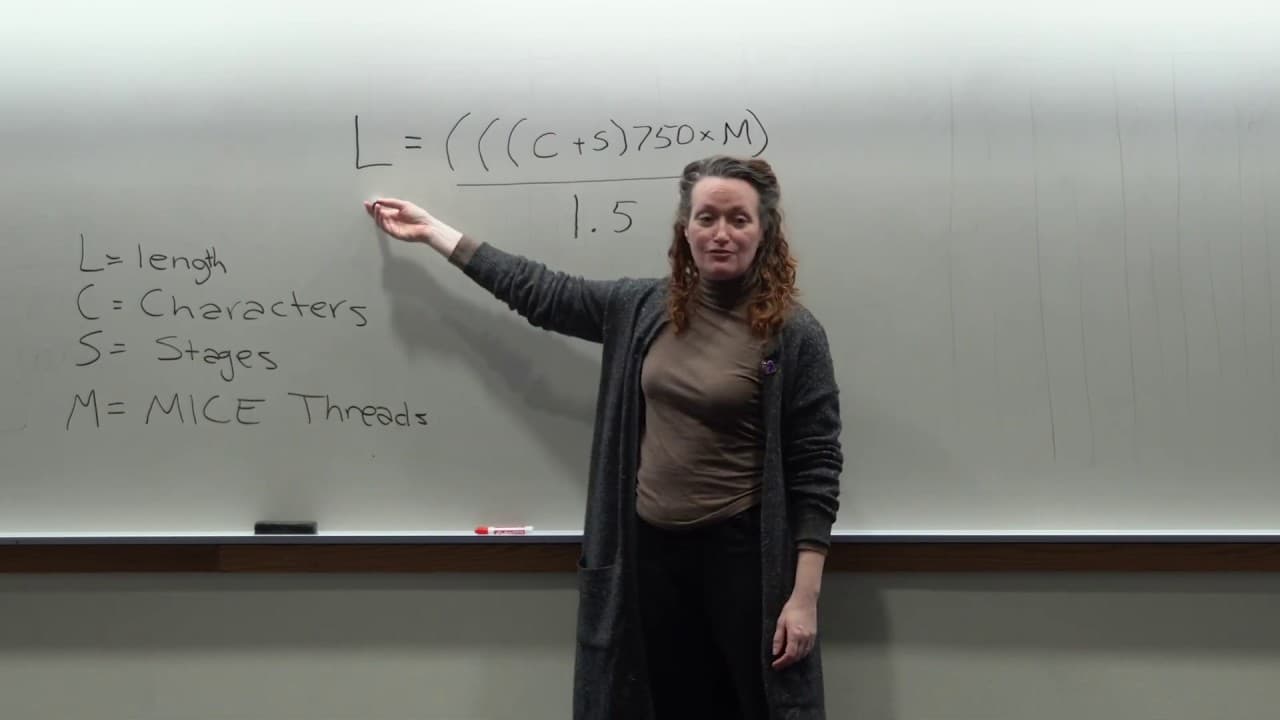
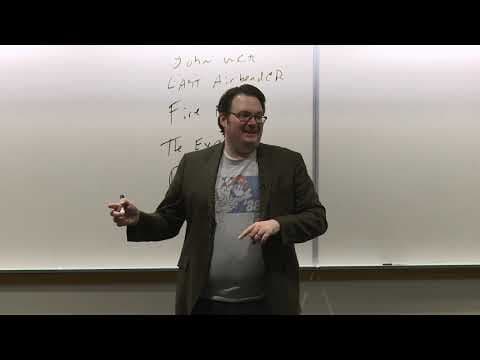
BRANDON: Everyone give a warm welcome to Mary Robinette. CLASS: (applause) MARY ROBINETTE: Thanks. Brandon invited me here to talk to you about short stories, because he is good at many things . . . that are not short stories. I know, it's shocking. I write a lot of short stories. But the thing that you should understand is that writing is fractal.... Read More
Key Insights
- Short stories are designed to deliver a specific emotional punch rather than the extended immersion associated with novels. Their concentrated form resembles watching a gymnast’s routine from immediately before the flips through the landing, without following the surrounding competition, preparation, ceremony, and interviews.
- Writing is fractal because principles that work at one narrative length can be applied at other lengths. A writer who understands the underlying mechanism can scale an idea from sentences and paragraphs to scenes, chapters, novels, or a multi-volume story.
- The MICE Quotient is an organizational theory built from four elements: milieu, inquiry, character, and event. These elements help writers identify where a story should begin and end, as well as the conflicts that should prevent characters from completing their goals.
- A milieu story begins when a character enters a place and ends when the character exits it. Its conflicts arise from navigating, surviving, understanding, or escaping that location, so spatial difficulty remains central until the character successfully leaves.
- An inquiry story begins with a question and ends when that question is answered. Lies, misunderstandings, dead ends, and red herrings sustain the conflict by preventing the character from discovering or correctly interpreting the information needed for resolution.
- A character story begins with an identity shift or dissatisfaction and ends when a new self-definition solidifies. Its conflicts resist internal change through restrictive roles, self-loathing, failed attempts at transformation, or consequences that make the desired change backfire.
- An event story begins when the normal status quo is disrupted and ends when a new status quo is established. Its conflict is external, often involving fights, chases, explosions, threats, or further disruptions that prevent the characters from restoring stability.
- Story threads work best when they close in reverse order of opening, like nested boxes or code. A deeply nested thread should resolve before its surrounding thread, while the longest-open thread generally closes last because sustained attention creates greater tension and cathartic release.
Install to Summarize YouTube Videos and Get Transcripts
Explore YouTube Video Summarizer or Get YouTube Transcript Extractor
Questions & Answers
Q: What is the main purpose of a short story?
The main purpose of a short story is to deliver a specific emotional punch or concentrated experience. Unlike a novel, which invites the reader into a long period of immersion, short fiction provides a quick, focused ride. It often begins immediately before the central performance or conflict and ends when the character metaphorically sticks the landing, completing the promised emotional effect.
Q: What is the MICE Quotient in story structure?
The MICE Quotient is an organizational theory that describes stories through four elements: milieu, inquiry, character, and event. These elements can appear in both fiction and nonfiction and may be mixed in different proportions. Each one helps determine the proper opening, ending, and conflict of a narrative thread, giving writers a practical way to diagnose structure and resolution.
Q: How does a milieu story begin and end?
A milieu story begins when a character enters a place and ends when the character exits that place. The conflicts between those moments should make the location difficult to navigate, survive, understand, or escape. Examples named in the lecture include Gulliver’s Travels and Around the World in 80 Days, both of which organize major parts of their narratives around movement through places.
Q: How do inquiry stories create and sustain conflict?
An inquiry story begins when a character forms a question and ends when the answer is found. To sustain the narrative, the writer prevents the character from reaching that answer too easily. Other characters may lie, evidence may be misunderstood, apparent answers may lead to dead ends, and red herrings may direct attention toward information that does not solve the central question.
Q: What distinguishes a character story from an event story?
A character story concerns an internal change in identity, while an event story concerns an external disruption of normal life. Character stories begin with dissatisfaction or a shift in self-definition and end when a new identity solidifies. Event stories begin when the status quo is disturbed and end when a new status quo is established, even if that outcome involves everyone dying.
Q: How should multiple MICE story threads be organized?
Multiple MICE threads should be nested so that the most recently opened thread closes first. If an inquiry begins inside a milieu thread, the inquiry should be answered before the character leaves the place and closes the milieu. This structure resembles nested code or boxes placed inside one another, where the contents of the inner box must be packed away before the outer box can close.
Q: Why can a story ending feel repetitive or weak?
A story can feel as though it ends repeatedly when its narrative threads close in an order that does not match how they were opened. It can also fizzle when a major thread resolves too early. Longer-open threads hold more of the reader’s attention under tension, so releasing one prematurely leaves insufficient time for another thread to build equivalent energy and provide a satisfying final release.
Q: What should the opening of a short story establish?
The opening should introduce the character, orient the reader, and make promises about the experience ahead. For the action-driven opening taught in the lecture, the first three sentences should establish who the story follows, where the story takes place, and what genre the reader has entered. The order of those details is flexible, but all three help readers understand the narrative quickly.
Summary & Key Takeaways
-
Short stories deliver a specific emotional punch, while novels create prolonged immersion. The difference resembles watching only a gymnast’s routine versus following the entire Olympic experience. Because short fiction offers a concentrated experience, writers should begin close to the important action and finish when the promised emotional landing has been achieved.
-
The MICE Quotient organizes stories around milieu, inquiry, character, and event threads. Each thread supplies a distinct opening condition, closing condition, and family of obstacles. Milieu concerns entering and leaving places, inquiry asks and answers questions, character transforms identity, and event disrupts and restores a status quo.
-
Multiple story threads should be nested like boxes or code. A thread opened inside another should close before the surrounding thread closes. Longer-open threads accumulate greater tension and usually deserve later resolution. Effective openings also orient readers quickly by establishing the central character, location, and genre within the first three sentences.
Read in Other Languages (beta)
Share This Summary 📚
Summarize YouTube Videos and Get Video Transcripts with 1-Click
Try YouTube Summary with ChatGPT & Claude or YouTube Transcript Generator
Explore More Summaries from Brandon Sanderson 📚
Summarize YouTube Videos and Get Video Transcripts with 1-Click
Try YouTube Summary with ChatGPT & Claude or YouTube Transcript Generator