How Do Promise, Progress, and Payoff Shape Plot? Brandon Sanderson’s Writing Lecture #2 (2025)
TL;DR
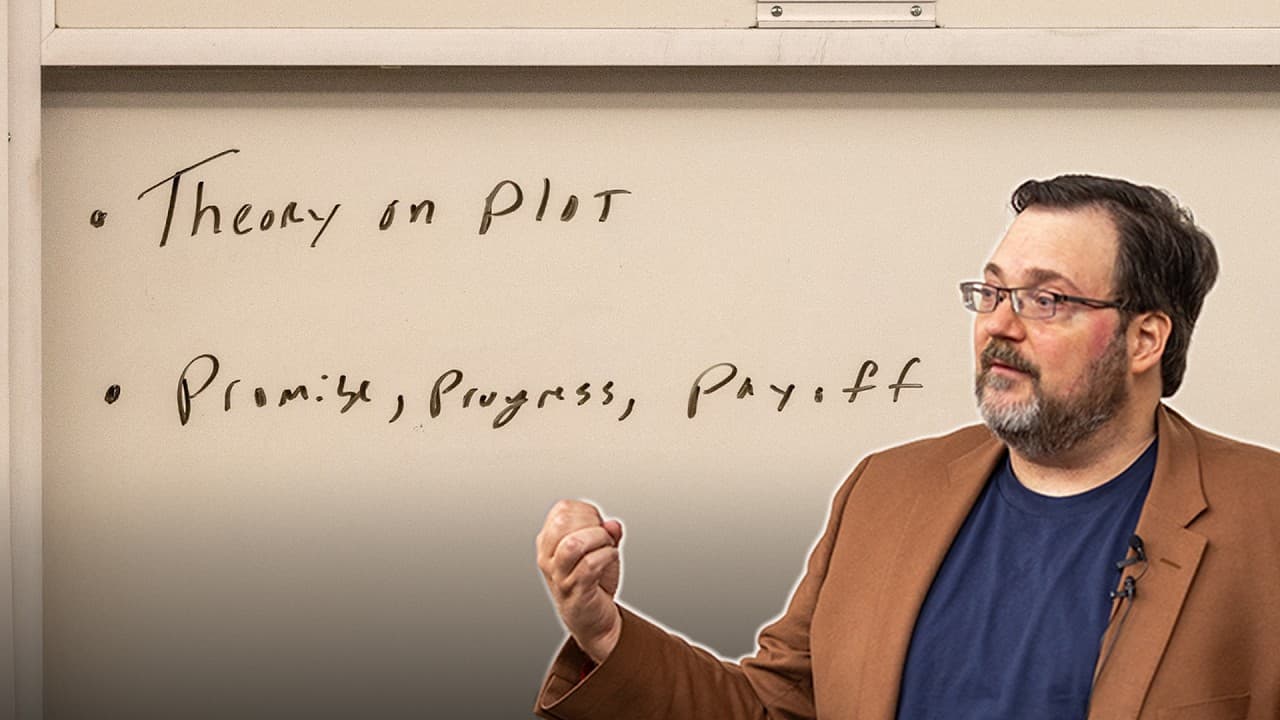
Promise, progress, and payoff shape a compelling plot by setting reader expectations, developing those expectations, and delivering a satisfying conclusion. In Brandon Sanderson’s 2025 Writing Science Fiction and Fantasy lecture #2, he also distinguishes the overarching capital-P Plot from the chapter-by-chapter problems of little-p plot. Read on to see how conflict, pacing, twists, and climax support this structure.
Transcript
BRANDON: Hey! Welcome to Brandon Sanderson's 2025 Writing Science Fiction and Fantasy lectures. Today we're going to cover plot, specifically the ideas of promise, progress, and payoff. So I hope you enjoy the lecture. We'll be on plot next week as well. Hey, everybody! Welcome to class! It's Science Fiction and Fantasy Writing! Yay! CLASS: (... Read More
Key Insights
- Promise, progress, and payoff are essential elements of plot structure.
- Capital P Plot is the overarching story, while little p plot involves chapter-by-chapter events.
- Stories are built from plot, setting, and character, with conflict arising from their intersection.
- Plot should facilitate conflict and provide structure, making it the hardest element to innovate.
- Promises set reader expectations, and progress involves delivering on these expectations.
- Payoff should be surprising yet inevitable, often achieved through twists or escalations.
- A story's pacing and progress should align with its climax to maintain engagement.
- Different genres and story types may require unique approaches to promise, progress, and payoff.
Install to Summarize YouTube Videos and Get Transcripts
Explore YouTube Video Summarizer or Get YouTube Transcript Extractor
Questions & Answers
Q: How do promise, progress, and payoff contribute to a story?
A promise establishes what readers should expect, progress develops and fulfills those expectations, and payoff delivers the conclusion. Together, these elements help sustain engagement and make the narrative feel cohesive and satisfying.
Q: What is the difference between capital-P Plot and little-p plot?
Capital-P Plot is the overarching story that can be summarized in a sentence or two. Little-p plot consists of the chapter-by-chapter problems and resolutions that keep readers engaged while building toward larger problems.
Q: What are the three main elements of a story?
Sanderson identifies plot, setting, and character as the three elements from which stories are generally built. Their intersection creates conflict, and each element should create or facilitate that conflict.
Q: What purposes does plot serve?
Plot primarily facilitates conflict by giving characters something to do and placing an obstacle in their way. It also gives readers structure, helping them sense that the story is moving forward.
Q: Why is plot difficult to innovate?
Plot must create conflict while providing the structure readers expect from a satisfying story. Sanderson ranks setting as the easiest element to innovate, character as the second easiest, and plot as the most difficult.
Q: How can familiar plot structures still feel fresh?
Sanderson says plot innovation is not necessarily required. Combining a familiar plot with interesting characters, an interesting setting, and effective storytelling principles can make a story read and feel fresh and unique.
Q: How can a writer create a satisfying payoff?
A satisfying payoff should feel surprising yet inevitable. Twists or escalations can create surprise, while alignment with the story’s earlier promises helps the conclusion feel earned.
Q: How should progress connect to a story’s climax?
Progress should build toward the climax through clear development and escalation. When the climax resolves the main conflicts and fulfills the story’s promises, the payoff provides a stronger sense of closure.
Summary & Key Takeaways
-
Promise, progress, and payoff form the backbone of engaging storytelling. A strong plot starts with a promise to the reader, which is developed through progress and culminates in a satisfying payoff. This structure helps maintain reader interest and ensures a cohesive narrative.
-
Capital P Plot refers to the main story arc, while little p plot involves the detailed chapter-by-chapter events. Both are crucial for creating conflict and advancing the story. The plot should provide structure and facilitate conflict, making it challenging to innovate but essential for storytelling.
-
Payoff in storytelling should be surprising yet inevitable, often achieved through twists or escalations. Effective pacing and progress are crucial for a compelling plot, with different genres requiring unique approaches to promise, progress, and payoff to keep readers engaged.
Read in Other Languages (beta)
Share This Summary 📚
Summarize YouTube Videos and Get Video Transcripts with 1-Click
Try YouTube Summary with ChatGPT & Claude or YouTube Transcript Generator
Explore More Summaries from Brandon Sanderson 📚




Summarize YouTube Videos and Get Video Transcripts with 1-Click
Try YouTube Summary with ChatGPT & Claude or YouTube Transcript Generator