How Much Worldbuilding Is Too Much for a Novel?

TL;DR
Two litmus tests reveal over-worldbuilding: whether the prep work is stopping you from hitting your writing deadlines, and whether you are pushing in explanations that turn readers off because you already spent the time. Brandon Sanderson recommends most authors aim for one book a year, with one book every two years still acceptable. Reader confusion in early readers signals the opposite problem.
Transcript
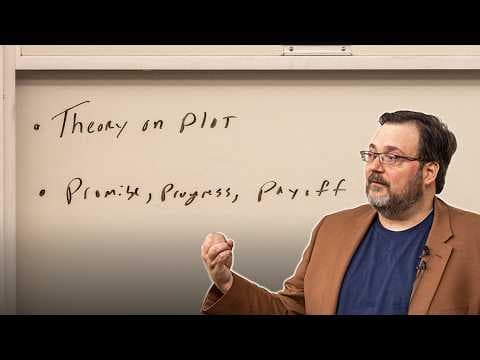
Hey, Brandon here. This is the bonus companion video to my worldbuing Q&A lecture. So, if you have been following along for each of the topics for my lecture series, which is now finished, I'm recording a bonus Q&A. And these are your questions about world building taken from the Q&A episode that happened in my class. Uh, number one, in your lectur... Read More
Key Insights
- The primary litmus test for over-worldbuilding is production, not page count: if you are spending so much time building the world that you never reach the story or miss your personal writing deadlines, the balance has tipped too far.
- One book a year of normal length is the target Sanderson recommends for most authors, with one book every two years still acceptable. Going beyond that pace while worldbuilding heavily is the signal to shift time into writing.
- Spending 20 years building a perfect world before writing stories in it is legitimate if that is your goal. The deadline advice applies specifically to writers whose aim is making a living as a science fiction and fantasy novelist.
- New writers cannot know where their worldbuilding time is best spent until their writing instincts develop. The more you write, the more effective your upfront worldbuilding becomes, so building those instincts through writing is itself the fix.
- Dense worldbuilding openings are not a flaw in themselves. Steven Erikson and Snow Crash both throw readers into strange worlds immediately, and Snow Crash is cited as one of the great pieces of science fiction literature despite the steep learning curve.
- A steep learning curve trades audience breadth for audience intensity: it cuts out some readers while gaining others who genuinely enjoy that style, which makes it a positioning choice rather than a mistake.
- Reader confusion is the signal that worldbuilding is too thin. Early readers who say they cannot focus on characters because they do not know what questions to ask about the magic system indicate the iceberg needs to be deeper.
- The grand skill of writing science fiction and fantasy is conveying the world through the eyes of a character, so the reader never notices worldbuilding is happening and feels they are simply getting character and plot.
Install to Summarize YouTube Videos and Get Transcripts
Explore YouTube Video Summarizer or Get YouTube Transcript Extractor
Questions & Answers
Q: How do you know if you have done too much worldbuilding?
Sanderson offers a two-phase litmus test. First and most important: are you spending so much time worldbuilding that you are not actually getting to your writing? The core problem with over-worldbuilding is spending so much time upfront that you never reach the story. Second: are you turning off your reader by withholding stakes, character, and story, and instead inserting worldbuilding simply because you already invested the time in it? Writers who spent heavily on history often want to include paragraphs of explanation even when it does not match the storytelling, which leaves readers asking why it connects.
Q: How many books a year should a professional novelist aim to write?
Sanderson recommends most authors shoot for completing one book a year of normal length. One book every two years is acceptable. If you are going beyond roughly one book every two years and you are spending a great deal of time worldbuilding, he recommends shifting some of that time into writing. This guidance is framed specifically around the goal of making a living as a science fiction and fantasy novelist. If your goal is different, for example spending 20 years worldbuilding a perfect world before writing stories in it, he says there is nothing wrong with that.
Q: What are the signs of amateur worldbuilding in a novel opening?
The first sign is how many proper names you throw at the reader. Names and jargon should be kept down in openings so readers can focus on the character and their name, because eyes start to glaze over, particularly in fantasy. The second sign is worldbuilding that shows off rather than enhances the story: paragraphs of info dumps instead of a character doing something. Amateur openings often read as long-winded and overwrought, along the lines of "in the dawn of time there was a magic that was," with no character to latch onto, forming a barrier to entry.
Q: How does a professional writer introduce a complex magic system?
Sanderson points to a book called Spellwright as an example. The opening scene has a character essentially trying to debug a spell in a world where spells are physically written. The character is dyslexic and is in a class for writing spells, so his personal limitation makes the problem worse through no fault of his own. That immediately builds sympathy and rooting interest while showing the magic system in action as he debugs it. A reader encountering that opening quickly learns whether the book is right for them, without sitting through explanation.
Q: How do you make a world's history relevant to the plot?
The easiest route is to make the history interesting to the characters in some way. If readers pick up early that a detail matters to a character, they pay better attention, which is important when that history carries weight later. This also signposts attention for a reason other than a coming twist. You can make the character passionate about it, or ignorant of it, and let the scene appear to be about something else, such as romance or an argument, while the historical clues you planted become relevant later.
Q: What should you do if you are a discovery writer and need foreshadowing?
Sanderson says being a discovery writer is fine. You reach the ending, then do a solid revision where you identify the key crucial elements and ask how to devise earlier scenes that convey that information without looking heavy-handed. Much of making history surprisingly relevant comes from understanding what you need to foreshadow, which usually means knowing your ending before writing or revising. Heavy-handedness is the specific thing new writers need to watch for when retrofitting these setups into earlier chapters.
Q: What does it mean to have a hollow iceberg in worldbuilding?
The hollow iceberg refers to worldbuilding depth beneath the visible surface of the story, and the question addressed in this Q&A is how writers can tell when their iceberg has become too dense or is not deep enough. Sanderson treats these as opposite failure modes with different symptoms: too dense shows up as missed writing deadlines and info dumps that displace story, while not deep enough shows up as reader confusion. He acknowledges it is a fine line to tread.
Q: Why is reader confusion sometimes acceptable at the start of a book?
Certain types of stories deliberately want readers a little confused at the beginning. Sanderson says those stories pair the confusion with really dynamic storytelling that pulls readers through, relying on realizations that come later to build a connection between the reader and the story. What you do not want is the version where an early reader says they cannot pay attention to the characters because they do not know what questions to ask about the magic system, and are simply confused with nothing carrying them forward.
Summary & Key Takeaways
-
The first litmus test for too much worldbuilding is production: if the prep prevents you from hitting personal writing deadlines, shift time to writing. Sanderson suggests most authors target one book a year of normal length, and treats one book every two years as acceptable. Spending 20 years perfecting a world is fine if that is your actual goal.
-
The second test is whether worldbuilding is displacing stakes, character, and story. Writers who spent heavy time on history often insert paragraphs of explanation that do not match the storytelling, prompting readers to ask why it connects. Dense openings are not inherently wrong: Steven Erikson and Snow Crash both front-load worldbuilding and succeed, though a steep learning curve trims the audience.
-
Amateur worldbuilding shows up as too many proper names and jargon early, and info dumps that show off the world instead of serving the story. Pros convey the world through a character's eyes, so readers feel they are getting character and plot. Making history matter to a character, and revising once the ending is known, keeps historical detail relevant without heavy-handedness.
Read in Other Languages (beta)
Share This Summary 📚
Summarize YouTube Videos and Get Video Transcripts with 1-Click
Try YouTube Summary with ChatGPT & Claude or YouTube Transcript Generator
Explore More Summaries from Brandon Sanderson 📚




Summarize YouTube Videos and Get Video Transcripts with 1-Click
Try YouTube Summary with ChatGPT & Claude or YouTube Transcript Generator