Why Is Iran Militarily Difficult to Defeat?
TL;DR
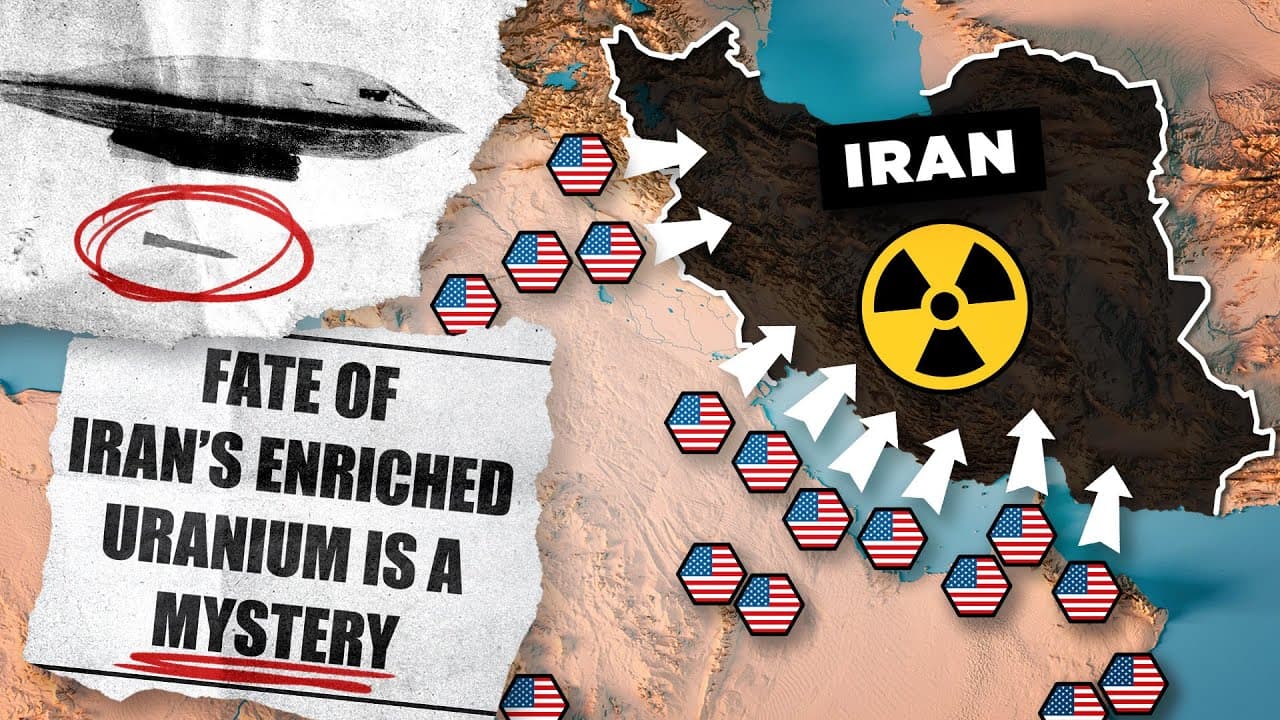
Iran's military resilience stems from its strategic use of proxies, espionage, and fortified nuclear sites. Despite Israeli and American attacks, Iran's nuclear capabilities have been only partially disrupted, with key infrastructure damaged but not entirely dismantled. The geopolitical complexities and historical precedents make a military resolution challenging and prolonged negotiations uncertain.
Transcript
For decades, Israel and the United States have engaged Iran in a shadow war across the Middle East, using the whole region as their massive geopolitical chessboard in their attempts to outmaneuver each other. But throughout all this time, until very recently, both sides maintained a taboo against attacking each other's territory directly, choosing ... Read More
Key Insights
- Iran's military strategy relies heavily on proxies like Hezbollah and Hamas, which complicates direct military engagement.
- Israel and the US have historically avoided direct attacks on Iranian soil, maintaining a shadow war through espionage and sabotage.
- In 2024, the taboo on direct attacks was broken, leading to significant military escalations between Israel and Iran.
- Operation Rising Lion and Operation Midnight Hammer were major military campaigns by Israel and the US targeting Iran's nuclear capabilities.
- Iran's nuclear sites are heavily fortified, with some facilities buried under mountains, complicating aerial attacks.
- The US used advanced bunker buster bombs to target Iran's underground nuclear sites, with mixed success.
- Iran's enriched uranium stockpile remains a critical concern, with uncertainties about its location and security.
- Historical precedents, like Libya and Iraq, influence Iran's determination to pursue nuclear capabilities as a deterrent.
Install to Summarize YouTube Videos and Get Transcripts
Explore YouTube Video Summarizer or Get YouTube Transcript Extractor
Questions & Answers
Q: Why is Iran difficult to defeat militarily?
Iran's military resilience is due to its strategic use of proxies, fortified nuclear sites, and a comprehensive network of espionage. The country's nuclear facilities are heavily fortified, with some buried under mountains, complicating aerial attacks. Additionally, historical precedents and geopolitical complexities make a military resolution challenging.
Q: How did the taboo on direct attacks between Israel and Iran break?
The taboo on direct attacks was broken in 2024 when Israel bombed the Iranian consulate in Syria, killing senior officials. Iran retaliated with missile strikes on Israeli territory, marking a significant escalation. This led to further military engagements, including Israel's Operation Rising Lion and the US's Operation Midnight Hammer.
Q: What were the objectives of Operation Rising Lion?
Operation Rising Lion aimed to curb Iran's nuclear capabilities and destabilize its theocratic regime. Israel launched overwhelming airstrikes and commando operations targeting Iran's nuclear sites, missile launchers, and military infrastructure. The operation significantly damaged Iran's military capabilities but did not fully dismantle its nuclear program.
Q: What role did the US play in the military conflict with Iran?
The US joined the conflict with Operation Midnight Hammer, targeting Iran's nuclear research sites. Using advanced B2 bombers and bunker buster bombs, the US aimed to destroy fortified nuclear facilities. The operation was complex and technical, involving stealth tactics and coordination with Israeli forces, but faced challenges in fully dismantling Iran's nuclear capabilities.
Q: How has Iran's nuclear program been affected by recent attacks?
Recent attacks have damaged key elements of Iran's nuclear supply chain, including the conversion of uranium metal to gas and enrichment processes. However, Iran's enriched uranium stockpile remains largely intact, and the exact extent of damage to its nuclear capabilities is uncertain. The country may still have covert facilities and resources to continue its program.
Q: Why is Iran determined to pursue nuclear capabilities?
Iran views nuclear capabilities as essential for regime survival and deterrence against external threats. Historical precedents, such as Libya and Iraq, reinforce Iran's belief that nuclear weapons are necessary to prevent foreign intervention. The lack of trust in international agreements and regional security concerns further drive Iran's nuclear ambitions.
Q: What historical precedents influence Iran's nuclear ambitions?
Historical precedents like Libya's disarmament followed by foreign intervention and Iraq's invasion after abandoning its nuclear program influence Iran's pursuit of nuclear capabilities. These examples reinforce the belief that possessing nuclear weapons is the only guarantee of regime survival and deterrence against external threats.
Q: What challenges do negotiations over Iran's nuclear program face?
Negotiations face challenges due to a lack of trust, historical precedents, and geopolitical complexities. Iran demands the lifting of sanctions before halting enrichment, while the US insists on compliance with previous agreements. The regional security dynamics and Iran's determination to maintain deterrence further complicate diplomatic efforts.
Summary & Key Takeaways
-
Iran's military resilience is rooted in its strategic use of proxies and espionage, complicating direct confrontations. Despite recent Israeli and American attacks, Iran's nuclear infrastructure remains partially intact, with key sites heavily fortified. The geopolitical landscape and historical precedents add complexity to military resolutions and negotiations.
-
The taboo on direct attacks between Israel and Iran was shattered in 2024, escalating military engagements. Operations like Rising Lion and Midnight Hammer targeted Iran's nuclear sites, but fortified locations and strategic dispersal of resources hindered complete dismantlement. Iran's enriched uranium stockpile remains a significant concern for global security.
-
Iran's nuclear ambitions are driven by a perceived need for deterrence, influenced by historical precedents of nations that abandoned nuclear programs and faced external threats. The ongoing geopolitical tensions and lack of trust complicate negotiations, with both sides wary of potential future conflicts.
Read in Other Languages (beta)
Share This Summary 📚
Summarize YouTube Videos and Get Video Transcripts with 1-Click
Try YouTube Summary with ChatGPT & Claude or YouTube Transcript Generator
Explore More Summaries from RealLifeLore 📚




Summarize YouTube Videos and Get Video Transcripts with 1-Click
Try YouTube Summary with ChatGPT & Claude or YouTube Transcript Generator