Which Is Better: Facebook Ads or Google Ads?

TL;DR
Use Google Ads to capture existing demand and Meta ads to create demand and scale beyond the finite number of daily searches. Smaller, highly visual, distinctive catalogs may favor Facebook and Instagram first, while large catalogs in search-heavy categories may favor Google, but e-commerce businesses should ultimately test and continually run a combination of both platforms.
Transcript
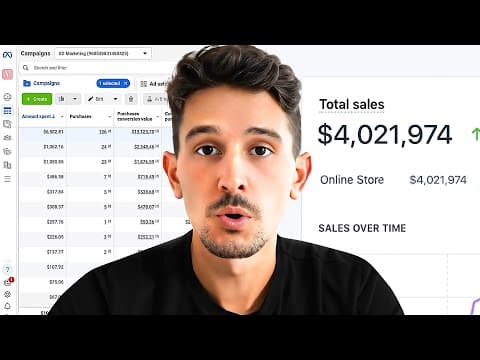
Facebook ads and Google ads represent over 50% of all of online advertising so it is an absolute non-negotiable that you know how to run both channels right now across all the brands we run with the moonlighters we've driven over half a billion dollars in Revenue using Facebook ads and Google ads so in this video I'm going to give you a clear-cut a... Read More
Key Insights
- Meta is a demand generation platform, while Google is a demand capture platform. Facebook and Instagram attract attention and introduce products or services, whereas Google places ads in front of consumers who are already searching or comparing products.
- The ideal customer profile is the starting point for choosing an advertising platform. Businesses must understand why their customers purchase because even similar competitors can attract slightly different buyers, searches, messages, and successful advertisements.
- Facebook and Instagram are highly visual advertising environments that support videos, images, collections, catalogs, and other formats. Their ads flow naturally within content consumption, making the advertisement itself a potential point of engagement instead of a conventional interruption.
- Google Search ads can place a business above organic results when a relevant query occurs. Google Shopping adds product imagery, pricing, and titles above search results, allowing advertisers to capture customers whose searches already demonstrate purchasing interest.
- Meta is recommended for smaller catalogs containing distinctive, visually appealing products or unfamiliar offerings. It can introduce category-breaking products and new services to people who are not actively searching because they have limited awareness of the solution.
- Google is recommended for large catalogs in search-heavy categories such as fashion, wellness, and beauty. Search and Shopping campaigns can match numerous products with relevant queries and position those products prominently when consumers are ready to evaluate options.
- Google’s scaling capacity is constrained by the finite number of relevant searches. Rising cost per click, falling click-through rate, worsening acquisition cost, or declining return on ad spend can indicate that a campaign has reached diminishing returns.
- Meta offers greater scaling potential because advertisers can reach people while they continuously scroll instead of waiting for additional searches. The recommended strategy is to capture high-intent demand through Google while using Meta to generate demand and expand beyond search-volume limits.
Install to Summarize YouTube Videos and Get Transcripts
Explore YouTube Video Summarizer or Get YouTube Transcript Extractor
Questions & Answers
Q: How do Facebook Ads and Google Ads differ?
Facebook Ads primarily generate demand by placing visual messages within Facebook, Instagram, WhatsApp, and Meta’s broader Audience Network. They can introduce an unfamiliar product or service to people who were not searching for it. Google Ads primarily capture existing demand through Search, Shopping, YouTube, Display, and other placements, reaching consumers when their searches or product queries reveal current interest.
Q: Which advertising platform should an e-commerce business use?
An e-commerce business should test both Meta and Google rather than choosing exclusively according to average order value. Google can capture shoppers who are already searching, while Facebook and Instagram can create attention and support broader scaling. The best starting platform depends on the ideal customer profile, the reason customers buy, catalog size, product distinctiveness, visual appeal, and the business’s growth goals.
Q: When should a business start with Facebook Ads?
A business should consider starting with Facebook and Instagram when it sells a smaller catalog of distinctive, highly visual products, introduces a category-breaking item, or offers a service that customers do not yet know well. Meta’s image, video, collection, and catalog formats help demonstrate unfamiliar offers within content feeds, reaching potential buyers even when they are not actively searching for a solution.
Q: When should a business start with Google Ads?
A business should consider starting with Google when customers already search for its products and when it has a large catalog in a category such as fashion, wellness, or beauty. Search ads can place the business above organic results, while Shopping ads can show product imagery, prices, and titles prominently. These placements help capture buyers whose queries indicate immediate relevance and purchasing intent.
Q: Why can Google Ads become harder to scale?
Google Ads can become harder to scale because the number of relevant searches available each day is finite. As an advertiser attempts to capture more demand and market share, cost per click can rise while click-through rate, acquisition cost, or return on ad spend can move in the wrong direction. Those changes may indicate that the campaign has reached a point of diminishing returns.
Q: Why can Meta Ads scale further than Google Ads?
Meta Ads can scale further because Facebook and Instagram users are already scrolling through content, so advertisers do not have to create additional search activity before showing another impression. The speaker reports personally spending more than $100,000 per day, reaching about $200,000 per day during peak holiday periods, and observing accounts spend $500,000 per day, illustrating the platform’s substantial reach potential.
Q: Does average order value determine which ad platform is best?
Average order value alone does not determine the better platform. The common rule that lower-value products belong on Facebook and higher-value products belong on Google is rejected in the transcript. Products with high or low average order values, high demand, expensive lead-generation offers, and other e-commerce models should test both platforms, then decide based on customer behavior, demand, performance, and scaling objectives.
Q: How should advertisers combine Facebook Ads and Google Ads?
Advertisers should use Google to capture people who are currently searching and use Facebook and Instagram to generate additional attention and demand. Google campaigns should be expanded until indicators such as cost per click, click-through rate, acquisition cost, and return on ad spend suggest diminishing returns. Meta can then support broader scaling, while both platforms continue running as complementary parts of the advertising mix.
Summary & Key Takeaways
-
Facebook and Google serve different advertising purposes despite reaching similarly large ecosystems. Facebook, Instagram, WhatsApp, and Meta’s Audience Network generate demand through visual, naturally integrated content. Google Search, Shopping, YouTube, and Display primarily capture people already expressing interest through searches and product queries.
-
Platform selection should begin with the ideal customer profile and the reason customers purchase. Meta is recommended for distinctive, visually appealing products, emerging categories, new services, and smaller catalogs. Google is recommended for large catalogs in categories with substantial product demand, including fashion, wellness, and beauty.
-
Google can efficiently capture high-intent demand, but its available search volume is finite, and costs may rise as advertisers pursue more market share. Meta offers greater scaling potential because users continuously scroll through content. The recommended long-term approach is testing both platforms, monitoring diminishing returns, and avoiding standard campaign structures used by every competitor.
Read in Other Languages (beta)
Share This Summary 📚
Summarize YouTube Videos and Get Video Transcripts with 1-Click
Try YouTube Summary with ChatGPT & Claude or YouTube Transcript Generator
Explore More Summaries from Sam Piliero 📚





Summarize YouTube Videos and Get Video Transcripts with 1-Click
Try YouTube Summary with ChatGPT & Claude or YouTube Transcript Generator