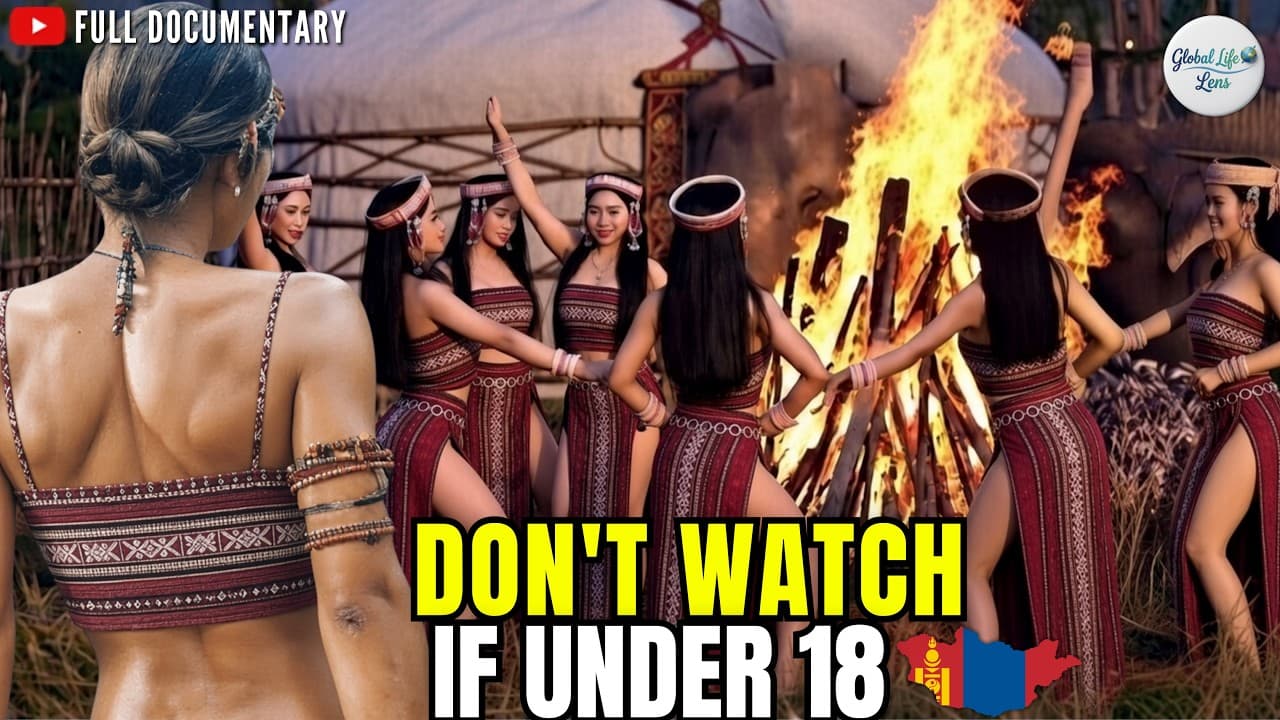
How do Mongolian nomads live on the step?
TL;DR
Nomads survive by moving their homes with the seasons and raising livestock that covers most of their wealth, food, and tradable goods. Large-scale space, extreme cold, and a culture centered on horses, yurts, and dairy meals shape daily life. Nadam festivals reveal the shared national identity beyond the harsh climate.
Transcript
On the vast steps of East Asia, a single white tent on an ocean of grass, a giant steel [music] horseman rising over an empty plane, and a frozen city breathing smoke [music] into a black winter sky. This is [music] Mongolia. It is bigger than all of Western Europe, yet fewer than 3 and 12 million people live here. One of the emptiest countries on ... Read More
Key Insights
- Mongolia is one of the emptiest countries on Earth with about 3.5 million people across 604,000 square miles, translating to roughly 5 people per square mile.
- Horses outnumber people in Mongolia, with around 5.1 million horses, and livestock totals approach 58 million head, creating a herd-based economy that serves as wealth, food, and insurance.
- A family wealth system is built around the five snouts, the five main animal types that define wealth and survival on the step.
- The gurr, or yurt, is a portable home that can be taken down and moved with the herd in about an hour or two, reflecting the nomadic lifestyle.
- Ulaanbaatar is noted as the coldest capital on Earth with mean annual temperatures around just below freezing, necessitating central heating and heavily insulated infrastructure.
- The staple diet is dairy and meat, with the fermented milk drink airag and hot salted milk tea playing central roles in daily life and hospitality.
- Nadam festival marks a yearly gathering with three traditional contests—horse racing, wrestling, and shooting—showing how nomadic skills are celebrated and preserved.
- Eagle hunting in Bayan Olgii demonstrates deep partnerships between humans and trained birds, highlighting regional diversity within Mongolian nomad culture.
Install to Summarize YouTube Videos and Get Transcripts
Explore YouTube Video Summarizer or Get YouTube Transcript Extractor
Questions & Answers
Q: A real search query question about the video (e.g. 'How to...', 'What is...', 'Why does...', 'When should...'). Question 1
How do Mongolian nomads survive the harsh winters and still maintain a nomadic lifestyle? The answer lies in their reliance on livestock as wealth and sustenance, the portability of the gurr or yurt, and the annual seasonal migrations that keep animals on fresh pastures. Central heating in towns supports urban living, while the step continues to define identity and resilience through family networks and shared meals.
Q: Question 2
What is the significance of the five snouts in Mongolian culture and economy? The five snouts refer to five main animals kept by herding families: sheep, goats, cattle or yak, horses, and camels. This herd forms wealth, savings, and insurance, enabling families to survive bad years when prices drop or pasture fails. Each animal type contributes differently to food, clothing, and income.
Q: Question 3
What is Nadam and why is it important to Mongolians? Nadam is a festival featuring three traditional games—horse racing, wrestling, and archery or other manly competitions—that brings the country together annually. It showcases skills developed over generations as part of the nomadic heritage and serves as a cultural reunion beyond daily subsistence.
Q: Question 4
How do horses function in Mongolian daily life and economy? Horses are transport, food, and companions, especially for children who learn to ride early. They enable movement across vast pastures, support the nomadic economy by enabling migration and work, and remain central to cultural practices and identity.
Q: Question 5
What role does Ulaanbaatar play in modern Mongolian life? As the coldest capital on Earth, it concentrates a large share of the population and demands robust infrastructure like centralized heating and insulated water systems. It represents the blend of ancient nomadic culture with modern urban challenges and opportunities.
Q: Question 6
How is food produced and consumed in a nomadic setting? Most nourishment comes from animals, with meat and dairy dominating the diet. Fermented mare’s milk (airag) and hot salty milk tea (sutai) circulate as staple beverages, reflecting a climate-driven cuisine that prioritizes calories, warmth, and hospitality.
Q: Question 7
Why is the step considered free despite being densely populated by animals and herders? The step is free geographically because the land is not fenced or owned, allowing seasonal movement with the herd. The culture values space for grazing and mobility, and the open sky symbolizes a sense of unlimited possibility.
Q: Question 8
How do the eagle hunters of Bayan Olgii illustrate cultural diversity within Mongolia? Eagle hunting requires deep partnership between hunter and bird, representing a regional tradition that preserves ancient skills. It demonstrates how Mongolian communities adapt to rugged landscapes while maintaining distinctive practices within a shared nomadic framework.
Summary & Key Takeaways
-
The nomadic lifestyle in Mongolia relies on movable gurrs, seasonal migrations, and livestock wealth as both savings and sustenance, creating a flexible, resilient economy on the open step.
-
Urban centers like Ulaanbaatar concentrate half the nation’s population in a climate that requires central heating, insulated pipes, and indoor life for most of the year, despite a still nomadic cultural identity.
-
Cultural traditions such as Nadam, horse racing by children, wrestling, and eagle hunting embody ancient skills that connect Mongolians to their land, past, and each other across a vast and sparsely populated country.
Read in Other Languages (beta)
Share This Summary 📚
Summarize YouTube Videos and Get Video Transcripts with 1-Click
Try YouTube Summary with ChatGPT & Claude or YouTube Transcript Generator
Explore More Summaries from Global Life Lens 📚

Summarize YouTube Videos and Get Video Transcripts with 1-Click
Try YouTube Summary with ChatGPT & Claude or YouTube Transcript Generator