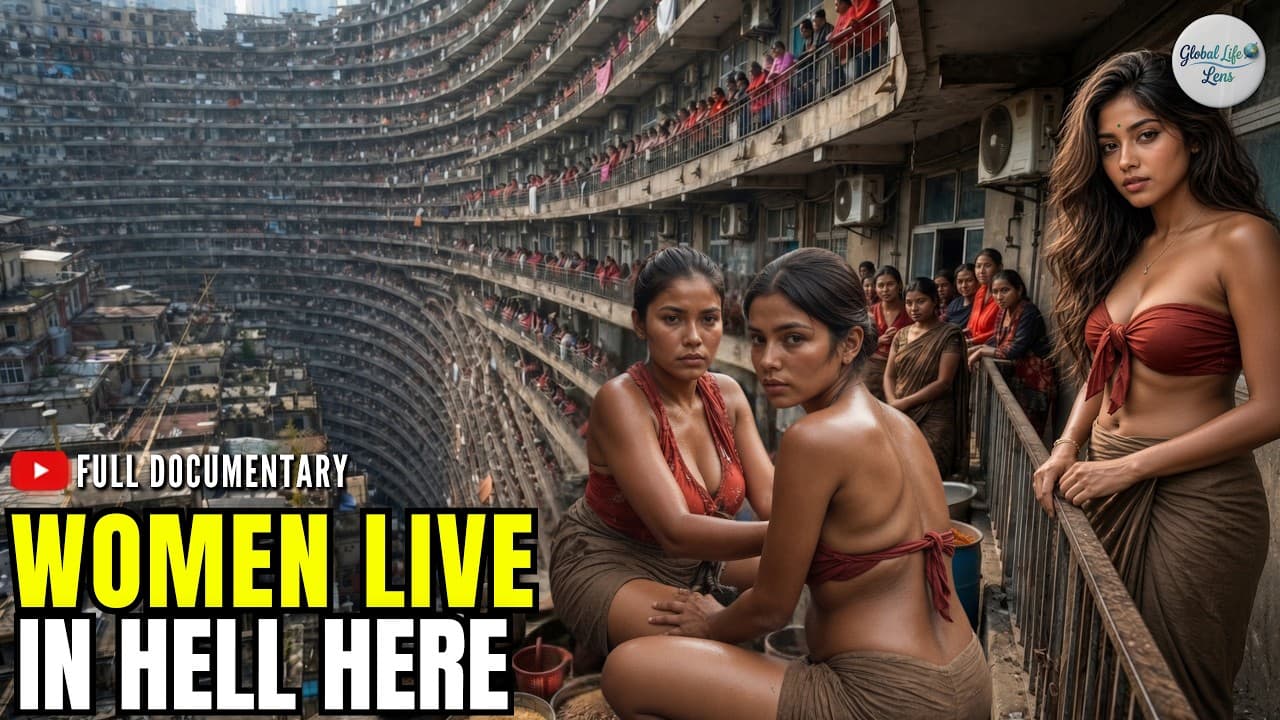
What is life inside the 15 urban hells on Earth?
TL;DR
These cities show how people survive where housing, sanitation, and clean air fail. Rooftop trains, coffin homes, and floating communities reveal resilience, informal economies, and daily risk. While pollution and poverty persist, communities adapt through recycling, informal work, and collective coping strategies.
Transcript
Every year, a train pulls out of Dhaka with more people riding on its roof than inside it. In Hong Kong, tens [music] of thousands sleep in rooms measured in inches, not feet. In [music] Cairo, an entire district of a 100,000 people lives buried [music] inside the city's garbage. In [music] Delhi, a mountain of trash more than 200 f feet high catch... Read More
Key Insights
- Dhaka trains show extreme overcrowding as people ride on roofs and doors due to rail system limits, turning transit into a deadly risk scenario for daily commuters.
- Hong Kong coffin homes reveal a housing crisis where even a full-time job yields only a small, legal living space, exposing the paradox of affordability in one of the world’s most expensive markets.
- Makoko in Lagos demonstrates how people survive on water with homes on stilts, limited infrastructure, and a thriving yet informal economy shaped by necessity and innovation.
- Gazipur landfill near New Delhi illustrates a mountain of waste that fuels methane fires, contaminates groundwater, and forces thousands to live and work amidst toxic conditions.
- Cairo’s garbage city shows a surprisingly efficient recycling economy run by the poorest residents, turning waste into a livelihood despite harsh living conditions and environmental exposure.
- Daravi in Mumbai reveals a dense informal city with hundreds of thousands of residents and hundreds of small workshops, sustaining a large portion of the city’s economy while lacking formal infrastructure.
- The Tower of David in Caracas exemplifies how economic collapse can convert a planned financial hub into the world’s tallest slum, housing thousands within a ruined skyscraper.
- The documentary portrays how urban systems fail the poor yet also how resilience and collective action emerge through recycling, scavenging, and community-led initiatives across different continents.
Install to Summarize YouTube Videos and Get Transcripts
Explore YouTube Video Summarizer or Get YouTube Transcript Extractor
Questions & Answers
Q: How is life organized in Dhaka when the rail system cannot carry all travelers?
In Dhaka, during Eid when millions travel, the system cannot seat everyone, so passengers climb roofs and cling to carriages to move. This overcrowding is tied to aging colonial era rails, rotten wooden sleepers, and signals controlled by humans, all creating a deadly but accepted daily routine for many, especially children.
Q: What housing reality does Hong Kong’s coffin home market reveal?
Hong Kong’s coffin homes show a housing market so expensive that even full-time workers cannot afford ordinary space. Subdivided units, sometimes as small as a coffin, force residents to live with limited privacy, share walls with neighbors, and endure daily noise and damp conditions while paying high rents.
Q: What is Makoko and how do residents survive there?
Makoko is a floating community in Lagos built on water with homes on wooden stilts and no reliable water or power grid. Residents survive through canoe-based daily life, informal markets, and a substantial but informal economy that includes food, water vending, and crafts, reflecting resilience amid precarious infrastructure.
Q: Why is the Gazipur landfill described as a hell and what dangers does it pose?
The Gazipur landfill is a 213-foot-tall mountain of waste where fires burn continuously, releasing toxic smoke and dioxins that drift over nearby homes. Methane risk and groundwater contamination add to the danger, while thousands of families live and work at the base of the unstable slopes.
Q: How does Cairo’s garbage city function as an economy?
Cairo’s garbage city operates as an efficient recycling system run by the poor, who collect trash door to door, process it by hand, and recycle around 80 percent of what they collect. This informal economy sustains a community and supports city services despite extreme living conditions.
Q: What makes Dharavi in Mumbai significant beyond poverty?
Dharavi is significant not only for its density and poverty but also for its large informal economy, home to around a quarter of a million people working in leather, pottery, recycling, and food. It generates substantial revenue and supports a substantial portion of the city’s solid waste processing, illustrating resilience and entrepreneurship.
Q: How did the Tower of David become a slum, and what does that imply?
The Tower of David became a slum after a banking crisis halted construction and the building was abandoned, allowing about 3,000 residents to move in. This illustrates how economic collapse can transform planned urban spaces into informal settlements, highlighting inequality and the persistence of human settlement in adversity.
Q: What overarching theme ties these urban hells together?
The overarching theme is resilience amid systemic failure. Each city demonstrates how people adapt through informal economies, communal support, and innovative housing or waste management practices, revealing both the limits of planning and the ingenuity of communities living at the edge of urban survival.
Summary & Key Takeaways
-
A close look at overcrowding, pollution, and informal economies in cities like Dhaka, Hong Kong, Lagos, Delhi, Cairo, Mumbai, Caracas, and Los Angeles, highlighting how residents endure extreme living conditions and build resilient support networks amid failing urban systems.
-
The film frames poverty not as helplessness but as a complex, dynamic reality where people create work, housing, and social structures under pressure from rapid urban growth and environmental hazards.
-
The documentary blends stark visuals with stories of ingenuity, such as roof travel, coffin homes, floating schools, waste recycling by the poor, and ambitious redevelopment, to explore inequality, resilience, and the human cost of urbanization.
Read in Other Languages (beta)
Share This Summary 📚
Summarize YouTube Videos and Get Video Transcripts with 1-Click
Try YouTube Summary with ChatGPT & Claude or YouTube Transcript Generator
Explore More Summaries from Global Life Lens 📚


Summarize YouTube Videos and Get Video Transcripts with 1-Click
Try YouTube Summary with ChatGPT & Claude or YouTube Transcript Generator