How Do People Adapt to Life in Extreme Nepal?
TL;DR
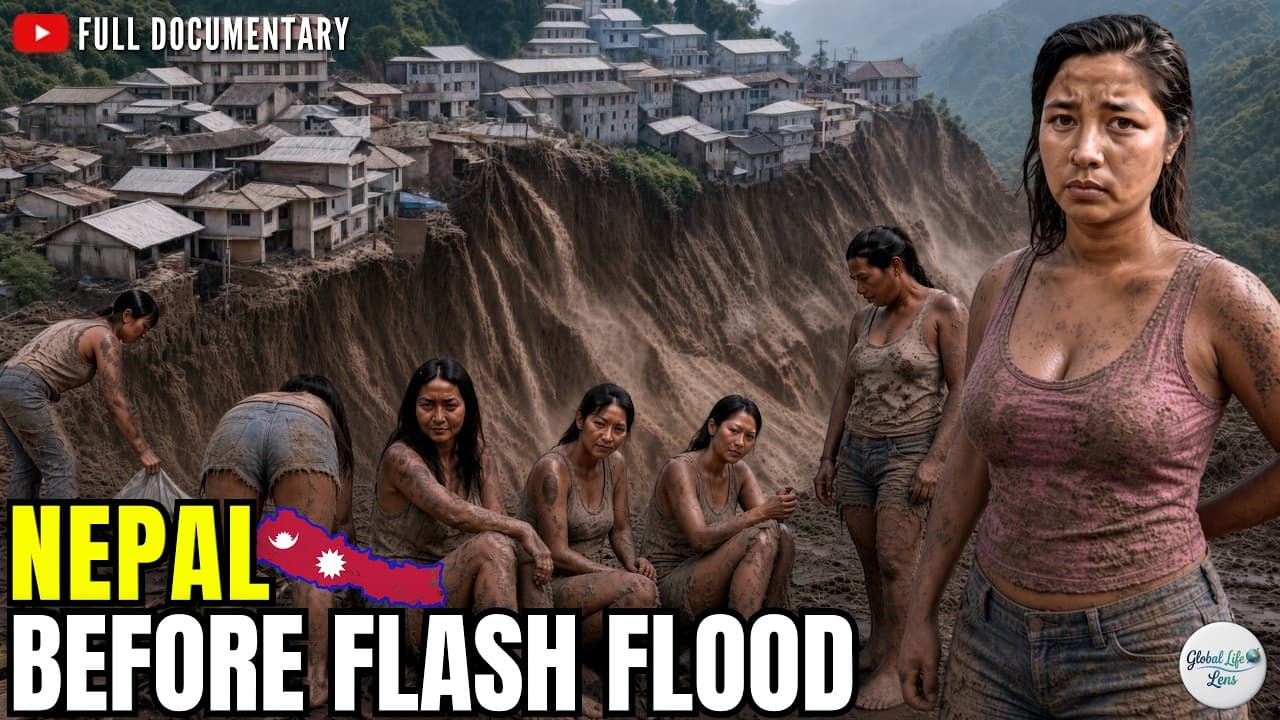
Nepal’s people adapt to extreme geography by developing specialized high-altitude abilities, preserving scarce farmland through unusual household structures, and maintaining religious traditions woven into daily life. The country rises from low tropical plains to Mount Everest within a short northward distance, creating remarkable environmental, cultural, and practical contrasts.
Transcript
Picture a warm green plane where wild rhinos graze at barely [music] 200 f feet above the sea. Now travel less than [music] 125 m and you are standing under Mount Everest, 29,000 ft into the sky. That is Nepal. The land rises faster here than almost anywhere on Earth, and the air grows thinner with every step, where thousands of tons of mud and wat... Read More
Key Insights
- Nepal’s geography spans an extraordinary vertical range, rising from the Terai plain at about 194 feet above sea level to Mount Everest at 29,032 feet within less than 125 miles of northward travel.
- The Kali Gandaki Gorge is described as exceeding 18,000 feet from surrounding peaks to the river. The river existed before the Himalayas rose, cutting downward while geological uplift pushed the mountains upward around its course.
- Mountain travel is safest outside the June-to-September monsoon, when heavy rain can trigger flash floods and landslides. The transcript recommends trekking in October to November or March to May, hiring a licensed guide, monitoring weather, and carrying suitable rescue insurance.
- Sherpas make many Everest ascents possible by fixing ropes, installing ladders across dangerous ice, and carrying expedition loads. The transcript attributes their high-altitude performance to inherited biological adaptations that help their blood use limited oxygen efficiently.
- Fraternal polyandry historically helped some families in remote districts such as Humla and Dolpo avoid dividing scarce farmland. Brothers shared one wife and household, keeping property, animals, labor, and inheritance together under severe agricultural constraints.
- The Kumari is selected from the Shakya clan through physical, astrological, and courage-related criteria known as the 32 signs of perfection. She is worshipped as the living embodiment of the goddess Taleju until puberty ends her sacred role.
- Kathmandu Valley contains seven separate UNESCO World Heritage sites within an area described as roughly nine miles across. Royal squares, temples, stupas, shrines, carvings, shops, and ordinary homes coexist within this unusually concentrated living heritage landscape.
- Religious practice is visible in Nepalese public life, including open-air cremations beside the Bagmati River at Pashupatinath Temple. Families regard these ceremonies as a natural and sacred part of life rather than something that must remain hidden.
Install to Summarize YouTube Videos and Get Transcripts
Explore YouTube Video Summarizer or Get YouTube Transcript Extractor
Questions & Answers
Q: How does Nepal’s geography change across the country?
Nepal changes from a hot, flat southern plain to the world’s highest mountains over a remarkably short distance. The Terai sits at about 194 feet above sea level, while Mount Everest reaches 29,032 feet. Traveling less than 125 miles north can therefore take someone from wildlife habitat and tropical conditions to thin air, glaciers, and Himalayan peaks.
Q: When is the best time to trek in Nepal?
The transcript recommends trekking during autumn, from October to November, or during spring, from March to May, when skies are clearer. Travelers should avoid the June-to-September monsoon because intense rain can produce flash floods and landslides along mountain roads. It also advises hiring a licensed guide, checking local weather closely, and obtaining insurance covering emergency high-altitude helicopter rescue.
Q: Why are Sherpas especially capable at high altitude?
Sherpas have lived at extreme altitude for many generations, and the transcript says their bodies developed inherited adaptations for that environment. Their blood carries oxygen more efficiently, allowing them to perform demanding work where outsiders may struggle to breathe. On Everest expeditions, Sherpas commonly fix ropes, place ladders across ice, carry supplies, and prepare routes through dangerous sections before other climbers arrive.
Q: Why do some brothers in Nepal share one wife?
Fraternal polyandry developed in remote northwestern districts where usable farmland is extremely scarce. If every brother established a separate household and divided the family field, each parcel could eventually become too small to support anyone. Sharing one wife allowed brothers to preserve a single household containing the land, animals, labor, property, and collective inheritance. The practice is becoming rarer as roads, schools, and urban employment expand.
Q: What is Nepal’s Kumari living goddess tradition?
The Kumari is a young girl regarded as the living body of the goddess Taleju rather than merely a religious symbol. A candidate from the Shakya clan is evaluated through 32 signs of perfection, a favorable horoscope, and tests of courage. Once selected, she lives in the Kumari house, appears publicly during festivals, and is carried so her feet do not touch the ground.
Q: When does a Kumari stop being a living goddess?
A Kumari’s sacred role ends when she reaches puberty and experiences her first menstrual bleeding. According to the belief described in the transcript, the goddess then leaves her body, and the former Kumari returns to ordinary life. Until that transition, she resides in the goddess house and may appear during festivals, including a three-day procession in which a large chariot carries her through the streets.
Q: What role do Sherpas play in Everest expeditions?
Sherpas perform essential preparation and support work that enables many climbers to reach Everest’s summit. They fix ropes, position ladders across unstable ice, carry heavy loads, and repeatedly cross some of the route’s most dangerous areas. The transcript states that about 96 percent of people who have reached the summit did not do so alone, emphasizing that a Sherpa commonly built the path behind the climber’s achievement.
Q: How is religion integrated into daily life in Nepal?
Religion appears throughout public and domestic life in the account. A sacred mountain remains officially closed to climbers, a selected girl is worshipped as the Kumari, and cremations occur openly beside the Bagmati River at Pashupatinath Temple. The cow is the protected national animal and can wander through city streets. Kathmandu’s temples, shrines, stupas, shops, homes, and ordinary routines also occupy the same living urban landscape.
Summary & Key Takeaways
-
Nepal’s terrain rises from the low, hot Terai plain to the summit of Mount Everest within less than 125 miles. Eight of the world’s 14 tallest mountains crowd its border, while deep gorges, dangerous mountain roads, monsoon floods, landslides, and high-altitude conditions make travel and ordinary life unusually demanding.
-
Sherpas perform much of the dangerous work supporting Everest expeditions, including fixing ropes, placing ladders across ice, and carrying loads. Their long residence at extreme altitude has produced inherited adaptations associated with efficient oxygen use. Climbers such as Kami Rita Sherpa and Nima Rinji Sherpa demonstrate this community’s extraordinary mountaineering experience.
-
Nepal’s cultural practices reflect both environmental pressures and deeply rooted religious traditions. Fraternal polyandry historically kept scarce mountain farmland intact, while Kathmandu’s Kumari tradition recognizes a carefully selected girl as a living goddess. Sacred mountains, open-air cremations, protected cows, and densely concentrated heritage sites further connect belief with everyday life.
Read in Other Languages (beta)
Share This Summary 📚
Summarize YouTube Videos and Get Video Transcripts with 1-Click
Try YouTube Summary with ChatGPT & Claude or YouTube Transcript Generator
Explore More Summaries from Global Life Lens 📚




Summarize YouTube Videos and Get Video Transcripts with 1-Click
Try YouTube Summary with ChatGPT & Claude or YouTube Transcript Generator