How Do People Work in the World’s Most Dangerous Markets
TL;DR
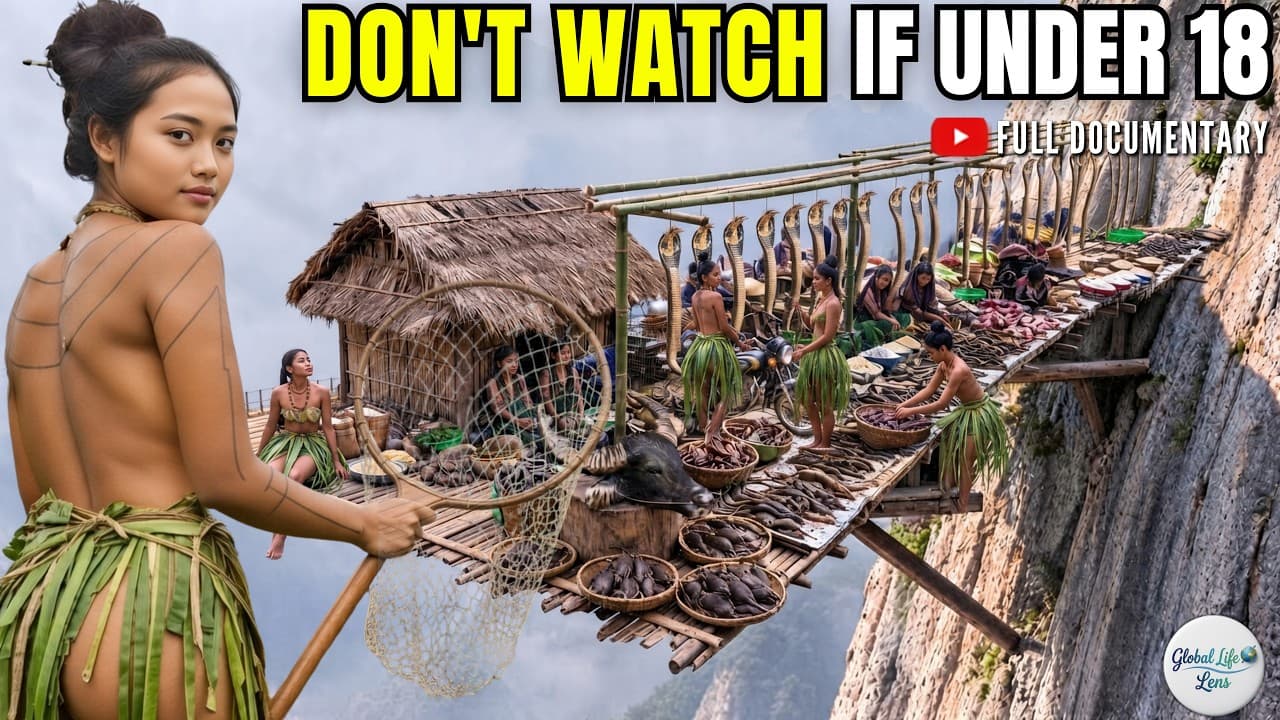
These markets push vendors to risk life for income, showing how people adapt to extreme conditions. From a moving train selling fish in Thailand to a cliff side shop in China and high altitude bazaars in Nepal and Bolivia, the video reveals the prices paid for survival and livelihood.
Transcript
Picture a train rolling through a fish market. Steel passing inches above the baskets. Eight times a day in Mlong, Thailand, vendors fold their awnings, slide their trays back, and let the train glide through the spot where they just stood. Then the market unfolds. This is the first of 15 of the most dangerous markets on Earth, where people defy de... Read More
Key Insights
- The Mlong railway market in Thailand unfolds as a fish market that moves with a passing train, requiring vendors to fold awnings and slide trays while inches from rolling carriages.
- The Shiniuzhai cliff shop in China is bolted to a rock face 394 ft above ground, accessed by a 90 minute climb that ends at a simple drink on a ledge, illustrating a product driven by nerve and effort.
- Namche Bazaar in Nepal sits high at 11,290 ft, serving as an acclimatization stop for climbers and a market supplying goods brought in by porters and yaks, underscoring altitude as a key trade factor.
- Skun Spider Market in Cambodia sells fried tarantulas along a highway, born from famine era needs and now sustaining a small family industry despite broader habitat loss and access challenges.
- Qashqar market in China acts as a centuries old livestock hub on Silk Road crossroads, where buyers inspect teeth and legs and animals are handled with minimal safety gear, showing traditional trading vigor persisted through time.
- Elto in Bolivia is a massive plateau market at around 13,000 ft where air thinness dominates daily commerce, with women traders standing long hours in wind and cold to sustain a large open air market.
- The witch market in La Paz region sells dried llama fetuses and herbal offerings, reflecting indigenous beliefs where offerings stabilize a home’s foundation and reflect cultural economics.
- The narrative links danger to livelihood by showing that markets adapt by preserving route, ritual, and resource access even when physical risk is high, emphasizing human endurance and community reliance.
Install to Summarize YouTube Videos and Get Transcripts
Explore YouTube Video Summarizer or Get YouTube Transcript Extractor
Questions & Answers
Q: A real search query question about the video (e.g. 'How to...', 'What is...', 'Why does...', 'When should...'). Question 1
How do the world’s most dangerous markets function and why do communities keep trading there despite constant risk. The video explains recurring patterns such as moving markets on rails, cliff side shops, high altitude bazaars, and traditional livestock exchanges that persist because they meet local needs, preserve cultural practices, and sustain families through dangerous work.
Q: Question 2
What is the Mlong railway market and how does it operate. It is a fish market laid out under a moving train in Thailand where vendors fold awnings and slide trays as the train passes at walking pace, then the market reopens immediately for shoppers, illustrating a daily ritual that blends danger with routine commerce.
Q: Question 3
What makes Shiniuzhai cliff shop unique and what does the climb signify. The shop is bolted to a rock face 394 feet up, reached by a 90 minute climb using a steel walkway and cables, and the reward is a cold drink, highlighting how product access is tied to nerve, effort, and controlled risk.
Q: Question 4
Why is Namche Bazaar important for climbers and traders alike. At 11,290 ft, it serves as an acclimatization stop where goods arrive by porters and yaks, and the reduced oxygen creates a challenging environment that shapes purchasing and the types of goods sold to support expeditions.
Q: Question 5
How did the Skun Spider Market originate and what sustains it today. Spiders were a famine era protein source, now turned into a small scale industry grown from rural demand, though habitat loss and price increases threaten supply and the livelihoods built around it.
Q: Question 6
What role does Qashqar play in Silk Road trade and how does it operate today. It remains a centuries old livestock market where buyers inspect animals, teeth, and legs amid crowded pens, continuing a tradition of hands on bargaining in a bustling, potentially unsafe environment.
Q: Question 7
What is the Imara market in Elto and what are the risks beyond the market stalls. The plateau market sits at high altitude with thin air, cold winds, and long hours of business, where traders and buyers navigate physical, physiological, and environmental pressures to keep a regional supply chain alive.
Q: Question 8
What themes tie the fifteen markets together and what do they reveal about human endurance. Across rail tracks, cliffs, high passes, and crowded plains, risk is transformed into economy, ritual, and identity, showing how communities persist by adapting trade routes, selling familiar goods, and maintaining cultural practices under threat.
Summary & Key Takeaways
-
The video surveys fifteen markets where traders operate under life threatening conditions, illustrating the human drive to earn a living despite danger. It connects risk with culture, economy, and tradition across multiple countries.
-
Viewers witness remarkable setups such as a market on rails, cliffside shops, and high altitude bazaars, each highlighting how geography shapes trade and resilience in local communities.
-
The narrative emphasizes that danger is embedded in daily life and that communities persist by adapting practices, routes, and livelihoods to extreme surroundings.
Read in Other Languages (beta)
Share This Summary 📚
Summarize YouTube Videos and Get Video Transcripts with 1-Click
Try YouTube Summary with ChatGPT & Claude or YouTube Transcript Generator
Explore More Summaries from Global Life Lens 📚





Summarize YouTube Videos and Get Video Transcripts with 1-Click
Try YouTube Summary with ChatGPT & Claude or YouTube Transcript Generator