What is life in Cambodia really like today
TL;DR
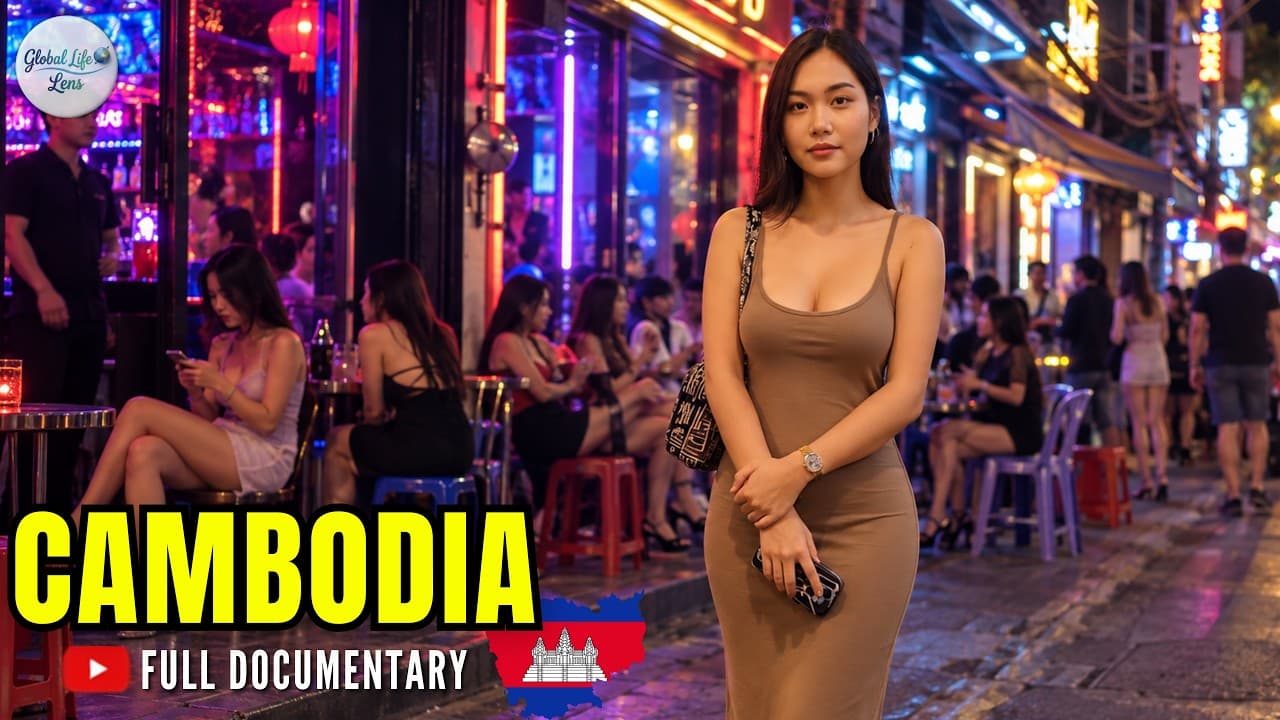
Cambodia blends deep tradition with modern struggles, especially for women who shape the economy and daily life. The video visits intimate scenes from rural huts, floating villages, crowded markets, and street food to reveal resilience rooted in history and community, while showing how the country rebuilds after tragedy.
Transcript
In one Cambodian [music] village, a family builds a small hut beside their house so their teenage daughter can choose her own husband. A short [music] drive from the capital, other families raise their children in the middle of a graveyard. sleeping [music] between the tombs. There is a town where people fry spiders [music] the size of your hand an... Read More
Key Insights
- The video presents a country shaped by a deep wound, yet defined by warmth and generosity.
- Women play a central role in both family life and the national economy, illustrating resilience and leadership.
- Arranged marriage traditions are shown in a modern light where choice remains central for the woman.
- Floating communities on Tonlé Sap demonstrate how people adapt to seasonal changes and preserve livelihoods.
- Market life emphasizes negotiation, shared meals, and social bonds that bind communities.
- The scene of tarantula snacks and other foods links memory of famine to present cultural identity.
- A dual currency system reveals how history continues to influence everyday commerce and trust.
- The narrative contrasts beauty and strife to show Cambodia’s complexity beyond tourist stereotypes.
Install to Summarize YouTube Videos and Get Transcripts
Explore YouTube Video Summarizer or Get YouTube Transcript Extractor
Questions & Answers
Q: A real search query question about the video (e.g. 'How to...', 'What is...', 'Why does...', 'When should...'). Question 1
What is life in Cambodia really like today, particularly for women and families? The video shows women as a driving force in the economy, forming the backbone of garment industries and providing essential support to families through remittances. It also highlights intimate living arrangements, traditional marriage choices, and the influence of Buddhism on daily life, illustrating a country that balances hardship with warmth and resilience.
Q: Question 2
How do traditional marriage practices appear in Cambodia according to the video? The film presents a practice where a young woman can invite suitors and choose her partner, a system that allows her to decide with community support rather than parental pressure. This choice is framed as progressive and historically rooted, suggesting a protective approach to avoid unhappy marriages.
Q: Question 3
What role does the Tonlé Sap lake play in Cambodian life as described in the video? The lake is central to livelihoods, providing fish and food for the nation. Communities adapt to seasonal changes, with floating villages that rise and fall with the water. This dynamic demonstrates how geography and ecology shape social structures and sustenance.
Q: Question 4
Why do Cambodians eat unusual foods like fried spiders and rice field rats in the video? The foods are linked to historical famine periods and resilience. What started as survival meals evolved into cultural heritage, reflecting memory and identity rather than mere novelty for locals and visitors alike.
Q: Question 5
How does currency circulation reveal Cambodia’s modern history in the video? The snippet explains a dual currency reality where large transactions use a foreign currency, while smaller ones use the local currency. This monetary mix echoes historical events and the country’s recovery process, showing how trust and adaptation shape everyday commerce.
Q: Question 6
What does the video suggest about urban life and daily markets in Cambodia? It depicts crowded sidewalks, busy food stalls, and a pace of life where strangers share meals and barter, illustrating a street-level culture that emphasizes hospitality, negotiation, and social connection as everyday survival and community building.
Q: Question 7
What message does the video convey about Cambodia’s past and present? It presents a history marked by dark chapters yet highlights enduring warmth and generosity. The narrative uses personal stories and economic realities to show how people rebuild, preserve heritage, and sustain a hopeful sense of identity despite challenges.
Q: Question 8
How does the video frame the viewer’s understanding of Cambodian culture beyond tourism stereotypes? It invites viewers to see ordinary life—family choices, factory work, street life, and floating communities—while acknowledging a traumatic history. This creates a more nuanced portrait of a resilient society with rich traditions and everyday dignity.
Summary & Key Takeaways
-
In rural Cambodia, a young woman can choose her own partner, a rare practice that prioritizes personal agency and community support.
-
The economy is driven in part by women, who make up a large share of the workforce and send money home to sustain families.
-
Everyday life unfolds across markets, sidewalks, and the Tonlé Sap lake, where water rhythms dictate livelihoods and social life.
Read in Other Languages (beta)
Share This Summary 📚
Summarize YouTube Videos and Get Video Transcripts with 1-Click
Try YouTube Summary with ChatGPT & Claude or YouTube Transcript Generator
Explore More Summaries from Global Life Lens 📚

Summarize YouTube Videos and Get Video Transcripts with 1-Click
Try YouTube Summary with ChatGPT & Claude or YouTube Transcript Generator