How do Pakistan slums build their own sewers
TL;DR
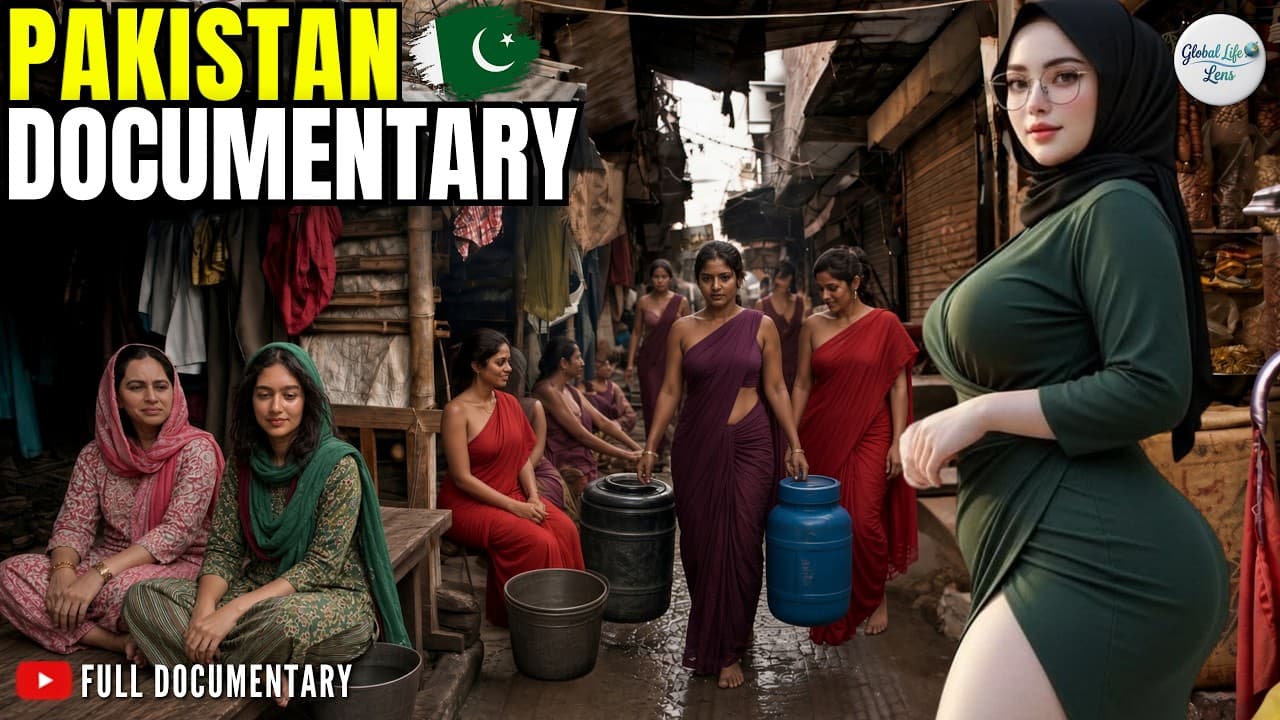
Orangi Town residents laid their own underground drains after the state failed to provide sewerage, showing a methodical, community driven solution. The video explains how local lanes survey and design their lines under the leadership of Perween Rahman, and it compares wages, social norms, and laws that shape life in Pakistan.
Transcript
There is a settlement in this country [music] where 2.4 million people live. And the government never built them a sewer. So they dug [music] one themselves by hand, lane by lane. 250 mi north, a [music] few thousand people crush grapes into wine in a nation where alcohol is restricted by law. In the mountains, a woman chooses [music] her own husba... Read More
Key Insights
- Orangi Town residents dug and paid for most underground drains themselves, vehicle by vehicle, showing a community led solution to lack of public infrastructure.
- The method used by residents involved each lane surveying and designing its own sewer line, then sharing the cost, a system taught by architect Perween Rahman.
- Women’s labor participation is around 22.6 percent, significantly lower than global averages, illustrating gendered divisions in work and public space.
- Mercury in skin whitening creams is a health concern reported in Pakistan, reflecting beauty standards that can harm public health.
- The Transgender Persons Protection of Rights Act of 2018 allows self declaration of gender on official records, indicating a step toward legal recognition despite challenges.
- Laws around keeping a lion changed after incidents, showing how cultural practices are regulated to address safety and urban living standards.
- The Kalash community maintains distinct cultural practices, including choosing their own husbands, highlighting regional diversity within Pakistan.
- Wage data shows a median monthly wage around 33,600 rupees, making perceptions of cheap prices misleading when compared to actual living costs.
Install to Summarize YouTube Videos and Get Transcripts
Explore YouTube Video Summarizer or Get YouTube Transcript Extractor
Questions & Answers
Q: What is the core example of community driven infrastructure in Pakistan shown in the video?
The core example is Orangi Town where residents dug their own underground drains because the state did not provide sewer services. This was not chaotic; it followed a method where mostly every lane surveyed itself, designed its line, and shared the cost. Aimed at improving sanitation and living conditions, this effort demonstrates how communities can address critical infrastructure gaps through organization, collaboration, and local leadership.
Q: Who was Perween Rahman and what was her impact according to the video?
Perween Rahman was an architect who was handed the problem of sewer construction in Orangi Town in 1982. She taught each lane to survey and design its own sewer line, effectively guiding residents to implement a self funded, self managed drainage system. Her approach left a lasting legacy on how communities can plan and execute essential urban utilities when authorities fail to provide them.
Q: How does the video describe gender dynamics in the Pakistani labor market?
The video notes that women’s participation in the labor force is around 22.6 percent, significantly lower than the world average of about 53 percent. It explains that the space for women is limited by cultural and structural factors, pushing many into agriculture or informal work. This reflects broader gendered barriers to mobility and formal employment.
Q: What does the video say about the Transgender Persons Protection of Rights Act?
The video describes the 2018 Transgender Persons Protection of Rights Act as allowing a person to register their gender without a medical board and to change it on identity records with protections in inheritance and anti discrimination. It also notes that parts of the act were struck down in 2023 by a federal court, indicating ongoing legal challenges and debates.
Q: Why did keeping a lion become regulated in Pakistan, according to the film?
The film explains that keeping a big cat was a status symbol; however, after a modern incident in which a pet lion escaped and caused injuries, Pakistan introduced new rules. A license became required, residential keeping was banned, and facilities must be on at least 10 acres. This shows how extreme practices are addressed through regulatory action.
Q: What is the role of the Kalash women as described in the video?
The Kalash women are introduced as part of a community where women can choose their own husbands and are central to festivals. The film uses their example to show how different cultural norms can coexist within the same country, illustrating regional diversity and the complexity of gender norms across Pakistan.
Q: How does the video frame the issue of prices and wages in Pakistan?
The video explains that while truck painting can cost thousands of dollars, monthly wages are modest, with the median wage around 33,600 rupees. This creates a mismatch between what outsiders see as cheap prices and the real purchasing power of local workers, highlighting how cost of living affects perceptions of affordability.
Q: What does the video say about water, sanitation, and disease in the broader Pakistan context?
The video argues that the real question about poverty is not the character of the people but the systems for waste, drainage, and clean water. It emphasizes that life in the slums and polluted areas reveals structural gaps in infrastructure, and that long term health and life expectancy are tied to access to basic sanitation and clean air.
Summary & Key Takeaways
-
Orangi Town is described as a large informal settlement where residents built the sewer network themselves after government inaction, illustrating a bottom up approach to urban infrastructure.
-
The film contrasts harsh realities with surprising facts such as a progressive transgender rights act and traditional customs that persist, highlighting the complex social landscape of Pakistan.
-
The documentary links poverty measures, wage levels, and costs of living to the decisions people make in crowded cities, showing how value is perceived and spent in a shifting economy.
Read in Other Languages (beta)
Share This Summary 📚
Summarize YouTube Videos and Get Video Transcripts with 1-Click
Try YouTube Summary with ChatGPT & Claude or YouTube Transcript Generator
Explore More Summaries from Global Life Lens 📚
Summarize YouTube Videos and Get Video Transcripts with 1-Click
Try YouTube Summary with ChatGPT & Claude or YouTube Transcript Generator