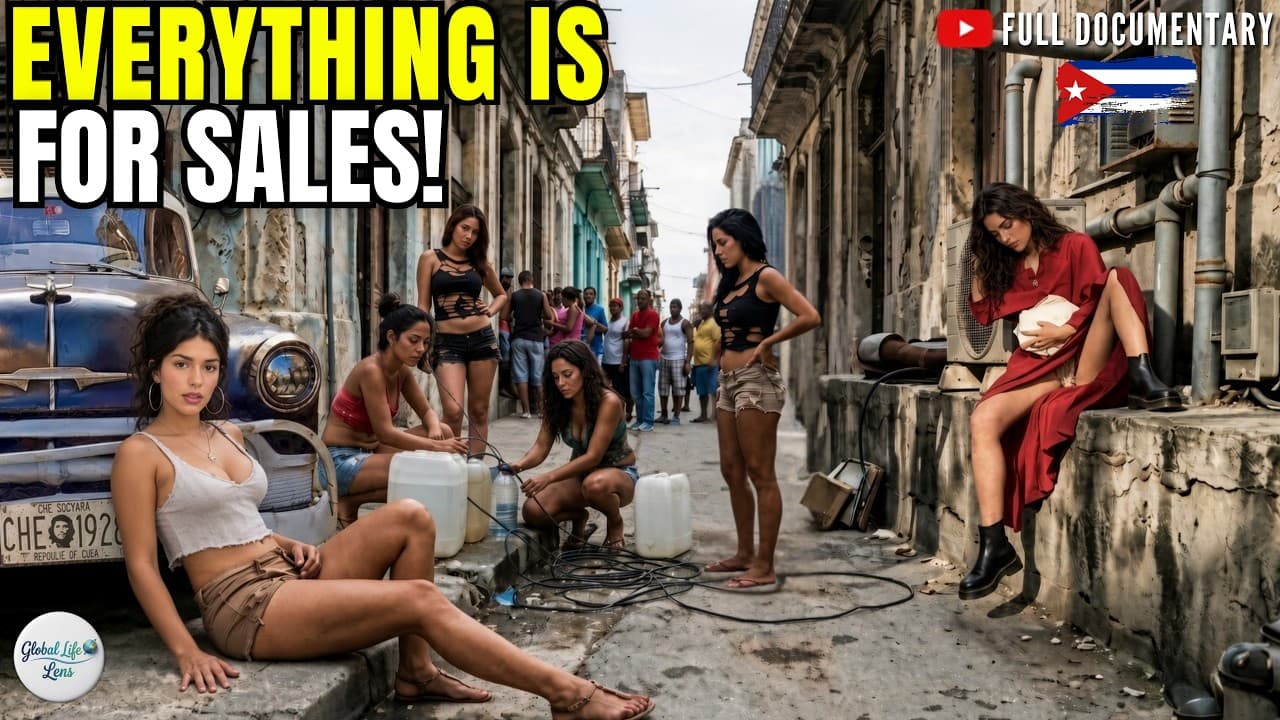
How do Cubans survive on a $5 monthly salary
TL;DR
Cubans live on wages that translate to roughly five dollars after currency differences, amid regular power cuts, fuel shortages, and empty shelves. The video explains how people cope by relying on rationing, black markets, and parallel economies, while tourists access a dollar-based system. Daily life adapts around scarce resources and unreliable services.
Transcript
In Cuba, a full month of work can pay as little as $5, less than a single coffee in New York. That number is real. As of 2026, [music] and it is only where the story begins. When night falls on Havana, the capital of 11 million people goes [music] dark. The street lights die. Homes lose power for hours. The only glow left on the [music] street come... Read More
Key Insights
- Cuba uses an official salary system that does not reflect real purchasing power due to multiple exchange rates and a thriving black market.
- Power outages occur frequently because aging plants lack sufficient fuel, leaving neighborhoods without electricity for hours or days.
- Water shortages follow electricity cuts because pumps need power, so communities rely on stored water and trucks with unpredictable schedules.
- Fuel shortages are so severe that legally refueling requires long waits on government apps, while black market trading fills gaps at high prices.
- The internet is unaffordable and capped, pushing students and others to use VPNs or offline networks, like El Pakete, to access information.
- A currency gap causes wages to look higher on paper while actual value remains low, leading to extreme income compression when converted by real rates.
- Rations through Libertad do not always match available stock, forcing people to buy from black markets or rely on relatives abroad for essentials.
- A tourism economy creates a parallel, higher-dollar market that sustains some sectors while most Cubans cannot access those goods.
Install to Summarize YouTube Videos and Get Transcripts
Explore YouTube Video Summarizer or Get YouTube Transcript Extractor
Questions & Answers
Q: How does Cuba’s official salary compare to its real purchasing power?
Cuba’s official salary is described as around $16 a month in 2026, with pensioners possibly closer to five when adjusted for what the money is really worth. The video explains that a large currency gap and a separate rate for public and black markets mean cash from wages buys far less in practice. This discrepancy creates a situation where the nominal salary hides its reduced value once you account for inflation, currency exchange, and the price of basic goods.
Q: What causes regular power outages in Havana according to the video?
The power outages are caused by an aging, oil-burning grid and a lack of sufficient fuel to run plants. As shipments of fuel shrink, the plants cannot operate at full capacity, leading to scheduled outages where electricity is available only for a few hours. This systemic issue is described as the root of the blackout cycles that put homes, water pumps, and services offline.
Q: How does the internet access differ for Cubans and tourists?
Internet access for Cubans is limited by high data prices and monthly caps, making online access expensive and unreliable. In contrast, tourists can access a full, dollar-based internet experience, which underscores a significant economic divide. When data runs out, Cubans turn to VPNs and offline sharing methods to maintain connectivity and access information.
Q: What role does the Libertad ration book play in daily life?
The Libertad ration book is supposed to provide staples like rice, sugar, oil, and bread at affordable prices, but the video shows that shelves are often bare and the quantities are reduced. For many families, even these rationed basics are insufficient, leading to reliance on the black market and personal networks to secure food and medicines.
Q: Why is there a separate luxury economy in tourist areas?
Tourist districts operate with foreign currency and premium prices, creating a luxury economy that locals rarely access. Hotels, restaurants, and services in these zones are well stocked and heavily priced in dollars, while nearby residents struggle with limited supplies and a much lower standard of living. This juxtaposition highlights unequal access to resources.
Q: How do people cope with fuel shortages for everyday transport?
With fuel scarce, transportation shifts to horse-drawn carts and three-wheeled taxis, while new car purchases are nearly impossible due to sanctions, taxes, and duties. The video explains that people adapt by using whatever fuel is available and by relying on informal networks for mobility, illustrating how daily life is reorganized around limited energy resources.
Q: What is El Pakete and how does it help people?
El Pakete refers to a roughly one terabyte offline package of movies, news, and apps that is passed hand-to-hand, effectively creating an offline internet for communities. This system helps Cubans bypass limited official internet access, enabling information sharing and entertainment in the absence of a reliable online connection.
Q: What is the overall contrast the video highlights between different parts of Cuban society?
The video contrasts a parallel luxury world catering to tourists with a much harsher reality for the local population. In tourist areas, electricity, food, and services are abundant due to dollar-based spending, while everyday Cubans face outages, shortages, and a devalued currency. This contrast emphasizes the unequal access to basic goods and services within the same country.
Summary & Key Takeaways
-
The video shows that Cuba relies on a dual economy with official peso wages and higher black market rates, making real income far lower than it appears on paper. It highlights how electricity, water, and fuel shortages shape daily routines and resilience.
-
Rationing through the Libertad system covers basic goods, but shelves are often empty and medicines scarce, forcing people to seek alternatives and rely on informal networks and community support.
-
The contrast between tourist zones and local life underscores a wider economic divide, where foreign currency flows fund a separate, privileged segment while ordinary Cubans struggle to meet essential needs.
Read in Other Languages (beta)
Share This Summary 📚
Summarize YouTube Videos and Get Video Transcripts with 1-Click
Try YouTube Summary with ChatGPT & Claude or YouTube Transcript Generator
Explore More Summaries from Global Life Lens 📚


Summarize YouTube Videos and Get Video Transcripts with 1-Click
Try YouTube Summary with ChatGPT & Claude or YouTube Transcript Generator