How to Apply New Claude Code Rules for Efficiency
TL;DR
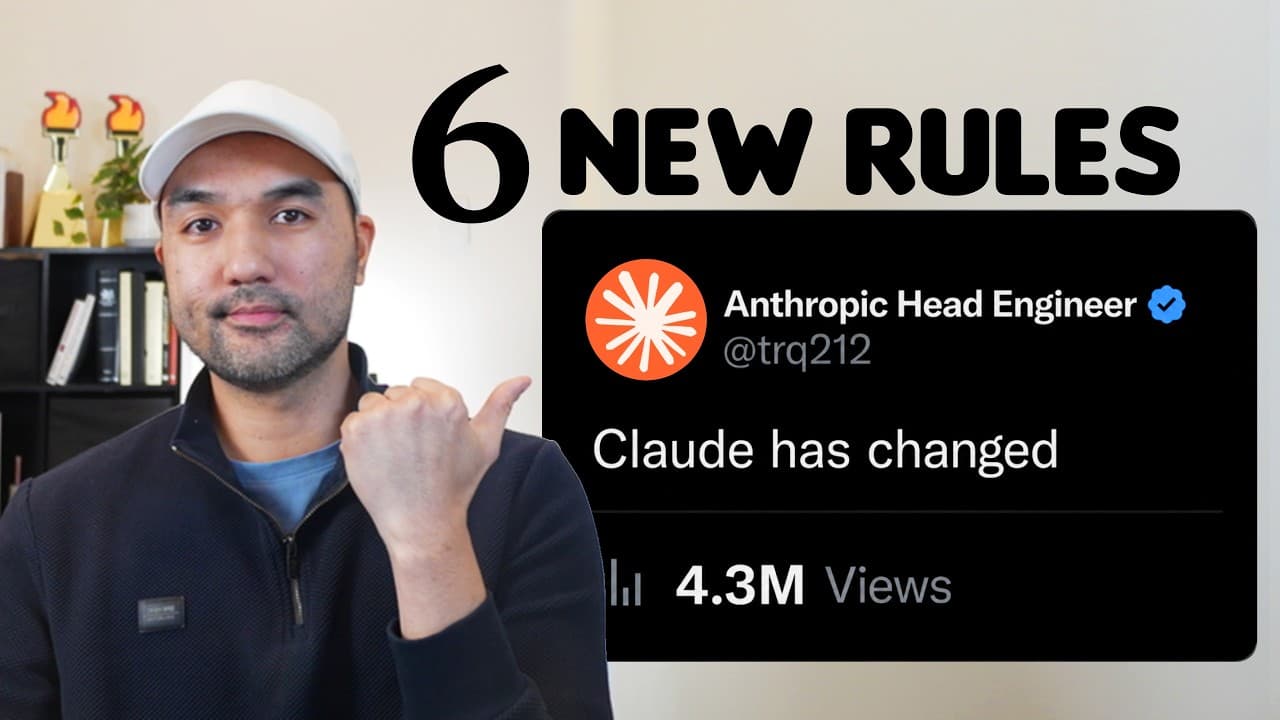
Anthropic's new rules for Claude code optimize AI agent performance by changing context engineering practices. Key updates include reducing system prompts, allowing AI judgment, and using design interfaces over examples. These changes enhance efficiency, reduce costs, and improve model intelligence, enabling better AI-driven outcomes.
Transcript
So one of the lead engineers at Anthropic just published this breakthrough article on X. It now has 4 million views [music] and in it he outlines the important changes that they've made to Claude code, which if you pay attention to can make your setup faster, can make your systems cost less, and just overall let you upgrade your agentic operating s... Read More
Key Insights
- Anthropic introduced new rules for Claude code, focusing on optimizing context engineering to enhance AI performance.
- Reducing system prompts by 80% in Claude code models like Opus 5 and Fable 5 showed no performance loss, highlighting improved model intelligence.
- Allowing AI judgment instead of strict rules can lead to better outcomes, especially in creative tasks such as design.
- Using design interfaces rather than specific examples provides more flexibility and creativity in AI outputs.
- Progressive disclosure, loading context as needed, improves efficiency and reduces token usage compared to providing all context upfront.
- Simplifying tool descriptions and avoiding repetition enhances model understanding and reduces token costs.
- Automatic memory in Claude code now saves relevant information, reducing the need for manual memory updates.
- The transition from simple markdown files to richer HTML references allows for more complex and visual representations of data.
Install to Summarize YouTube Videos and Get Transcripts
Explore YouTube Video Summarizer or Get YouTube Transcript Extractor
Questions & Answers
Q: How can reducing system prompts improve AI performance?
Reducing system prompts in AI models like Claude code can improve performance by allowing the AI to use its enhanced judgment and intelligence. This change reduces unnecessary constraints and enables the AI to make better decisions autonomously, leading to more efficient and effective task execution without compromising on performance.
Q: What is progressive disclosure in AI context engineering?
Progressive disclosure in AI context engineering refers to the practice of loading relevant context only when needed, rather than providing all context upfront. This approach improves efficiency by reducing the initial token usage and allows the AI to access the necessary information at the right time, enhancing performance and reducing costs.
Q: Why is allowing AI judgment beneficial in creative tasks?
Allowing AI judgment in creative tasks is beneficial because it enables the AI to explore a wider range of possibilities and produce more innovative solutions. By not restricting the AI with strict rules, it can use its advanced capabilities to generate unique and creative outputs, particularly in areas like design and artistic projects.
Q: How do design interfaces enhance AI outputs?
Design interfaces enhance AI outputs by providing a structured framework that guides the AI in creating consistent and high-quality results. Instead of relying on specific examples, design interfaces offer a set of guidelines that allow the AI to maintain creativity while adhering to certain standards, resulting in more coherent and visually appealing outputs.
Q: What are the benefits of using richer HTML references over markdown files?
Richer HTML references offer several benefits over markdown files, including the ability to represent data more visually and complexly. HTML allows for interactive and engaging presentations of information, making it easier for users and AI to understand and work with the data. This enhances communication and comprehension, particularly for visual and design-related tasks.
Q: How does automatic memory work in Claude code?
Automatic memory in Claude code functions by saving relevant information and context automatically during interactions with the AI. This reduces the need for manual updates to the AI's memory, ensuring that important data is retained and accessible for future sessions, thereby enhancing continuity and efficiency in AI operations.
Q: What is the significance of simplifying tool descriptions in AI?
Simplifying tool descriptions in AI is significant because it reduces redundancy and improves the model's understanding of the tools. By avoiding repetition and focusing on clear, concise descriptions, the AI can more effectively utilize the tools, leading to better performance and reduced token costs, as the AI processes information more efficiently.
Q: Why is it important to transition from simple specs to richer references in AI?
Transitioning from simple specs to richer references in AI is important because it allows for more detailed and nuanced representations of data. Richer references, like HTML, enable the AI to access and interpret complex information more effectively, leading to improved decision-making and output quality, particularly in tasks requiring detailed analysis or visual presentation.
Summary & Key Takeaways
-
Anthropic's new rules for Claude code focus on optimizing context engineering, allowing AI judgment, and using design interfaces over examples. These changes enhance efficiency, reduce costs, and improve model intelligence, enabling better AI-driven outcomes.
-
Reducing system prompts by 80% in Claude code models like Opus 5 and Fable 5 showed no performance loss, highlighting improved model intelligence. Progressive disclosure improves efficiency by loading context as needed, reducing token usage.
-
The transition from simple markdown files to richer HTML references allows for more complex and visual representations of data. Automatic memory in Claude code now saves relevant information, reducing the need for manual memory updates.
Read in Other Languages (beta)
Share This Summary 📚
Summarize YouTube Videos and Get Video Transcripts with 1-Click
Try YouTube Summary with ChatGPT & Claude or YouTube Transcript Generator
Explore More Summaries from Jay E | RoboNuggets 📚





Summarize YouTube Videos and Get Video Transcripts with 1-Click
Try YouTube Summary with ChatGPT & Claude or YouTube Transcript Generator