How to Automate Video Production with GPT6 Astra
TL;DR
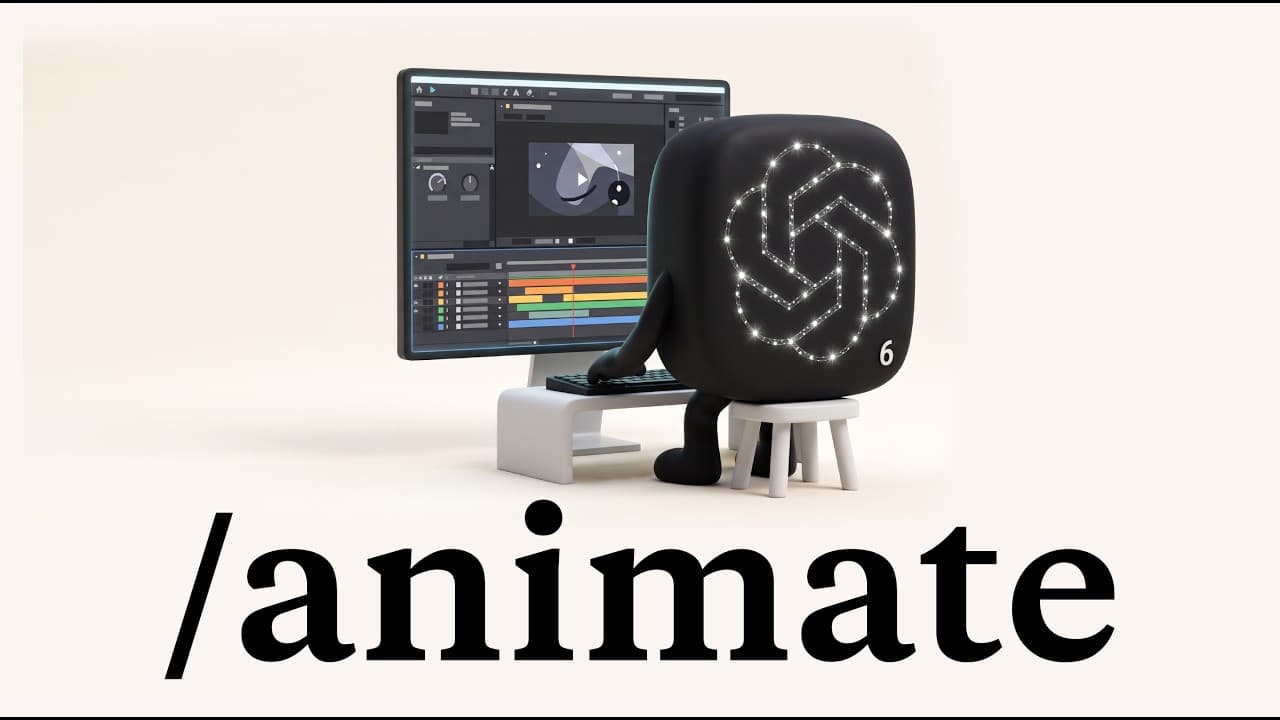
GPT6 Astra's /animate skill automates video production by transforming raw footage into polished videos using AI tools like Assembly AI and Hyperframes. The process involves creating and refining skills for better output, using design systems, feedback, and an element library to enhance video quality.
Transcript
So, here I have a raw recording of myself just reading a script for eight Instagram reels. And over at the chat GPT app, I just asked GPT6 Astra to use this new/animate skill to create eight vertical videos from this raw footage. And these are some examples of what I got. This free AI tool clones any website from a single screenshot. It's called Sc... Read More
Key Insights
- GPT6 Astra's /animate skill automates video editing from raw footage to finished videos.
- Refined skills produce higher quality video outputs compared to unrefined skills.
- Assembly AI transcribes audio efficiently, aiding in video editing.
- Hyperframes is a tool that converts HTML elements into video animations.
- Design systems and reference designs help customize video aesthetics.
- Structured feedback to AI agents is crucial for refining skills.
- An element library allows for the reuse of assets in multiple videos.
- Continuous skill refinement improves video production quality over time.
Install to Summarize YouTube Videos and Get Transcripts
Explore YouTube Video Summarizer or Get YouTube Transcript Extractor
Questions & Answers
Q: How does GPT6 Astra automate video production?
GPT6 Astra automates video production through its /animate skill, which transforms raw footage into edited videos. It uses tools like Assembly AI for audio transcription and Hyperframes for creating animations. The process involves creating and refining skills to enhance video quality, allowing users to produce polished videos efficiently.
Q: What is the difference between refined and unrefined skills?
Refined skills produce higher quality outputs compared to unrefined skills. Unrefined skills are created with a single prompt and often result in generic outputs that lack customization. Refined skills, on the other hand, are developed through structured feedback and design systems, allowing for tailored and superior video production.
Q: What role does Assembly AI play in video production?
Assembly AI is used for transcribing audio in video production. It efficiently converts spoken content into text, which is crucial for understanding the video's context. This transcription aids in the editing process, enabling the AI model to accurately process and enhance the video content.
Q: How does Hyperframes contribute to video animations?
Hyperframes is a tool that converts HTML elements into video animations. It captures website-like elements and transforms them into dynamic video content. This tool allows for the creation of animations, color grading, and overlays, making it essential for adding visual elements to videos.
Q: Why are design systems important in video production?
Design systems provide a framework for customizing the aesthetic of videos. They offer reference designs that can be used to guide the visual style of video content. By incorporating design systems, users can ensure that their videos maintain a consistent and appealing look, tailored to their specific needs.
Q: How can structured feedback improve AI skills?
Structured feedback is crucial for refining AI skills. By providing detailed and specific feedback on the AI's output, users can guide the AI in making improvements. This iterative process helps in enhancing the quality of video production, ensuring that the AI's output aligns with the user's expectations and requirements.
Q: What is the purpose of an element library in video production?
An element library serves as a repository of reusable assets for video production. It includes 3D graphics, layouts, motion elements, infographics, and other components that can be reused in multiple videos. This library streamlines the production process, allowing for efficient creation and customization of video content.
Q: How does continuous skill refinement enhance video production?
Continuous skill refinement involves regularly updating and improving AI skills based on feedback and new requirements. This process ensures that the AI system evolves to meet changing needs, resulting in consistently high-quality video outputs. By refining skills, users can achieve better customization and functionality in their video production.
Summary & Key Takeaways
-
GPT6 Astra's /animate skill simplifies video production by automating the editing process. Using tools like Assembly AI for transcription and Hyperframes for animation, it transforms raw footage into polished videos. The key to high-quality output lies in refining skills through feedback and utilizing design systems and an element library.
-
Refined skills are crucial for achieving superior video quality. By providing structured feedback and using reference designs, users can customize the aesthetic and functionality of their videos. Creating an element library allows for efficient reuse of assets, enhancing the video production process.
-
The skill refinement process involves three main steps: awareness of tools, providing structured feedback, and continuously updating the skill. This iterative process ensures that the video production system is tailored to specific needs, resulting in consistently high-quality video outputs.
Read in Other Languages (beta)
Share This Summary 📚
Summarize YouTube Videos and Get Video Transcripts with 1-Click
Try YouTube Summary with ChatGPT & Claude or YouTube Transcript Generator
Explore More Summaries from Jay E | RoboNuggets 📚



Summarize YouTube Videos and Get Video Transcripts with 1-Click
Try YouTube Summary with ChatGPT & Claude or YouTube Transcript Generator