How Motivation and Emotion Shape Personality
TL;DR
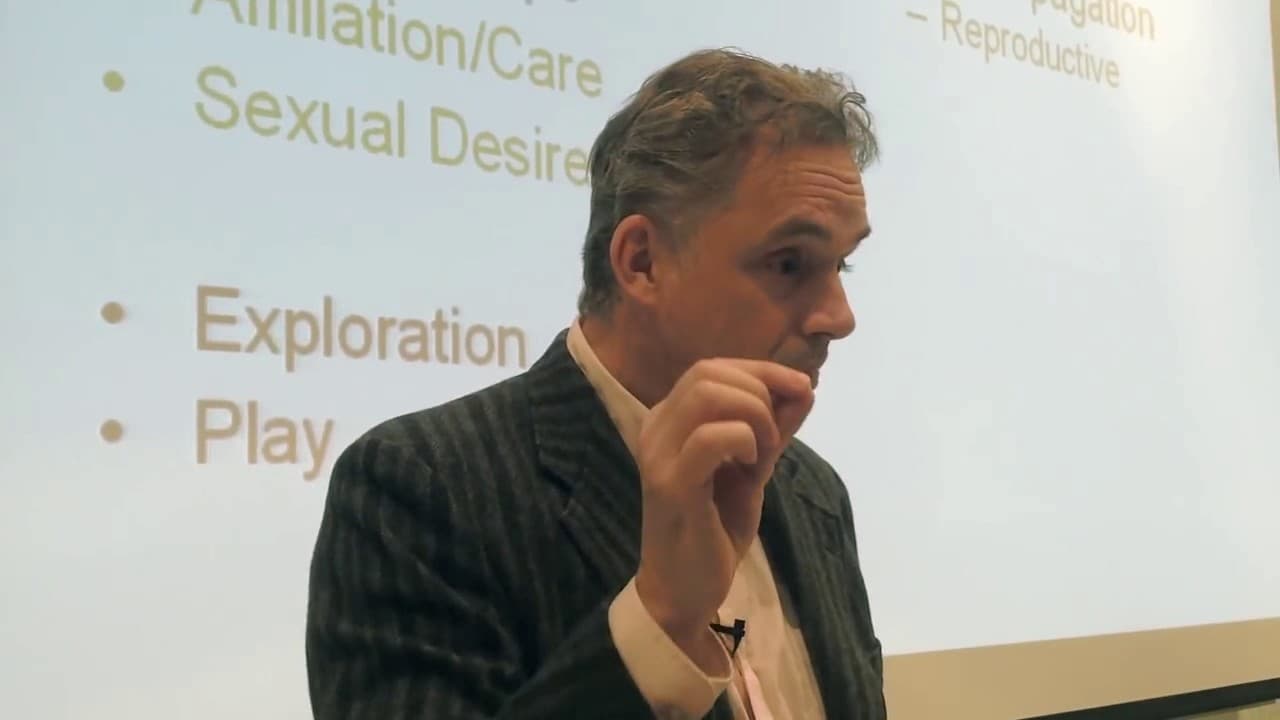
Motivational systems define goals, focus perception on relevant cues, activate behavior, and prepare the body for action. Emotions then track whether progress toward those goals is favorable or unfavorable, linking ancient subcortical systems with personality traits such as extraversion, neuroticism, and agreeableness.
Transcript
so okay so we talked a little bit about motivation last time or quite a bit about motivation and what I I told you that I was basically teach you teaching you a personality Neuroscience approach to personality and um part of the reason that I have to go into the bi ology to give you is to give you the kind of foundation that you need in order to un... Read More
Key Insights
- Motivation is a psychophysiological state that defines a goal, organizes behavior toward it, directs attention to relevant features of the environment, and prepares bodily systems for the anticipated outcome.
- A motivated state functions like a micro-personality because it has a dominant aim while also coordinating perception, motor activity, autonomic responses, and goal-directed action around that aim.
- Emotions track progress toward goals by signaling whether a person is moving along a favorable path. This provides a practical distinction between systems that establish goals and systems that evaluate movement toward them.
- Basic motivational systems are evolutionarily ancient and shared with other animals. The lecture identifies hunger, thirst, pain, aggression, thermal regulation, panic, care, sexual desire, exploration, and play as examples.
- Psychological pain includes grief, disappointment, frustration, and loneliness. These experiences may primarily activate cortical pain circuitry, although depression and grief can also be accompanied by bodily, or somatic, pain.
- Panic and escape are not simply identical to anxiety and fear. Fear may trigger panic, but panic is described as a more primordial circuit that produces an especially powerful impulse to escape.
- Aggression includes at least two potentially distinct forms: defensive aggression, which may relate more closely to neuroticism, and predatory aggression, which may oppose maternal care along the agreeableness distribution.
- Rough-and-tumble play teaches behavioral regulation by requiring children to balance excitement with restraint. The game continues only when participants remain forceful enough to engage each other without becoming so aggressive that someone is hurt.
- More videos from this channel:
- More from this channel: Jordan B Peterson
Install to Summarize YouTube Videos and Get Transcripts
Explore YouTube Video Summarizer or Get YouTube Transcript Extractor
Questions & Answers
Q: How does motivation shape perception and behavior?
Motivation defines a conceptual space in which a goal becomes important, then tunes perception toward information relevant to pursuing that goal. It also activates or disinhibits the motor patterns normally used to reach the goal and coordinates autonomic responses. Food deprivation, for example, makes food more salient, organizes food-seeking behavior, and prepares the body for eating.
Q: What is the difference between motivation and emotion?
Motivation establishes the framework for action by defining an endpoint and organizing perception, behavior, and bodily preparation around it. Emotions, or at least many emotions, monitor progress within that framework. They indicate whether movement toward the goal is proceeding favorably or unfavorably, although the lecture emphasizes that there is no single motivation system or single emotion system.
Q: Why is a motivated state described as a micro-personality?
A motivated state resembles a small, narrowly focused personality because it has a central aim and organizes multiple systems around that aim. It changes what a person notices, which actions become available, and how the body prepares to respond. It is less sophisticated than a complete personality, but it still coordinates perception, behavior, and physiology.
Q: How are physical pain and psychological pain connected?
Physical pain registers levels of bodily input that may be damaging, while psychological experiences such as grief, disappointment, frustration, and loneliness appear to have related pain-like qualities. The lecture proposes that psychological pain may primarily involve cortical pain circuitry. Depression and grief can also include somatic pain, supporting the characterization of depression as resembling a pain state.
Q: Why might opiates reduce distress caused by loneliness?
Opiates are analgesics that dampen pain, frustration, disappointment, grief, and loneliness. The lecture describes experiments in which isolated chicks or kittens vocalize from social distress, and opiates stop this response even after researchers account for a simple impairment of vocalization. This leads to a proposed connection between severely painful relationships and vulnerability to opiate use.
Q: What is the difference between defensive and predatory aggression?
Defensive aggression is presented as one aggression system and is suggested to have a stronger association with neuroticism. Predatory aggression appears to rely on a separate circuit related to hunting behavior. The lecture further proposes that predatory aggression and maternal solicitude inhibit one another and may occupy opposite ends of the Big Five agreeableness distribution.
Q: How is panic different from fear and anxiety?
Panic and escape appear to involve a circuit that is distinct from the anxiety and fear system, even though the experiences can sound similar. Fear may activate panic, but panic is characterized as a more primordial response with an immense drive to escape. The distinction suggests that increasing fear does not merely produce the same system at a stronger intensity.
Q: How does rough-and-tumble play help socialize children?
Rough-and-tumble play teaches children to regulate force and distinguish acceptable aggression from excessive aggression. To keep the game going, a child must remain active enough to make it exciting while avoiding actions that cause injury. The activity may also help children discover their bodily boundaries, their physical tolerance, and how to configure their behavior around other people.
Summary & Key Takeaways
-
Motivation is presented as an all-encompassing psychophysiological state rather than a simple goal or chain of behaviors. A motivational system defines an endpoint, filters perception for relevant information, activates suitable motor patterns, and coordinates autonomic preparation, as illustrated by the bodily and behavioral changes associated with food deprivation.
-
Emotions are described as systems that monitor progress toward motivational goals. The lecture connects physical pain with psychological experiences such as grief, disappointment, frustration, and loneliness, while distinguishing panic and escape from anxiety and fear. Opiates may suppress distress related to social separation because they function as analgesics.
-
Several ancient motivational circuits are discussed, including hunger, thirst, pain, aggression, temperature regulation, panic, care, sexual desire, exploration, and play. Predatory aggression and maternal care may occupy opposite ends of agreeableness, while rough-and-tumble play helps children regulate aggression, discover physical boundaries, and sustain cooperative social interaction.
Read in Other Languages (beta)
Share This Summary 📚
Summarize YouTube Videos and Get Video Transcripts with 1-Click
Try YouTube Summary with ChatGPT & Claude or YouTube Transcript Generator
Explore More Summaries from Jordan B Peterson 📚

Summarize YouTube Videos and Get Video Transcripts with 1-Click
Try YouTube Summary with ChatGPT & Claude or YouTube Transcript Generator