How Does Existentialism Respond to Suffering?
TL;DR
Human suffering does not always indicate a personal defect because vulnerability, loss, illness, humiliation, anxiety, and pain are intrinsic possibilities of existence. Existentialism responds by emphasizing responsible action: examine what people actually do, bring conduct into alignment with stated beliefs, and choose ways of living that do not surrender to or multiply unavoidable misery.
Transcript
so we started to talk a little bit about phenomenology last time and about carl rogers and, uh, I mentioned that the phenomenologists were interested in experiences in some sense as the ultimate as the ultimate reality, and that's a very complicated concept to grasp the existentialists also adopted that viewpoint. they were concerned with the th... Read More
Key Insights
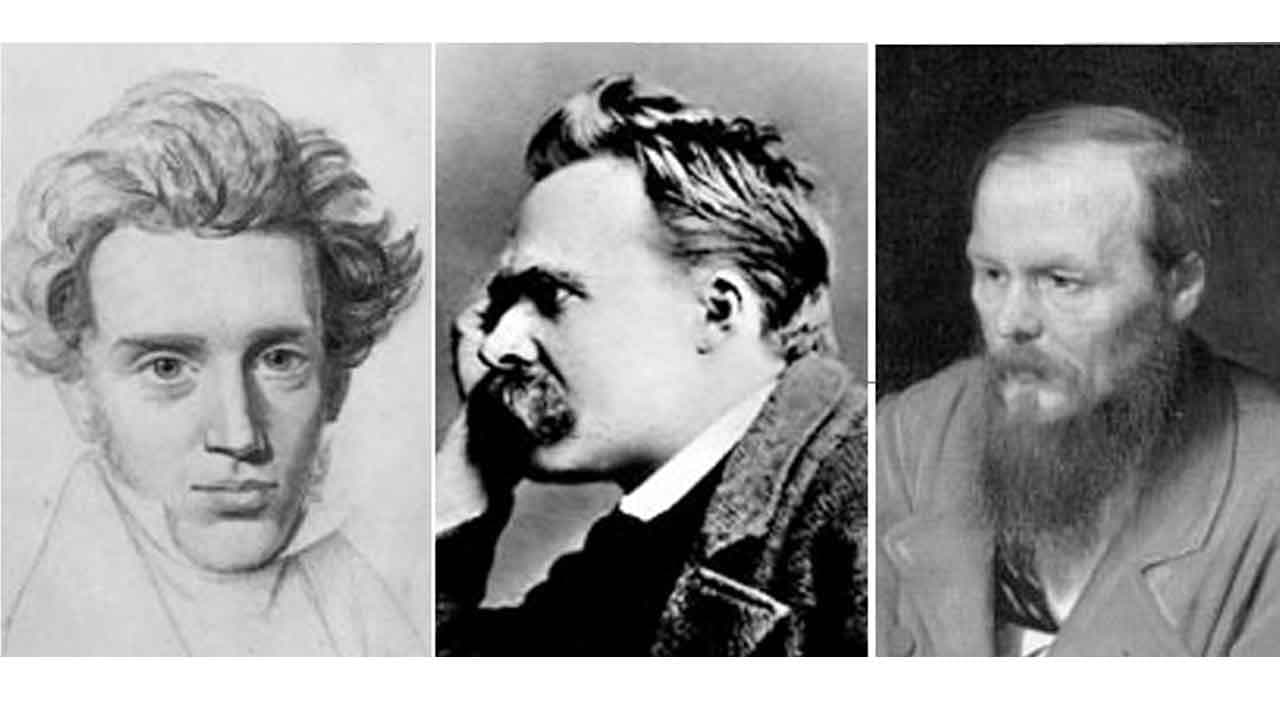
- Existentialism is concerned with the reality and quality of subjective experience while still recognizing objective reality. Its central psychological interest is how existence is actually experienced by vulnerable individuals, particularly when they confront suffering, anxiety, pain, disease, loss, and the demands of action.
- Actions are often stronger evidence of belief than verbal statements because speaking about knowledge and embodying practical knowledge depend on different memory systems. A person may describe a belief sincerely while behaving according to procedures, habits, or priorities that reveal a conflicting practical commitment.
- Procedural memory is the embodied form of knowing involved in skills such as riding a bicycle. People can perform such skills without being able to explain precisely how they do them, showing why verbal descriptions do not fully capture the knowledge that organizes action and perception.
- Psychological alignment is achieved by bringing conduct closer to professed beliefs. This reduces discontinuity between body and mind, as well as contradictions in how a person presents themselves and acts in the world, making behavior a crucial target for reflection and therapeutic change.
- Suffering is an intrinsic possibility of human existence because people are vulnerable to chaos, anxiety, pain, disease, death, loss, and humiliation. These experiences can occur without proving that something unusual, uniquely defective, or personally blameworthy is responsible for an individual's distress.
- Diagnosis can provide relief when it shows a distressed person that their symptoms are recognizable and shared by others. Although inaccurate labels are harmful and accurate labels can become restrictive, naming depression, anxiety, agoraphobia, or obsessive compulsive disorder may reduce isolation and incomprehensibility.
- Social comparison can intensify depression and anxiety when people contrast their private suffering with the smiling public faces they see on Facebook. This comparison encourages the mistaken belief that everyone else is well, increasing alienation from other people and from one's own experience.
- Responsibility through action is the existential response to unavoidable misery. If suffering is already present, surrendering to it or increasing it only multiplies what is bad, so the practical task is to choose conduct that faces vulnerability without adding unnecessary suffering.
Install to Summarize YouTube Videos and Get Transcripts
Explore YouTube Video Summarizer or Get YouTube Transcript Extractor
Questions & Answers
Q: What is existentialism's psychological view of suffering?
Existentialism treats suffering as an intrinsic element of vulnerable human existence rather than assuming that every form of distress requires an unusual external cause. Chaos, anxiety, pain, disease, death, loss, and humiliation can affect people even when nothing uniquely wrong has happened to them. The central question therefore becomes how a person should conduct themselves responsibly when misery cannot be completely avoided.
Q: Why does existentialism focus on actions rather than words?
Existentialism focuses on actions because what people do may reveal their beliefs more reliably than what they say. Verbal representation and embodied practical knowledge rely on different memory systems, so stated convictions can conflict with habitual conduct. Examining behavior exposes the procedures, priorities, and commitments through which a person actually engages with the world, including contradictions that spoken explanations may conceal.
Q: How does procedural memory differ from stated knowledge?
Procedural memory contains embodied knowledge used to perform actions and organize perception, while stated knowledge consists of descriptions that a person can consciously express. Riding a bicycle illustrates the difference: someone can know how to ride without being able to explain exactly how the skill works. Practical competence is built into physiology and cannot be fully translated into verbal instructions or beliefs.
Q: How can a person align actions with stated beliefs?
A person can seek alignment by comparing repeated behavior with the values and beliefs they consciously claim, then addressing the contradictions between them. The therapeutic aim described in the lecture is to reduce discontinuity between body and mind by bringing conduct closer to stated convictions. This process treats action as evidence and asks whether a person's embodied life genuinely expresses their professed commitments.
Q: Why can a mental health diagnosis feel relieving?
A diagnosis can feel relieving because distressed people may assume that their symptoms are unique, incomprehensible, and evidence of a personal defect. Recognizing a familiar pattern shows that other people experience similar difficulties and that improvement may be possible. The lecture also cautions that mislabeling is harmful and that even an accurate label can become a restrictive box for someone's identity.
Q: Why do depressed or anxious people feel uniquely defective?
Depressed or anxious people may have limited social contact and few opportunities to discuss their suffering, leading them to believe that no one else feels the same way. They can interpret symptoms as proof that something uniquely wrong is their fault. Comparing private distress with the smiling faces displayed on Facebook can strengthen this false impression and deepen alienation from others and themselves.
Q: What role does psychoeducation play in therapy?
Psychoeducation can help people understand that a considerable amount of misery is common and that genuine reasons for distress exist throughout ordinary life. Death, loss, illness, humiliation, anxiety, and other painful experiences can sustain negative emotion without implying a uniquely strange defect. This understanding reduces isolation, challenges unrealistic social comparison, and places suffering within the shared conditions of vulnerable human existence.
Q: How should people respond to unavoidable misery?
People should respond to unavoidable misery by taking responsibility through action and avoiding conduct that merely multiplies suffering. Existentialism begins with the recognition that vulnerability and distress are built into human experience, then asks how one ought to live under those conditions. Surrendering to misery does not solve it, so behavior should be directed toward confronting suffering without unnecessarily increasing it.
Summary & Key Takeaways
-
Existentialism treats subjective experience as genuinely important while acknowledging objective reality. It focuses more strongly on action than on statements or professed beliefs because practical knowledge is embodied in procedural memory. What a person repeatedly does can therefore reveal commitments that verbal descriptions fail to capture or may even contradict.
-
Suffering is presented as an intrinsic feature of vulnerable human existence, not merely as evidence of childhood trauma, defective development, or a uniquely personal failure. Death, loss, illness, humiliation, anxiety, pain, and disease provide ample reasons for distress, so psychopathology does not always require an additional or unusual explanation.
-
The practical existential question is how a person should conduct themselves when misery is already part of life. Surrendering to suffering or multiplying it only makes the condition worse. The proposed response centers on responsibility through action, including reducing contradictions between embodied conduct and consciously stated values or beliefs.
Read in Other Languages (beta)
Share This Summary 📚
Summarize YouTube Videos and Get Video Transcripts with 1-Click
Try YouTube Summary with ChatGPT & Claude or YouTube Transcript Generator
Explore More Summaries from Jordan B Peterson 📚



Summarize YouTube Videos and Get Video Transcripts with 1-Click
Try YouTube Summary with ChatGPT & Claude or YouTube Transcript Generator