How Does Phenomenology Shape Human Experience?
TL;DR
Human experience is not a neutral registration of independent objects, but a constrained world shaped by values, emotions, past interactions, anticipated futures, and present actions. Heidegger’s concept of Dasein, as interpreted through Binswanger and Boss, helps explain why meaning emerges through the relationship between a person and what they encounter, rather than residing solely in either subject or object.
Transcript
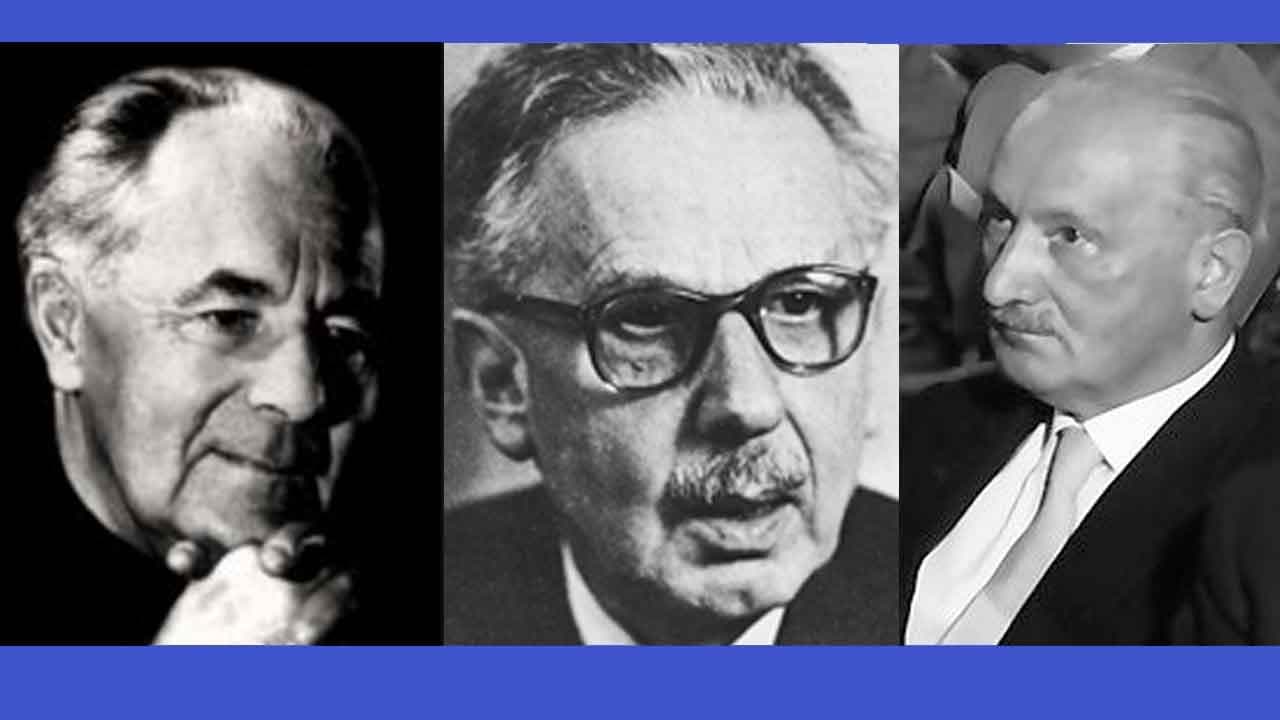
I don't know if any other personality course in North America talks about Binswanger and Boss anymore maybe not But I think their ideas are extremely interesting And so I'm going to talk about them They were influenced very much by Martin Heidegger Who was one of the 20th century's greatest philosophers I would say probably - This school of This pa... Read More
Key Insights
- Clinical psychology is partly philosophical because its practical purpose involves determining how to live properly. Even treating wellness as the absence of illness does not eliminate values, since the concept of illness itself combines scientific descriptions with ethical judgments.
- Human perception selects a constrained subset from an infinitely complex environment. A person could examine one tile in extraordinary detail, yet ordinary experience ignores most available complexity and organizes attention around only a limited range of relevant possibilities.
- Dasein is the experiential frame in which a person exists at the center of a world containing perceptions, emotions, meanings, and qualia. It cannot be reduced to visual perception because it encompasses the full subjective field of lived experience.
- Qualia are experienced qualities such as pain, color, beauty, love, and sorrow. Neurological circuits associated with pain can be analyzed, but the felt quality of pain does not appear reducible to objective components and instead manifests as a raw fact of existence.
- Present experience implicitly contains the past because previous interactions shape current emotions and behavior. A recurring argument with a family member carries the history of earlier arguments, so understanding the present conflict may require examining the entire pattern of interactions.
- Present experience also implicitly contains possible futures because current actions partly determine how events unfold. People do not completely control what happens, but their histories, choices, and behavior influence which possibilities become real through ongoing interaction.
- An object’s experienced meaning can exceed its visible physical form. An envelope containing an MCAT score is physically paper, yet it functions as a portal toward medical school or another future, which explains why someone might shake while holding it.
- Objects reveal different facets according to how people interact with them. Another person may become hostile under one pattern of interaction and cooperative under another, so defining what someone or something is requires a frame of reference and particular procedures.
- More videos from this channel:
- More from this channel: Jordan B Peterson
Install to Summarize YouTube Videos and Get Transcripts
Explore YouTube Video Summarizer or Get YouTube Transcript Extractor
Questions & Answers
Q: What is Dasein in phenomenological psychology?
Dasein is the experiential or existential frame in which a person stands at the center of a lived world. It includes more than perception because emotions, subjective qualities, personal history, current circumstances, and anticipated possibilities all belong to it. The concept describes the meaningful field a person actually inhabits, rather than an objective inventory of everything physically present.
Q: Why is clinical psychology not strictly scientific?
Clinical psychology is not strictly scientific because it is oriented toward values and toward the question of how a person should live properly. Defining good living merely as the absence of illness does not remove this issue, since illness itself combines scientific concepts with ethical concepts. Clinical practice therefore enters a philosophical domain whenever it evaluates health, conduct, meaning, or improvement.
Q: How do values shape human perception?
Values help structure the limited experiential world that a person selects from an infinitely complex environment. People cannot attend to every possible detail, so they perceive a constrained subset of what surrounds them. Because human beings live within ethical and value systems, those systems influence what receives attention, what appears meaningful, and how situations are interpreted and acted upon.
Q: Why can an object mean more than its physical form?
An object can mean more than its physical form because its significance emerges through the possibilities it contains for the person encountering it. An envelope holding an MCAT score is physically a rectangle of paper, but experientially it opens toward different futures, including attending medical school or not attending. The body’s fear can register this larger meaning even when perception labels it simply as an envelope.
Q: How is the past present in current experience?
The past is present implicitly because earlier interactions shape current emotional responses, expectations, and behavior. When someone repeats a familiar argument with a family member, the immediate exchange carries the history of previous arguments. Fully understanding the present conflict may therefore require examining the entire sequence of interactions that produced its established emotional pattern and meaning.
Q: How is the future contained in present experience?
The future is contained in present experience as a range of possibilities that unfolds through current action. A person’s history and present choices help determine what happens next, although they do not provide complete control over events. Phenomenologically, the future is therefore folded into the current situation because each interaction supports some possible developments while excluding or weakening others.
Q: What are qualia, and why are they difficult to reduce?
Qualia are subjective qualities such as the felt character of pain, color, beauty, love, and sorrow. Scientists can analyze neurological circuits involved in an experience such as pain, but asking what pain itself is made of may be poorly formulated. These qualities appear within experience as basic facts of existence rather than as objects readily decomposed into objective constituent parts.
Q: How does interaction influence what an object reveals itself to be?
Interaction influences an object because complex things possess multiple possible facets, and particular actions bring only some of them forward. Another person may appear fiercely hostile under one form of treatment and cooperative under another. Consequently, identifying what an object or person is requires a frame of reference, since the selected procedures help determine which characteristics become visible in the encounter.
Summary & Key Takeaways
-
Clinical psychology cannot be strictly scientific because helping someone live properly necessarily involves values. Even defining health as the absence of illness combines scientific and ethical judgments. Personality research must therefore examine philosophy because people inhabit value systems that structure what they perceive, experience, and regard as meaningful.
-
Phenomenology studies the highly constrained experiential world people inhabit within an infinitely complex environment. Heidegger’s Dasein includes perception, emotion, qualia, personal history, and anticipated possibilities. Experiences such as pain, beauty, love, and sorrow appear as basic facts of existence that cannot be adequately described merely by decomposing their neurological mechanisms.
-
Objects acquire meaning through a person’s relationship and actions toward them. An envelope containing an MCAT score is not experienced as mere paper, but as a portal into different possible futures that can also reinterpret the past. Phenomenology therefore challenges a strict division between independently existing objects and secondary subjective responses.
Read in Other Languages (beta)
Share This Summary 📚
Summarize YouTube Videos and Get Video Transcripts with 1-Click
Try YouTube Summary with ChatGPT & Claude or YouTube Transcript Generator
Explore More Summaries from Jordan B Peterson 📚





Summarize YouTube Videos and Get Video Transcripts with 1-Click
Try YouTube Summary with ChatGPT & Claude or YouTube Transcript Generator