What happens when humans seek immortality in stories and myth
TL;DR
Immortality reveals how finite minds cope with infinite possibilities. The discussion argues that finite limits shape meaningful inquiry and creativity, while unbounded infinity tends to overwhelm perception. The balance between constraint and possibility drives human purpose, art, and religious thought.
Transcript
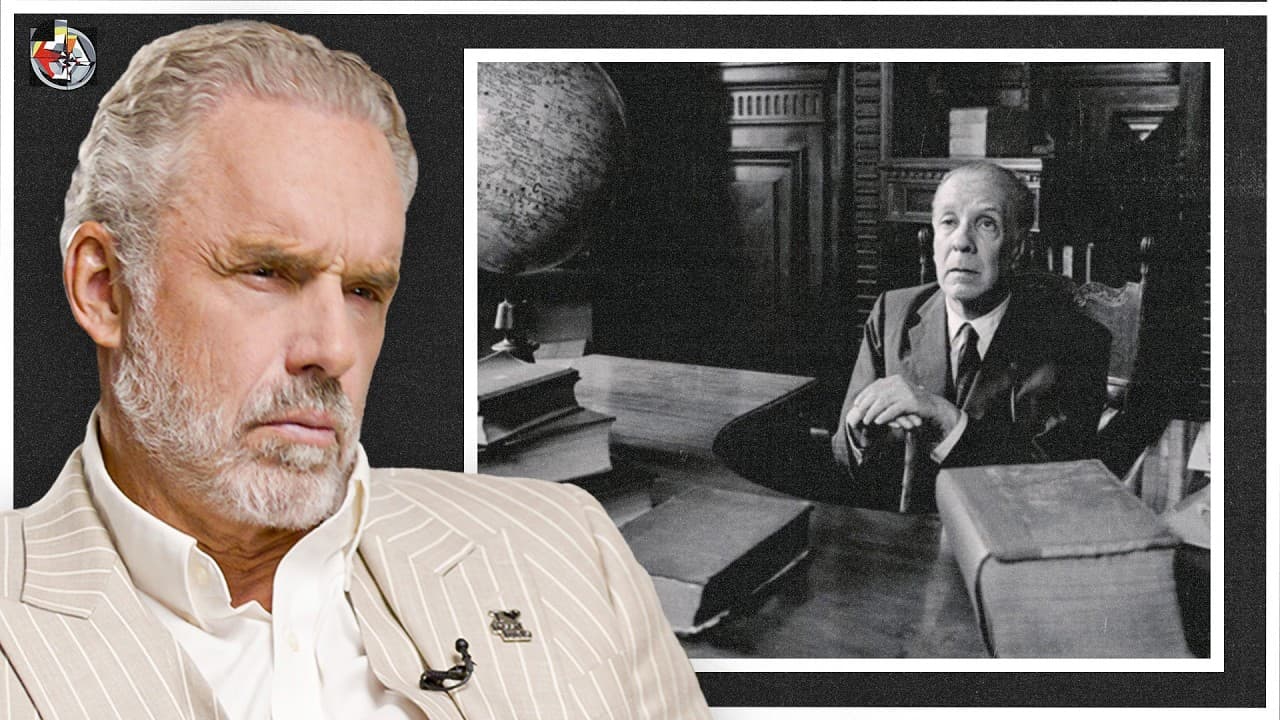
It seems to me that you're on a very fruitful path in talking about this. While you were speaking, I was thinking how this shows up in a lot of fields. So even for example in great literature and the example that came to my mind is Jorge Luis Boris. Have you read any of Horge Luis Borkez's short stories? Okay. So it seems to me that this man's writ... Read More
Key Insights
- Finitude shapes meaningful inquiry by providing boundaries that foster productive questions and creativity.
- The main issue is balancing constraint and possibility; too much freedom or too little structure reduces meaningful action and novelty.
- Infinity confronts us with the limits of human memory and understanding, making certain knowledge feel overwhelming or irrelevant.
- Literature uses restrictive forms, like haiku or literary puzzles, to generate beauty and insight within precise boundaries.
- Borges’ library illustrates a universe where every possible book exists, revealing both abundance and epistemic complexity.
- The concept of misaligned aim shows that proper orientation toward a higher good or order is essential for purposeful action.
- Religious narratives suggest that divine law imposes necessary limits that enable flourishing without chaos.
- Creative growth often emerges from exploring the tension between what is finite and what is infinite.
Install to Summarize YouTube Videos and Get Transcripts
Explore YouTube Video Summarizer or Get YouTube Transcript Extractor
Questions & Answers
Q: A real search query question about the video (e.g. 'How to...', 'What is...', 'Why does...', 'When should...'). Question 1
How does finitude influence our understanding of immortality in literature and religion, and why does this matter for how we live? The discussion argues that finite humans cannot fully grasp infinity, so stories about immortality reveal the human need for meaningful limits. These limits generate questions, drive inquiry, and shape moral and artistic projects.
Q: Question 2
What role do Borges and the library of Babel play in illustrating the problem of infinity? The dialogue notes that the library presents an endless repository where every possible book exists, showing both abundance and epistemic overload. This metaphor clarifies why humans seek discernible meaning within boundless possibilities.
Q: Question 3
Why is the balance between constraint and possibility considered essential for creativity? The speakers point out that strict limits can stimulate novel output, while excessive freedom produces chaos. A well-tuned balance enables productive exploration and the emergence of value within creative and intellectual pursuits.
Q: Question 4
How do biblical and Platonic sources frame the issue of infinite longing? The conversation connects the Hebrew Bible and Plato to the fundamental question of how finite beings relate to the infinite, suggesting that proper orientation and limits are crucial for meaningful engagement with the unknown.
Q: Question 5
What is meant by misaligned aim in human life, and how does it relate to rules or commandments? The discussion suggests that turning away from proper aims leads to chaos, while well-structured constraints guide individuals toward higher purposes and ordered living within finite boundaries.
Q: Question 6
How do stories like the water of immortality illustrate the experience of endless life? The dialogue describes how unlimited memory and time can overwhelm a person, dissolving personal meaning. Immortality thus exposes the challenge of maintaining purpose when experience becomes boundless.
Q: Question 7
What is the deeper takeaway about questions as a driver of growth? The speakers emphasize that questions are fertile for creativity, and limitations make questions productive. This premise underpins literary and philosophical exploration across cultures and eras.
Q: Question 8
How do religious and philosophical traditions propose a productive relationship with the infinite? The discussion suggests that acknowledging finite limits while seeking higher orders enables a constructive bond with the infinite, rather than a defeating confrontation with endless possibility.
Summary & Key Takeaways
-
A concise exploration of how finitude and infinity interact, influencing literature, myth, and philosophy. The speakers argue that limits help generate meaningful inquiry and creative output, while boundless abundance can lead to paralysis or disinterest. The dialogue then ties these ideas to biblical and classical texts.
-
The discussion uses Borges, the library of Babel, and other stories to illustrate how finite beings struggle to find meaning in an infinite framework, highlighting the role of constraints in producing value.
-
Finally, the speakers connect these themes to religious thought and the idea that meaningful life arises from aligning our aims with given limits within a larger infinite context.
Read in Other Languages (beta)
Share This Summary 📚
Summarize YouTube Videos and Get Video Transcripts with 1-Click
Try YouTube Summary with ChatGPT & Claude or YouTube Transcript Generator
Explore More Summaries from Jordan B Peterson 📚


Summarize YouTube Videos and Get Video Transcripts with 1-Click
Try YouTube Summary with ChatGPT & Claude or YouTube Transcript Generator