How Does Prayer Reorder Desire Toward God?
TL;DR
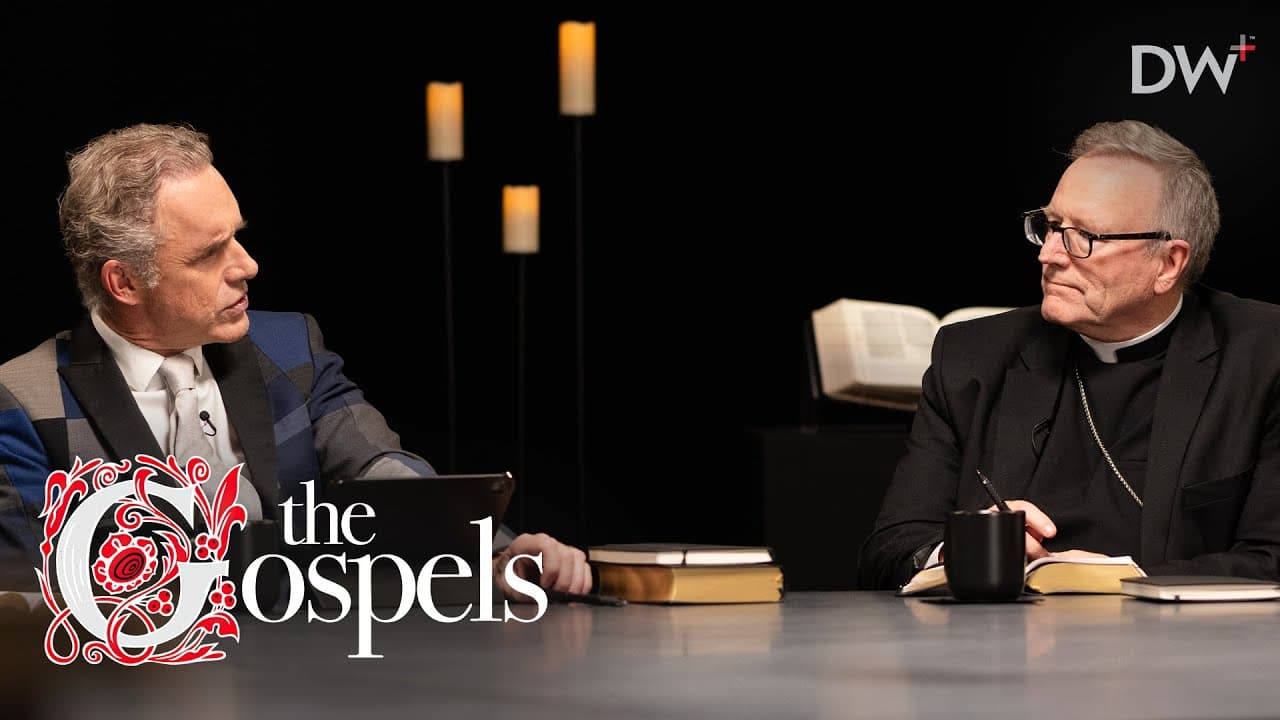
Prayer reorders desire by directing attention away from ego, resentment, temptation, and competing priorities toward God’s name, kingdom, and will. A practical routine is to reserve about ten minutes, choose a place and visual focus, examine each line of the Lord’s Prayer, acknowledge personal failings, forgive others, and remain open to guidance.
Transcript
uh Thomas Merton one of the great spiritual masters of the last century someone asked him you know how can I improve my prayer life and he said take the time so it's a very simple thing but I encourage people set aside a time to pray uh and it might be morning if you're a morning person might be the end of the day if that's better time for you but ... Read More
Key Insights
- Regular prayer is supported by deliberately reserving time for it. Thomas Merton’s simple advice is summarized as taking the time, whether prayer occurs in the morning or at day’s end, because a stable practice requires an intentional place in daily life.
- A visual focus can help gather scattered concerns around a spiritual center. The rose window serves as an example because it depicts Christ at the center, with everything else arranged harmoniously around him, providing an image for ordering the elements of life.
- The Lord’s Prayer is a template for ordering the soul toward God. Its opening combines intimacy with transcendence by addressing God as Father while recognizing that God is not merely another worldly object, conditioned thing, distant force, or abstract principle.
- Hallowing God’s name removes spiritual competition by declaring that no rival priority is holy in the same way. The practice therefore includes identifying which ambitions, attachments, plans, or values are functioning as sacred centers even though they should not occupy that position.
- Seeking God’s kingdom and will decenters the ego. The words redirect attention from personal arrangements and preferred outcomes toward the highest good, allowing a person to acknowledge ignorance, surrender control, and ask for help in removing obstacles to an upward aim.
- Self-examination is presented as an essential element of prayer. Reflecting on the day in light of God includes noticing opportunities, recognizing good actions, identifying failures, and becoming conscious of sins that disrupt a properly ordered relationship with God and other people.
- Forgiveness is described as a condition for unobstructed prayer. Hatred, resentment, and old grudges can become internal blocks, so asking forgiveness for personal trespasses must be joined with a willingness to forgive those who have caused harm.
- Christian contemplation is distinguished from practices that primarily quiet desire. The discussion acknowledges shared psychological methods across Christian, Buddhist, and other contemplative traditions, but describes Christian prayer as ordering desire toward the Creator, entering Christ’s relationship with the Father, and invoking God’s presence.
Install to Summarize YouTube Videos and Get Transcripts
Explore YouTube Video Summarizer or Get YouTube Transcript Extractor
Questions & Answers
Q: How can someone begin a regular prayer practice?
A person can begin by reserving a consistent time, choosing a place that supports concentration, and spending about ten minutes with the Lord’s Prayer. Morning may suit one person, while the end of the day may suit another. A visual focus, such as Christ at the center of a rose window, can gather attention. The main requirement is to take the time and proceed slowly through the prayer.
Q: How does the Lord’s Prayer reorder desire?
The Lord’s Prayer reorders desire by placing God’s name, kingdom, and will above personal plans and competing priorities. “Hallowed be thy name” challenges whatever else functions as holy, while “thy kingdom come” and “thy will be done” decenter the ego. The prayer then addresses sin, resentment, and temptation, helping the person identify and remove forces that interfere with a life directed toward God.
Q: Why does Christian prayer address God as Father?
Addressing God as Father expresses intimacy rather than treating God as a distant force or abstract principle. At the same time, the phrase “who art in heaven” preserves transcendence by distinguishing God from every worldly or conditioned thing. The discussion also presents the prayer as participation in Christ’s relationship with the Father, because Christ invites his followers to join him in calling upon God as Father.
Q: What does it mean to hallow God’s name in prayer?
To hallow God’s name is to recognize God as holy without allowing another desire, plan, possession, or priority to take the same place. The line prompts a practical examination of what currently functions as sacred in one’s life. By identifying these competitors, the person can begin eliminating false centers and arranging attention, choices, and desires around God rather than around ego or worldly conditions.
Q: Why is self-examination important in prayer?
Self-examination helps a person review the day in light of God. It includes recognizing opportunities received, acknowledging good actions, and honestly identifying failures and sins. The transcript cites Ignatius of Loyola’s consciousness examen as so central that preserving it would preserve the essence of prayer. This examination is not merely abstract reflection. It reveals what must be forgiven, corrected, or reordered.
Q: How does forgiveness affect prayer?
Forgiveness affects prayer because resentment, hatred, and old grudges can block a person’s movement toward God. The request to be forgiven is linked directly with forgiving those who trespass against us. Prayer therefore requires more than naming another person’s wrongdoing. It asks the person praying to confront persistent hostility and deal with the relationship or internal grievance that keeps attention trapped in resentment.
Q: What is the difference between quieting desire and ordering desire?
The discussion describes quieting desire as an aim associated with Buddhist practice and ordering desire as a Christian aim directed toward the Creator God. Both traditions may share methods involving attention, decentering, contemplation, and insight into the mind. The stated distinction concerns orientation: Christian prayer does not simply reduce desire or mental disturbance. It redirects desire toward God’s name, kingdom, will, and presence in the world.
Q: Is prayer only speaking to God, or does it involve receiving guidance?
Prayer is presented as bidirectional. A person addresses God, but also invokes God’s presence and becomes open to revelation, insight, or a solution not produced by the ego alone. Asking for God’s kingdom to come invites divine engagement with the world. The person identifies a problem, admits limited knowledge, asks that obstacles be revealed and removed, and opens inward attention to what may be received.
Summary & Key Takeaways
-
A practical prayer life begins by setting aside a regular time and finding a place that supports focused attention. A visual image, such as Christ at the center of a rose window, can help organize life around God. Even ten minutes spent slowly considering familiar words can establish a meaningful discipline.
-
The Lord’s Prayer provides a structure for reordering the soul. Addressing God as Father expresses intimacy, while acknowledging heaven places God above every conditioned thing. Hallowing God’s name, seeking God’s kingdom, and accepting God’s will remove competing priorities and decenter personal plans, desires, and control.
-
Prayer also involves self-examination, repentance, forgiveness, resistance to temptation, and openness to revelation. The discussion compares Christian contemplation with Buddhist and Stoic practices while distinguishing their aims. Christian prayer does not merely quiet desire. It orders desire toward the Creator and invites God’s kingdom into human life.
Read in Other Languages (beta)
Share This Summary 📚
Summarize YouTube Videos and Get Video Transcripts with 1-Click
Try YouTube Summary with ChatGPT & Claude or YouTube Transcript Generator
Explore More Summaries from Jordan B Peterson 📚




Summarize YouTube Videos and Get Video Transcripts with 1-Click
Try YouTube Summary with ChatGPT & Claude or YouTube Transcript Generator