How Do Smartphones Wreck Gen Z Minds and Attention?
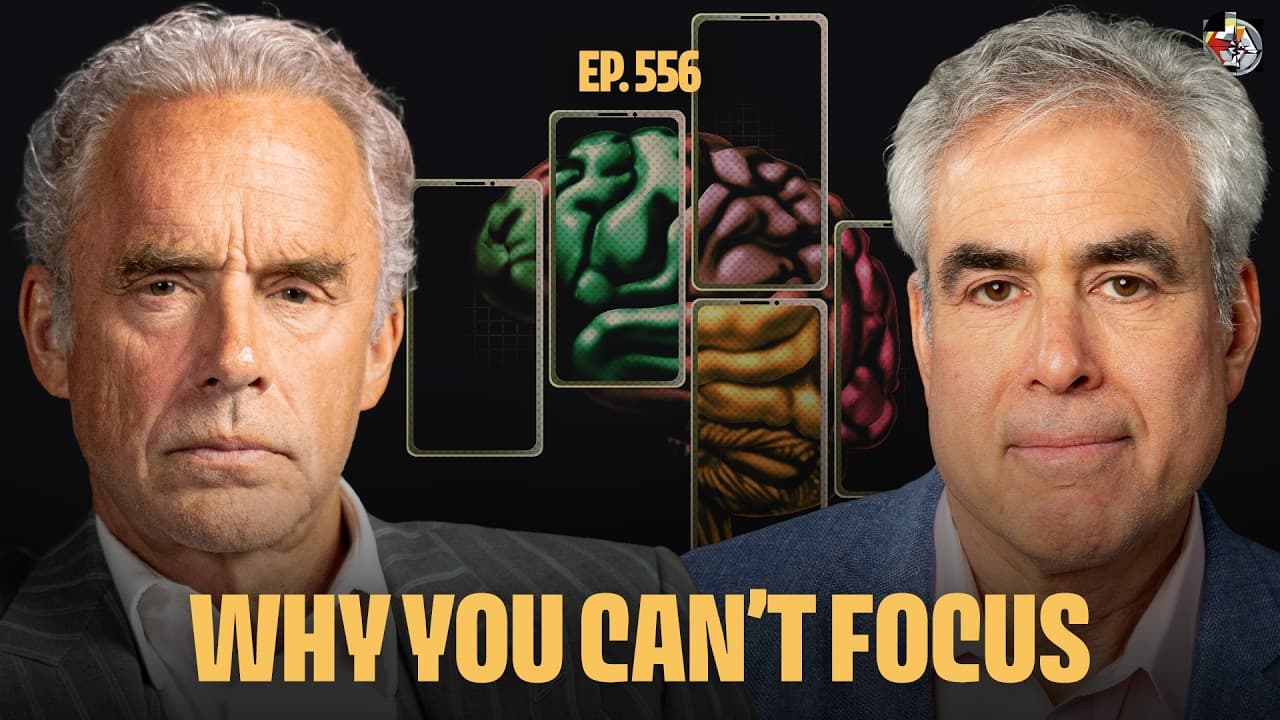
TL;DR
Smartphones and social media correlate with rising anxiety, depression, and attention problems in youth. The data show a timeline beginning around 2012, with heavy usage linked to worse internalizing disorders. Removing or reducing time on smartphones for longer than a week can improve mood, while more real world supervision supports healthier development.
Transcript
Half of our kids say they're online almost constantly. Once you give your kid a smartphone and Instagram or Tik Tok or Snapchat, that's sort of the end of what we might have thought of as normal childhood. We've actually created machines that use reinforcement technology to optimize the grip of reinforcement technology. Tik Tok or YouTube shorts, i... Read More
Key Insights
- Smartphones and social media correlate with rising internalizing disorders in adolescents, especially anxiety and depression, beginning around 2012 and accelerating thereafter.
- Heavy usage of social media is consistently associated with worse mental health outcomes across multiple countries, suggesting a cross-cultural pattern rather than a localized issue.
- There is evidence that reducing or pausing social media use for more than a week can improve mood and reduce anxiety for many users, indicating a potential causal link.
- The rise in self harm and hospital visits among young girls since 2012 is presented as a key behavioral indicator supporting concerns about digital platforms.
- Adult supervision and real world engagement are framed as critical buffers against the negative effects of online environments on youth.
- The phenomenon is described as a shift in adolescence brought on by algorithmic attention optimization that reinforces short-term gratification over developmentally healthy activities.
- The discussion distinguishes internalizing disorders from psychotic or manic conditions, focusing on anxiety, depression, and related demoralization rather than broader psychiatric categories.
- The data interpretation acknowledges limitations of self report but highlights converging evidence from multiple sources and cross national trends to support the claims.
- More videos from this channel:
- More from this channel: Jordan B Peterson
Install to Summarize YouTube Videos and Get Transcripts
Explore YouTube Video Summarizer or Get YouTube Transcript Extractor
Questions & Answers
Q: What is the central claim about smartphones and Gen Z mental health?
The central claim is that smartphones and social media are associated with a rise in anxiety, depression, and attention problems among Gen Z, with a noticeable shift starting around 2012. The argument is built on cross national patterns and multiple data sources, including self report and behavioral indicators like self harm, suggesting a broad, culturally connected impact of digital platforms on youth development.
Q: Why do the speakers discuss 2012 as a turning point?
The discussion highlights 2012 as a turning point because it marks the period when smartphones and social media platforms like Instagram became more pervasive in teenage life. This coincides with the observed elbow in mental health trends, where rates of internalizing disorders began to rise sharply, especially among girls, suggesting a potential causal connection between digital connectivity and worsening well being.
Q: What evidence is offered that challenges self report limitations?
Beyond self report, the speakers point to behavioral indicators such as increases in self harm and hospital visits among young people, particularly girls, since 2012. They also reference cross national stability before 2012 followed by rapid changes, and brief experiments where removing social media for more than a week leads to mood improvements, which strengthens the case beyond self reported symptoms.
Q: How do the speakers describe the mechanism of harm from social media?
The mechanism described involves algorithmic optimization for short term attention, which reinforces reinforcement seeking and creates a fixation on 10 second clips and other micro interactions. This rewiring of attention competes with healthy development, play, and real world supervision, leading to decreased motivation and demoralization that manifest as anxiety and depression over time.
Q: Are there any proposed remedies or actions for parents and educators?
Yes, the discussion emphasizes practical steps such as limiting screen time, supervising online activities, and increasing real world engagement and supervision. The goal is to reduce exposure to highly reinforcing online stimuli, support healthier routines, and foster environments that encourage play, conversation, and offline activities as buffers against digital harm.
Q: Do the speakers claim the problem is unique to the United States?
No, the speakers describe the issue as cross cultural, noting that similar patterns appear across Anglophone countries and more broadly in Northern Europe. This cross national pattern suggests the problem is tied to the global spread of smartphone technology and social media rather than a country specific phenomenon.
Q: What is the distinction made between internalizing disorders and other psychiatric conditions?
The distinction made is that the observed impact pertains specifically to internalizing disorders such as anxiety and depression, not to psychotic or manic disorders. The focus is on how digital exposure correlates with withdrawal, decreased positive affect, and increased negative emotion, rather than broader psychiatric categories.
Q: How do short term experiments with platform abstinence contribute to the argument?
Short term abstinence studies show that removing social media for more than a week tends to improve mood and reduce anxiety for many participants. While brief removals may cause withdrawal effects, longer abstinence appears to correlate with better emotional well being, supporting a potential causal interpretation that excessive online use harms mental health.
Summary & Key Takeaways
-
Smartphones and social media are linked to worsening mental health in the new generation, with a notable rise in anxiety and depression beginning around 2012. The pattern is observed across multiple Western countries, suggesting a broad effect tied to digital connectivity.
-
Evidence comes from self report and behavioral indicators like self harm, and experiments show that extended removal from social media can improve well being for many individuals.
-
The discussion emphasizes practical steps for parents and educators, including limiting screen time, supervising online activity, and fostering real world engagement to support developmental health.
Read in Other Languages (beta)
Share This Summary 📚
Summarize YouTube Videos and Get Video Transcripts with 1-Click
Try YouTube Summary with ChatGPT & Claude or YouTube Transcript Generator
Explore More Summaries from Jordan B Peterson 📚






Summarize YouTube Videos and Get Video Transcripts with 1-Click
Try YouTube Summary with ChatGPT & Claude or YouTube Transcript Generator