How Do Openness, IQ, and Creativity Relate?
TL;DR
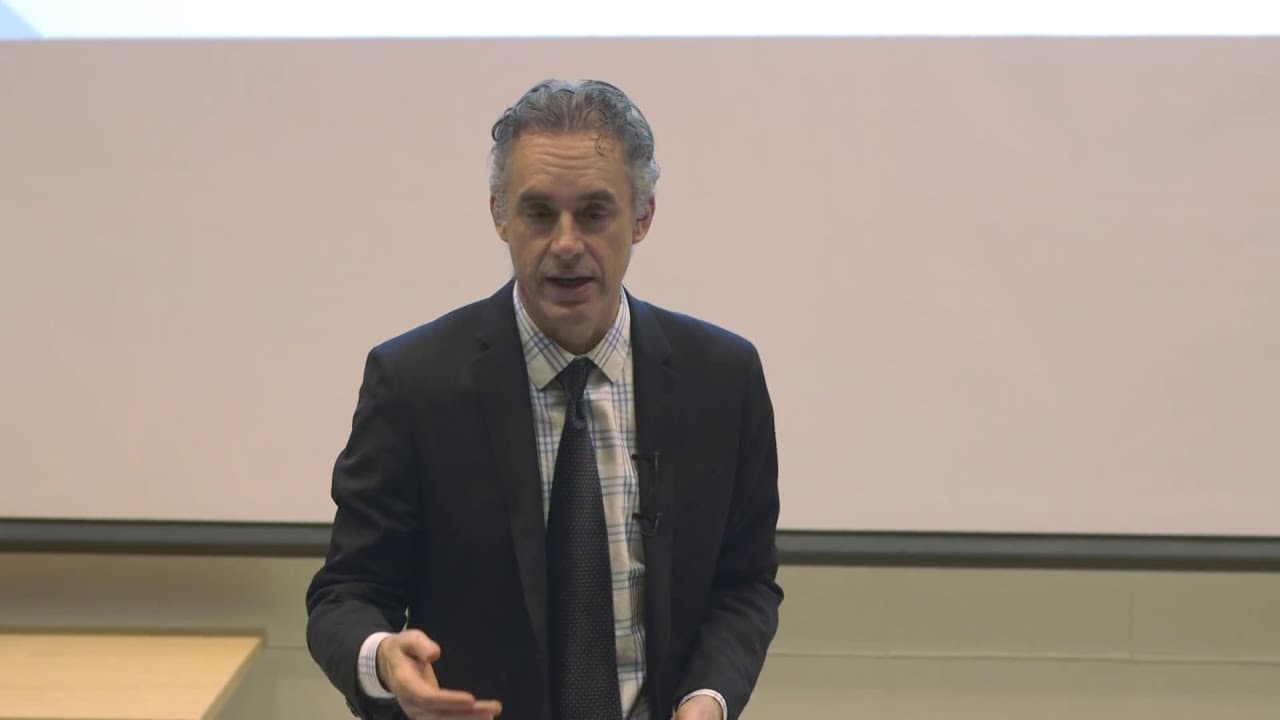
Openness to experience divides into intellect and openness proper, roughly corresponding to intelligence and creativity. IQ predicts creative potential, but creativity also requires generating many original ideas that remain useful, while creative achievement requires implementing those ideas as artifacts, performances, inventions, or artworks.
Transcript
today we're going to talk a little bit more about the fractionation of openness to experience and we've done a fair number of studies with the big five aspect scale which we've talked about a lot which enables the big five model to be differentiated down into two aspects per trait and those aspects have been useful for a variety of reasons for exam... Read More
Key Insights
- The Big Five Aspect Scale divides each broad personality trait into two aspects, offering a more detailed level of analysis. This higher resolution can reveal relationships that broad trait scores conceal and can improve prediction or help researchers formulate more precise scientific theories.
- Conservative conscientiousness is described as primarily a difference in orderliness rather than industriousness. The lecture connects orderliness with disgust sensitivity and the behavioral immune system, suggesting that concerns about boundaries may be more relevant than generalized anxiety when interpreting certain political attitudes.
- Conservatives are not described as higher in trait neuroticism, which challenges theories that characterize conservative political behavior mainly as heightened fear or threat sensitivity. The lecture instead treats disgust as a distinct negative emotion that may help explain concerns about separation, contamination, and boundaries.
- Openness to experience divides into intellect and openness proper. Intellect is characterized as the personality manifestation of IQ, while openness proper is treated as a useful shorthand for creativity, even though the two aspects remain related within the broader openness trait.
- General intelligence, or g, is the first factor extracted from a set of IQ-test items through factor analysis. The lecture argues that calling such a factor a mathematical abstraction does not make it useless, because even an average is an abstraction that can perform meaningful functions.
- Self-reported intellect may add limited value when a direct IQ test is available. People with higher IQ scores often recognize their problem-solving ability and describe themselves as intelligent, but the lecture presents IQ testing as a more accurate way to assess that capability.
- Creativity requires novelty and usefulness at the same time. A response shared by nearly everyone is insufficiently original, while an extremely idiosyncratic response that nobody understands is unlikely to be useful, placing effective creativity within a range between obviousness and incomprehensibility.
- Creative thinking combines fluency with originality. Fluency is the rate or quantity of ideas generated, while originality reflects how improbable a response is compared with other people's responses. IQ combined with idea-generation performance is presented as a better creativity predictor than IQ alone.
- More videos from this channel:
- More from this channel: Jordan B Peterson
Install to Summarize YouTube Videos and Get Transcripts
Explore YouTube Video Summarizer or Get YouTube Transcript Extractor
Questions & Answers
Q: What are the two aspects of openness to experience?
Openness to experience divides into intellect and openness proper. Intellect is described as the personality expression of IQ, particularly because working memory predicts it and working-memory tests correlate highly with general intelligence. Openness proper is treated as a practical shorthand for creativity, including the tendency to generate original associations that can still be understood and used.
Q: How is intellect related to IQ in personality research?
Intellect is presented as the personality instantiation of IQ. People with high IQ scores tend to recognize their cognitive ability and describe themselves as smart or effective problem solvers, causing those descriptions to load on intellect in personality questionnaires. However, the lecture suggests that a direct IQ test is more accurate than self-report for assessing this capability.
Q: What does general intelligence, or g, mean?
General intelligence, called g, is technically defined as the first factor extracted when researchers apply factor analysis to a set of IQ-test questions. The lecture compares this factor with an average, noting that both are mathematical abstractions. Their abstract nature does not make them unreal or useless because they can still serve predictive and analytical functions.
Q: How does the lecture define creativity?
Creativity is roughly defined as producing something that is both novel and useful. A familiar response may be useful but insufficiently original, while a highly unusual response may be so idiosyncratic that nobody understands or benefits from it. Creative performance therefore depends on generating unlikely ideas that remain comprehensible, relevant, and capable of serving a function.
Q: How can creative thinking be measured with a brick task?
A person can be asked to list as many uses for a brick as possible within three minutes. Researchers can score the number of responses as fluency and compare each response with other people's answers to estimate originality. A rare but workable suggestion, such as using a brick as a pumice stone, illustrates a response combining novelty with utility.
Q: What is fluency in creativity testing?
Fluency is the number or rate of ideas a person can generate under a stated constraint. It can be measured by asking someone to list uses for a brick or produce words beginning with a specified letter. The lecture states that IQ combined with the number of generated responses predicts creativity better than IQ by itself.
Q: What is originality in creative thinking?
Originality refers to how improbable a response is relative to answers generated by other people. An idea is more original when fewer participants produce it or when it lies farther from the initial concept. Originality alone is insufficient, however, because a creative response must also remain understandable and useful rather than merely strange or idiosyncratic.
Q: What is the difference between creative thought and creative achievement?
Creative thought is the tendency or ability to generate many original and useful ideas through broad associations. Creative achievement goes further by implementing those ideas in the world. It can be assessed through the actual production of artifacts, performances, inventions, artworks, or other outcomes, rather than solely through a person's capacity for imaginative thinking.
Summary & Key Takeaways
-
The Big Five Aspect Scale divides each broad personality trait into two narrower aspects, creating a higher-resolution model that can improve prediction and theory. For example, political differences associated with conscientiousness appear more specifically connected to orderliness than industriousness, while some differences between men and women also become clearer at the aspect level.
-
Openness to experience separates into intellect and openness proper. Intellect is presented as the personality expression of IQ because working memory predicts it, working memory correlates highly with general intelligence, and people with high IQ scores tend to describe themselves as intelligent and capable problem solvers on self-report personality measures.
-
Creative thinking involves producing numerous ideas, including responses that are relatively improbable but still useful. Divergent-thinking tasks, such as listing possible uses for a brick, can measure fluency through response quantity and originality through response rarity. Creative achievement additionally requires turning promising ideas into inventions, performances, artworks, or other real-world products.
Read in Other Languages (beta)
Share This Summary 📚
Summarize YouTube Videos and Get Video Transcripts with 1-Click
Try YouTube Summary with ChatGPT & Claude or YouTube Transcript Generator
Explore More Summaries from Jordan B Peterson 📚

Summarize YouTube Videos and Get Video Transcripts with 1-Click
Try YouTube Summary with ChatGPT & Claude or YouTube Transcript Generator