How Does the Brain Decide Which Memories to Keep?
TL;DR
The brain uses sharp wave ripples, a pattern of neural activity, to tag important memories for consolidation during sleep. This process involves the hippocampus replaying experiences in a compressed form, allowing the neocortex to strengthen connections for permanent storage. Awake ripples bookmark key events for later consolidation.
Transcript
Throughout our lives, our brains face a constant challenge, deciding which memories to keep and which to discard. Think about it. You probably remember what you had for breakfast today, but that memory will likely fade within months. Yet if you win a lottery today, that memory would stay with you for the rest of your life. This remarkable ability t... Read More
Key Insights
- The hippocampus plays a crucial role in episodic memory, recording personal experiences as sequences of events.
- Sharp wave ripples act as an internal bookmarking system for the brain, tagging important memories.
- During sleep, the hippocampus replays experiences in a compressed form to facilitate memory consolidation.
- Awake ripples serve as memory bookmarks, tagging specific experiences for priority consolidation during sleep.
- The hippocampus switches between recording experiences during wakefulness and replaying them during sleep.
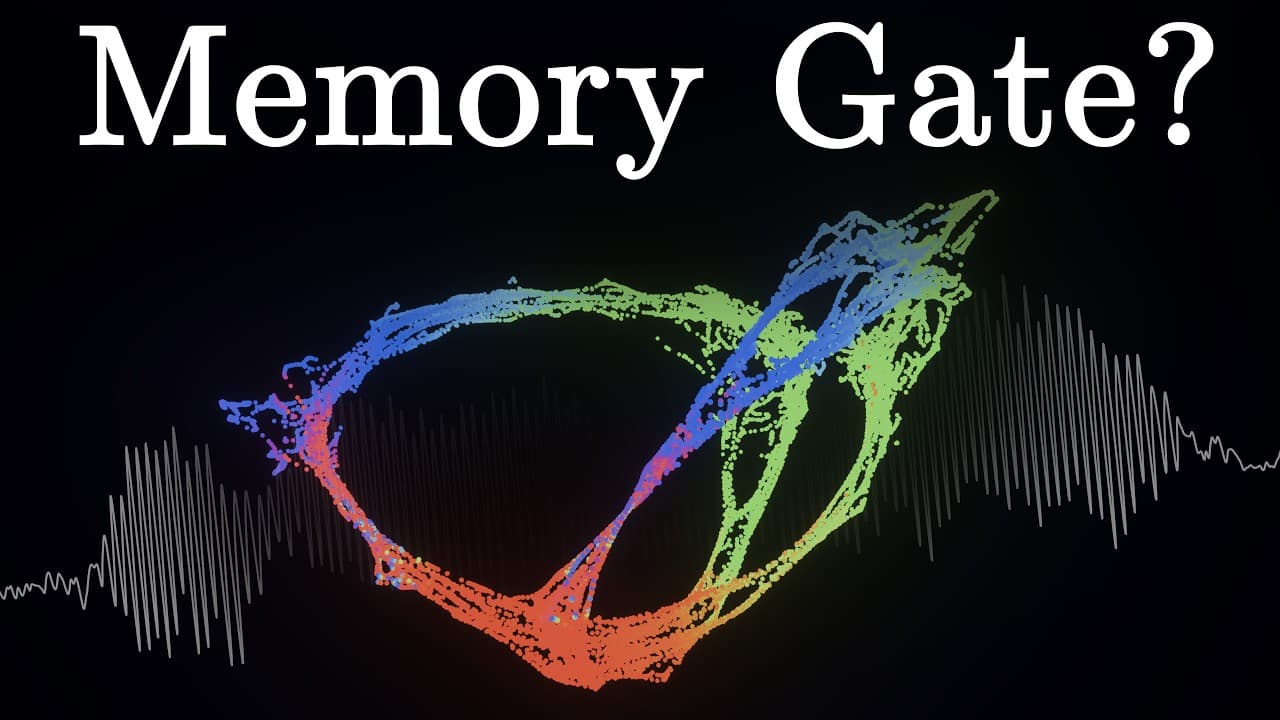
- Neural activity patterns are confined to a specific region in a high-dimensional space, known as a manifold.
- Dimensionality reduction techniques like UMAP help visualize complex neural activity patterns.
- Awake replays capture recent memories of successful paths to rewards in experimental tasks.
Install to Summarize YouTube Videos and Get Transcripts
Explore YouTube Video Summarizer or Get YouTube Transcript Extractor
Questions & Answers
Q: How does the brain decide which memories to keep?
The brain uses a pattern of neural activity known as sharp wave ripples to tag important memories. These ripples occur in the hippocampus and act as an internal bookmarking system. During sleep, the hippocampus replays these tagged experiences in a compressed form, allowing the neocortex to strengthen connections and store them permanently.
Q: What role does the hippocampus play in memory?
The hippocampus is crucial for episodic memory, recording personal experiences as sequences of events. It switches between two modes: recording experiences during wakefulness and replaying them during sleep. This replay, accompanied by sharp wave ripples, helps consolidate important memories by transferring them to the neocortex for permanent storage.
Q: What are sharp wave ripples in the brain?
Sharp wave ripples are patterns of neural activity that occur in the hippocampus. They act as an internal bookmarking system, tagging significant experiences for later consolidation. During sleep, these ripples facilitate the replay of experiences in a compressed form, allowing the brain to strengthen connections and store important memories permanently.
Q: Why are awake ripples important for memory?
Awake ripples serve as memory bookmarks, tagging specific experiences for priority consolidation during sleep. They occur right after important events, ensuring that these experiences are marked for later replay and storage. This process allows the brain to manage the vast amount of information it encounters daily, preserving only the most significant memories.
Q: How does the brain consolidate memories during sleep?
During sleep, the hippocampus replays experiences in a compressed form, facilitated by sharp wave ripples. This replay allows the neocortex to strengthen connections between neurons, effectively transferring and storing important memories permanently. The compressed timing of these replays ensures that neural activity arrives in precise temporal windows, crucial for memory consolidation.
Q: What is the significance of dimensionality reduction in neuroscience?
Dimensionality reduction techniques, like UMAP, are used to visualize complex neural activity patterns by reducing high-dimensional data to a more manageable form. These techniques reveal the structure of neural activity, helping researchers understand how the brain encodes and processes information, such as the correspondence between neural patterns and task-related activities.
Q: How do awake and sleep ripples differ in function?
Awake ripples occur during brief periods of rest or immobility and serve as memory bookmarks, tagging important events for later consolidation. In contrast, sleep ripples facilitate the actual replay and consolidation of these tagged experiences. While awake ripples occur less frequently, they are crucial for prioritizing which memories should be stored during sleep.
Q: What experimental methods are used to study memory tagging?
Researchers use experiments involving tasks that engage episodic memory, such as mice running through mazes. By recording from hundreds of neurons in the hippocampus, scientists can observe the learning process and analyze neural activity patterns. Techniques like UMAP are employed to visualize and decode these patterns, helping to understand how memories are tagged and consolidated.
Summary & Key Takeaways
-
The brain's ability to select memories for retention is linked to sharp wave ripples, a neural activity pattern acting as an internal bookmarking system. These ripples tag significant experiences for consolidation during sleep, where the hippocampus replays them in a compressed form, allowing the neocortex to store them permanently.
-
Research highlights the hippocampus's role in episodic memory, switching between recording experiences and replaying them for consolidation. Awake ripples tag important events for later consolidation, ensuring significant memories are stored when the brain is in the right state during sleep.
-
Dimensionality reduction techniques like UMAP reveal the structure of neural activity, showing how awake replays capture recent successful paths in tasks. This process underscores the importance of practice and direct experience in memory consolidation, as highlighted by hippocampal physiology studies.
Read in Other Languages (beta)
Share This Summary 📚
Summarize YouTube Videos and Get Video Transcripts with 1-Click
Try YouTube Summary with ChatGPT & Claude or YouTube Transcript Generator
Explore More Summaries from Artem Kirsanov 📚
Summarize YouTube Videos and Get Video Transcripts with 1-Click
Try YouTube Summary with ChatGPT & Claude or YouTube Transcript Generator