How to Stop Catastrophizing and Reduce Anxiety
TL;DR
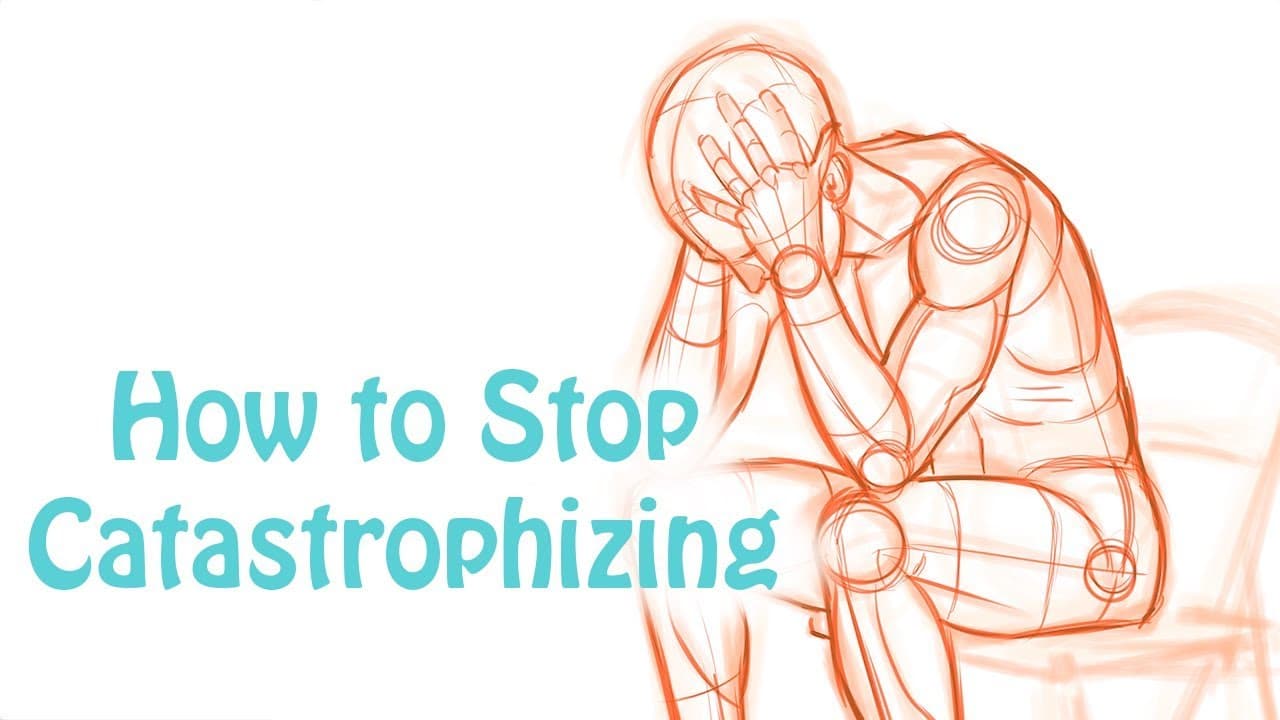
Catastrophizing is a cognitive distortion that turns a real setback into a belief that something horrible and unrecoverable is bound to happen, and it invites the very problems you fear. Three replacements work better: get a good night's rest, accept uncertainty as a normal part of life, and motivate yourself with positive goals you value instead of fear.
Transcript
In this video we're going to talk about catastrophizing-expecting the worst. Catastrophizing is an excellent way to make yourself anxious and depressed and completely ruin your life! Oh yeah and I'm going to teach you three approaches to replace it with something healthier. So let's talk about that. This video is part of my intensive course on rew... Read More
Key Insights
- Catastrophizing is a common cognitive distortion or thinking error in which a current or future situation is interpreted as a catastrophe, taking a difficult situation and reading it as horrible, terrible and unrecoverable rather than as a problem that can be solved.
- The root of catastrophizing is a habitual response to challenges or shortcomings. When that response becomes a repeated pattern it leads to depression or anxiety, and people caught in it tend to imagine never being able to recover from the setback.
- Expecting the worst does not prevent the worst, it invites it. The stranded driver feared rejection so strongly that he slammed the door shut on himself, cutting himself off from the exact solution, the jack, that he had walked all that way to get.
- Imagining a future that is bleak, threatening or hopeless leads the brain to put out less serotonin and dopamine, the happiness, pleasure and motivation chemicals, which produces a cycle of withdrawal from life, lack of motivation and a pattern of depression.
- Catastrophizing forces the brain to see threats and failure everywhere, and the brain answers perceived threats with a very real fight, flight or freeze response, contributing to social anxiety, general anxiety and panic attacks.
- The first dysfunctional function of catastrophizing is emotional avoidance: expecting failure protects against disappointment and rejecting yourself first spares you from being rejected. It is comfortable in the short term, but you cannot have success if you never risk failure.
- The second dysfunctional function is fear as motivation. Telling a child they will ruin their life gets them out of bed today, but they spend the day worrying about being a failure and the next morning is even harder, so fear is not a sustainable motivator.
- Sleep is the first step out of the pattern. When sleep deprived, people are hypersensitive to threats and less resilient facing challenges, while rest builds a greater ability to face the same challenges bravely.
Install to Summarize YouTube Videos and Get Transcripts
Explore YouTube Video Summarizer or Get YouTube Transcript Extractor
Questions & Answers
Q: What is catastrophizing?
Catastrophizing is a common cognitive distortion, also called a thinking error, in which you think of a current or future situation as a catastrophe. It means imagining the worst: taking a difficult situation and interpreting it as horrible, terrible and unrecoverable. Examples include worrying about failing a test and then picturing yourself failing out of school, working at McDonald's, never having success and dying homeless, or getting a B and declaring that you are failing the class. It often starts from a genuine setback, then the thinking error converts that reality into the belief that something horrible is bound to happen.
Q: How do I stop catastrophizing?
Three approaches replace it with something healthier. First, start with a good night's rest, because sleep deprivation makes you hypersensitive to threats and less resilient, while being rested gives you a greater ability to face challenges bravely. Second, accept uncertainty as a natural and acceptable part of living a wholehearted life, relabeling anxiety from harmful to uncomfortable but survivable. Third, motivate yourself with positive goals: what you want, value and hope for, instead of fear. The classic CBT approach adds noticing when you catastrophize and then gently challenging those thoughts.
Q: Why does expecting the worst make things worse?
People often trick themselves into believing that if they expect the worst they can prevent it, but usually the exact opposite happens. Seeing the worst invites the worst. The stranded driver in the story feared rejection so much that he slammed the door on the farmer and cut himself off from the jack he needed. Going into a conversation expecting the other person to get defensive tends to make you lead off harsher and more rigid, which invites the defensiveness you feared. Expecting a crush to reject you keeps you from asking, so you end up alone on the weekend anyway.
Q: How does catastrophizing cause depression?
When you imagine a future that is bleak, threatening or hopeless, your brain responds by putting out less serotonin and dopamine, described as the happiness, pleasure and motivation chemicals. The logic the brain follows is simple: why be happy or hopeful when the future looks impossibly dreary? That chemical shift leads to a cycle of withdrawal from life, a lack of motivation and a pattern of depression. Expecting the worst also leaves you hopeless about the future, unmotivated because you assume you will fail anyway, and free to wallow in self-pity.
Q: How does catastrophizing cause anxiety?
Catastrophizing forces the brain to see threats and failure everywhere, and the brain responds to perceived threats with a very real fear response, the fight, flight or freeze response. This contributes to social anxiety, general anxiety, panic attacks and more. Typical patterns include a man with panic disorder predicting he will have a panic attack at the mall on a weekend afternoon and then treating that attack as a catastrophe rather than as something merely uncomfortable, and a teenager equating mild to moderate social rejection with being totally shunned by all desirable people.
Q: Why do people keep catastrophizing if it is harmful?
It serves two dysfunctional functions. First, preparing for the worst is a coping strategy that prevents you from feeling risk or uncertainty: if you expect to fail you will not be disappointed when you do, and if you reject yourself first you avoid worrying that someone else will. It is an attempt to avoid feeling sadness or worry, though trying not to feel usually ends in depression and anxiety. Second, many people were trained to believe that fear is the best motivation and that predicting doom is what gets them to work or study.
Q: Why does using fear as motivation fail?
Fear as motivation works briefly, but in the long run it makes you anxious, depressed, overwhelmed and less functional. The example given is a child avoiding school because of anxiety whose anxious parents say she has to get up or she will ruin her life and end up working at McDonald's. In the short term it gets her out of bed and into school, but she spends the rest of the day worrying about being a failure, and the next day motivation is even harder to find. It is not a sustainable source of motivation.
Q: What is the CBT approach to ending catastrophizing?
The classic CBT approach starts with noticing when you are catastrophizing. Pay attention to the words you use, commonly never, terrible, failure, rejected and awkward, and to exaggerations that make things out to be worse than they are. Notice which situations trigger it, write down what it looks like when you do it, and ask a friend or family member to point it out. The second step is challenging those thoughts: just because you think something does not mean it is true, so gently question your thoughts and let them pass rather than believing or fighting them.
Q: How can I accept uncertainty instead of fearing it?
Accepting uncertainty is described as a fundamental life skill that can be developed and practiced, and part of living a wholehearted life. It involves changing how you think about anxiety: instead of labeling anxiety as bad, harmful or unmanageable, you tell yourself this is uncomfortable but it will not injure me, and I can do hard things. Courage is defined here not as the absence of fear but as the judgment that something else is more important. You build the emotional muscles for uncomfortable emotions by practicing mindfulness meditation or doing something that scares you every day.
Q: What should I do if I feel broken for catastrophizing?
Stop that thought process and take a deep breath. Thinking things like why am I such an idiot, I am so broken, or see, I am defective because I do this, is itself unhelpful. You are not defective. You might be doing something that is not working for you, but that does not mean you are bad or broken; it means you can change and start feeling better. Pause, be kind to yourself and practice some courage. Changing how you think takes work, and you can do hard things. The same rule applies when challenging thoughts: do not beat yourself up for having them.
Q: What are positive goals and how do they replace fear-based motivation?
Positive goals mean motivating yourself by what you want in life, what you value and what you hope for, instead of trying to use fear. Rather than saying I have to go to school so I do not die homeless on the street, you say I choose to go to school because I want to be a therapist when I grow up. The practical method is to choose what you do want in life, break it down into small goals, and bravely work toward those little by little rather than driving yourself with predictions of doom.
Q: What does the story of the man and the jack teach about catastrophizing?
A driver on a dark country road gets a flat tire late at night, finds his jack missing and has no phone reception, so he walks toward a distant porch light to borrow a jack from a farmer. During the walk he imagines the farmer being cranky, having no jack, pulling out a gun, setting a dog on him and robbing him. By the time the door opens he is scared and angry, so he shouts that he does not want the jack anyway, slams the door and storms off. The setback was real, but the catastrophizing destroyed the solution.
Summary & Key Takeaways
-
Catastrophizing means interpreting a current or future situation as a catastrophe: taking a difficult situation and reading it as horrible, terrible and unrecoverable. The parable of the stranded driver shows the pattern. A flat tire and a missing jack are real setbacks, but the long walk fills with imagined guns, dogs and robbery until the driver slams the door on the help he needed.
-
Expecting the worst does not prevent the worst, it invites it. Fearing rejection, the driver cut himself off from the solution. Going into a conversation expecting defensiveness makes you harsher and invites defensiveness. Imagining a bleak future leads the brain to put out less serotonin and dopamine, the happiness, pleasure and motivation chemicals, which feeds withdrawal, low motivation and depression.
-
Two dysfunctional functions keep the habit alive: preparing for the worst avoids feeling risk or uncertainty, and predicting doom is used as motivation. Both backfire. The replacements are rest, accepting uncertainty and anxiety as normal, and positive goals. The classic CBT approach adds noticing the words you catastrophize with, then gently questioning those thoughts and letting them pass.
Read in Other Languages (beta)
Share This Summary 📚
Summarize YouTube Videos and Get Video Transcripts with 1-Click
Try YouTube Summary with ChatGPT & Claude or YouTube Transcript Generator
Explore More Summaries from Therapy in a Nutshell 📚


Summarize YouTube Videos and Get Video Transcripts with 1-Click
Try YouTube Summary with ChatGPT & Claude or YouTube Transcript Generator