What Is the Future of Hydropower and Its Risks
TL;DR
Hydropower remains the dominant renewable energy source, outpacing wind and solar, and pumped storage is key to grid reliability. Expansion faces licensing barriers, environmental concerns, and drought risks that can reduce output, but experts see a critical role for hydro in a 100 percent renewable future if impacts are mitigated and infrastructure is modernized.
Transcript
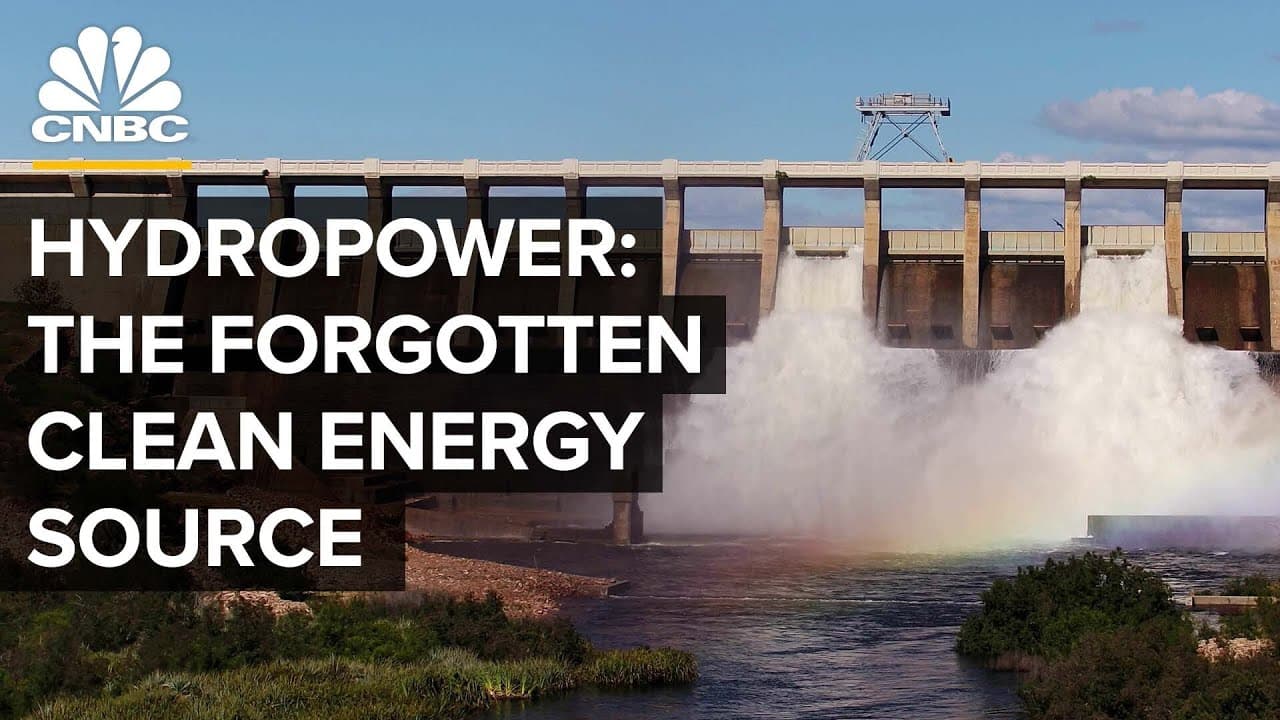
Hydropower was the world's first large-scale renewable energy source. It's still by far the largest renewable worldwide, producing over twice as much energy as wind and over four times as much as solar. And pumping water up a hill, aka pumped storage hydropower, comprises well over 90% of the world's total energy storage capacity. But in spite of h... Read More
Key Insights
- Hydropower is the world’s largest renewable energy source, generating more than twice what wind does and more than four times what solar does.
- Pumped storage hydro acts like a giant battery by moving water between reservoirs to store and release energy as needed.
- The United States has about 90,000 dams, but only 3 percent generate power, indicating room for growth via upgrading or retrofitting existing dams.
- License renewals and aging dam infrastructure are major barriers to growth in domestic hydro over the next decade.
- Pumped storage currently has 22 GW of capacity and over 60 GW proposed, making it a primary growth area after China.
- Closed-loop pumped storage is environmentally friendlier because it does not rely on external water sources or river disruption.
- Reservoir emissions vary; some sites emit significant methane from flooded vegetation, while others emit less depending on climate and conditions.
- Climate-driven drought reduces reservoir levels, cutting hydro output and often increasing fossil fuel use to compensate.
- More videos from this channel:
- More from this channel: CNBC
Install to Summarize YouTube Videos and Get Transcripts
Explore YouTube Video Summarizer or Get YouTube Transcript Extractor
Questions & Answers
Q: What is the role of pumped storage in a renewable energy grid?
Pumped storage serves as a large scale energy storage system that can store excess energy when wind or solar production is high and release it when demand rises or supply wanes. It uses an upper and lower reservoir to move water through a turbine to generate electricity, and it can be recharged by using grid power to pump water uphill. This enables continuous power availability and helps balance daily fluctuations in renewable output.
Q: Why is expanding hydropower in the U.S. challenging?
Expansion is challenging due to licensing hurdles and the high cost of obtaining permits, along with aging infrastructure. Many facilities may lack the money or time to navigate licensing processes, and re licensing can be lengthy and expensive. These factors slow growth even as the technology could support more flexible, carbon-free generation.
Q: What environmental concerns accompany hydroelectric development?
Dams and reservoirs disrupt river ecosystems and habitats, can displace communities, and emit methane and carbon dioxide from decomposing organic matter. Emissions vary by reservoir and climate, with some areas showing higher methane output while others show lower emissions, underscoring the need for robust emissions measurement and mitigation strategies.
Q: How does drought affect hydropower reliability?
Drought reduces reservoir water levels, which lowers the potential energy available to spin turbines and generate electricity. This can force a shift toward fossil fuels to meet demand, as evidenced by past drought periods that increased CO2 emissions and costs while reducing hydro output.
Q: What is the difference between open loop and closed loop pumped storage, and why does it matter?
Open loop pumped storage uses a lower reservoir connected to a water source like a river, which can disrupt ecosystems. Closed loop systems are not connected to external water sources, making them generally more environmentally friendly and more flexible in siting, which helps minimize ecological impact while enabling storage capacity growth.
Q: What is the current contribution of hydropower to U.S. electricity generation and renewables?
Hydropower accounted for about 6 percent of utility-scale electricity generation in the U.S. and 32 percent of renewable electricity generation in 2021, maintaining the position as the largest renewable source domestically until 2019 when wind surpassed it. This highlights its ongoing importance in the energy mix.
Q: How can new technologies change the environmental footprint of hydro projects?
New technologies, including smaller pumped storage facilities and closed loop designs, aim to reduce environmental disruption by avoiding river connections and allowing siting away from sensitive ecosystems. These innovations expand the potential for hydro while trying to limit ecological damage and improve licensing outcomes.
Q: What is the global trend in hydroelectric expansion and its drivers?
Globally, hydro expansion has been driven by large scale dam building, especially in China, with other regions in Asia-Pacific, Africa, and India pursuing growth. The trend faces environmental scrutiny and climate variability, but still remains a critical option for meeting long term renewable energy goals while supporting grid flexibility and storage.
Summary & Key Takeaways
-
Hydropower is currently the largest renewable energy source and plays a crucial role in long duration energy storage through pumped storage. Expansion hinges on upgrading existing infrastructure, obtaining licenses, and addressing environmental and climate-related challenges.
-
Pumped storage can stabilize grids by storing excess energy from intermittent sources, while newer systems may reduce ecological disruption through closed-loop designs and flexible siting.
-
Environmental, social, and climate risks require robust monitoring, selective permitting, and innovative technologies to minimize harm while boosting capacity and reliability.
Read in Other Languages (beta)
Share This Summary 📚
Summarize YouTube Videos and Get Video Transcripts with 1-Click
Try YouTube Summary with ChatGPT & Claude or YouTube Transcript Generator
Explore More Summaries from CNBC 📚




Summarize YouTube Videos and Get Video Transcripts with 1-Click
Try YouTube Summary with ChatGPT & Claude or YouTube Transcript Generator