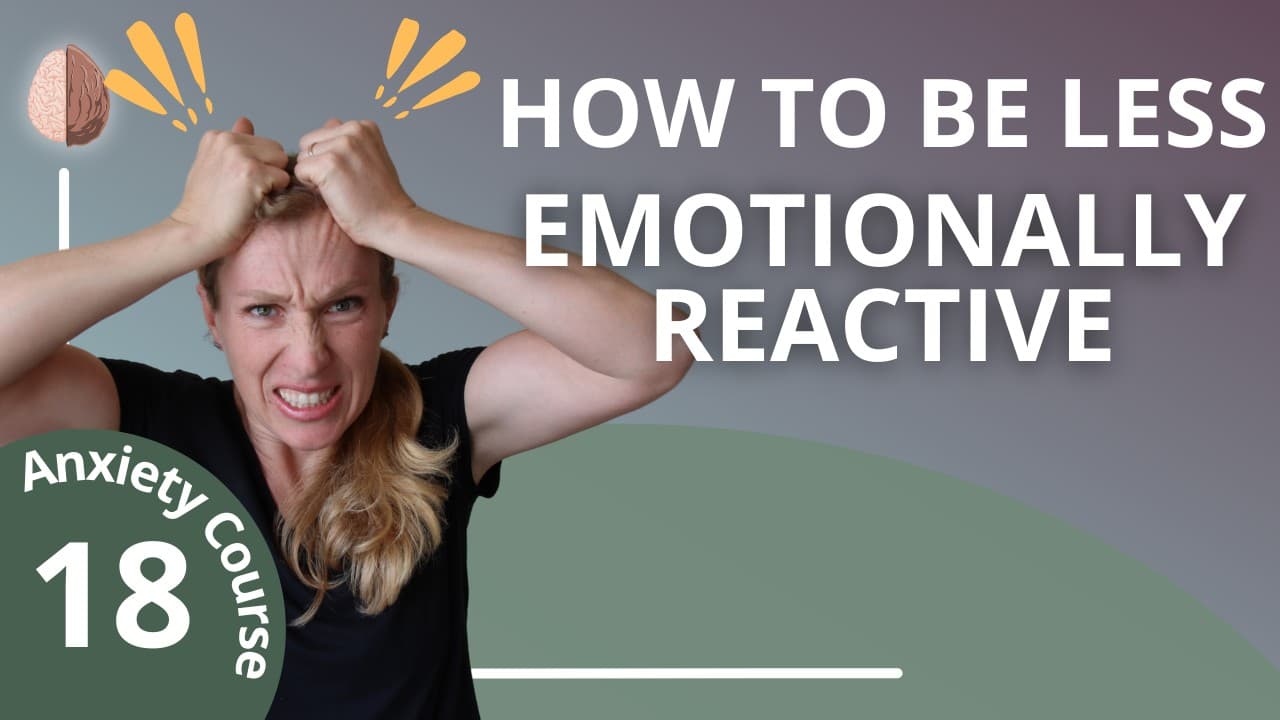
What Is Emotional Reasoning and How Do You Stop It?, Anxiety 18/30
TL;DR
Emotional reasoning is a cognitive distortion in which a feeling is treated as proof that something is true. Because emotions are fast, loud, and imprecise, the speaker recommends slowing down, checking HALT, Hungry, Angry, Lonely, or Tired, and using opposite action before responding. Emotion processing then separates feelings from evidence and supports a balanced choice, so read on for practical ways to become less emotionally reactive.
Transcript
In this video I'm going to teach you an important skill to be less emotionally reactive. This last year my family needed to buy a house. We were living in 1500 square feet with six people, and we were trying to work from home, and it was just too loud and tight. So we looked at homes for over a year. We carefully saved up and considered our bud... Read More
Key Insights
- Emotional reasoning is a cognitive distortion where you believe something is true simply because it feels true, using emotions as evidence instead of logic or actual evidence. It sounds like "If I feel anxious, this must be dangerous, so I must avoid it."
- Emotions work like a smoke alarm: it is better for them to be loud and too reactive just in case there is a fire than quiet, slow, and very accurate. They are big, fast, imprecise chemical releases that serve the function of keeping us alive.
- Emotions bias attention toward matching information. Feeling sad draws more attention to sad things, and feeling anxious draws more attention to frightening news stories, which makes it harder to tell the difference between feelings and reality.
- Intuition differs from emotion in its texture: intuition comes with a quiet sense of confidence, a discerning between light and darkness, and a drive toward decisive action, while emotions are rash, loud, sloppy, and impulsive, leaving you shaky or confused.
- Anxiety in a relationship is not automatically a signal to break up. There is a difference between anxiety because you are in danger or something is wrong and anxiety because you are afraid of being hurt, and finding love requires taking risks.
- Slowing down is the first defense against reactivity, because between stimulus and response there is a space, and in that space lies our freedom. Practical pauses include shutting your mouth, taking a breath, and counting to five or ten before speaking.
- HALT is a rule against deciding while Hungry, Angry, Lonely, or Tired, because those states make people more emotional and less logical. Big decisions made in those conditions are more likely to be driven by feeling rather than balanced judgment.
- Opposite action changes thoughts and feelings by doing the reverse of what the emotion urges: talk softly instead of yelling, approach what you want to avoid, get on with your day instead of staying in bed, which channels cortisol and adrenaline into action.
Install to Summarize YouTube Videos and Get Transcripts
Explore YouTube Video Summarizer or Get YouTube Transcript Extractor
Questions & Answers
Q: What is emotional reasoning?
Emotional reasoning is a cognitive distortion in which you believe something is true simply because it feels true. You use emotion as evidence instead of examining logic and actual evidence, which can lead to poor decisions.
Q: How can I stop emotional reasoning?
Observe the feeling without automatically believing or resisting it, and remind yourself that feeling something does not make it true. Explore alternative evidence and logic that challenge the belief, then choose a balanced response.
Q: Why can emotions be inaccurate?
Emotions are big, loud chemical releases in the brain and body that work quickly and imprecisely. Like an overly sensitive smoke alarm, they help protect you but may react even when the perceived danger is not real.
Q: How can I become less emotionally reactive in an intense moment?
Slow down by pausing, breathing, and counting to five or ten before speaking or acting. That pause creates space to examine the feeling instead of immediately treating it as a fact.
Q: What does HALT mean, and how does it help?
HALT stands for Hungry, Angry, Lonely, or Tired. Avoiding big decisions in these states helps because they can make you more emotional and less logical.
Q: What is opposite action?
Opposite action means doing the reverse of what an emotion urges you to do. Examples include speaking softly instead of yelling, approaching something you want to avoid, or getting on with your day when you want to remain in bed.
Q: How is intuition different from emotion?
The speaker describes intuition as subconscious wisdom gained through experience, accompanied by quiet confidence and a drive toward decisive action. Emotions, by contrast, tend to feel rash, loud, sloppy, or impulsive and may leave you shaky or confused.
Q: Does anxiety mean a decision or relationship is wrong?
No; anxiety alone is not proof that a choice is wrong or that a relationship should end. The speaker distinguishes anxiety caused by actual danger from anxiety about possible hurt and notes that finding love requires taking risks.
Summary & Key Takeaways
-
The speaker describes buying a house after a year of searching with six people living in 1500 square feet. Even after saving carefully and confirming affordability, she felt sick to her stomach with anxiety once under contract. Using emotional reasoning would have meant reading that anxiety as proof of a wrong decision and backing out of the contract.
-
She prepared for that predictable reaction in advance by asking her realtor to text her every day until closing with the message that this is an investment, not just an expenditure. Knowing she feels emotions deeply, she treated the anxiety as noise rather than evidence, and the family bought the home, which has been wonderful.
-
Emotional reasoning fuses feeling with belief and leads to poor decisions. DBT frames the mind in three parts: emotional mind, rational mind that can be too cold, rigid, or serious, and wise mind that weighs all factors to make a good and balanced decision. Intuition sits apart from emotion as subconscious wisdom gained by experience.
-
Four ways to slow down are pausing and breathing or counting, using HALT to avoid decisions when hungry, angry, lonely, or tired, taking opposite action, and predicting triggers with an action plan modeled on how first responders use training, acronyms, and checklists. Reviewing a blowup afterward in writing lays down new neural pathways.
-
The antidote is emotion processing, which the speaker maps to a chart: observe feelings without believing or resisting them, apply willingness with the mantra that just because I feel it does not mean it is true, explore alternative evidence and logic that dispute the belief, then choose a response.
Read in Other Languages (beta)
Share This Summary 📚
Summarize YouTube Videos and Get Video Transcripts with 1-Click
Try YouTube Summary with ChatGPT & Claude or YouTube Transcript Generator
Explore More Summaries from Therapy in a Nutshell 📚

Summarize YouTube Videos and Get Video Transcripts with 1-Click
Try YouTube Summary with ChatGPT & Claude or YouTube Transcript Generator