Why Do Some Adults Avoid Emotional Connection?
TL;DR
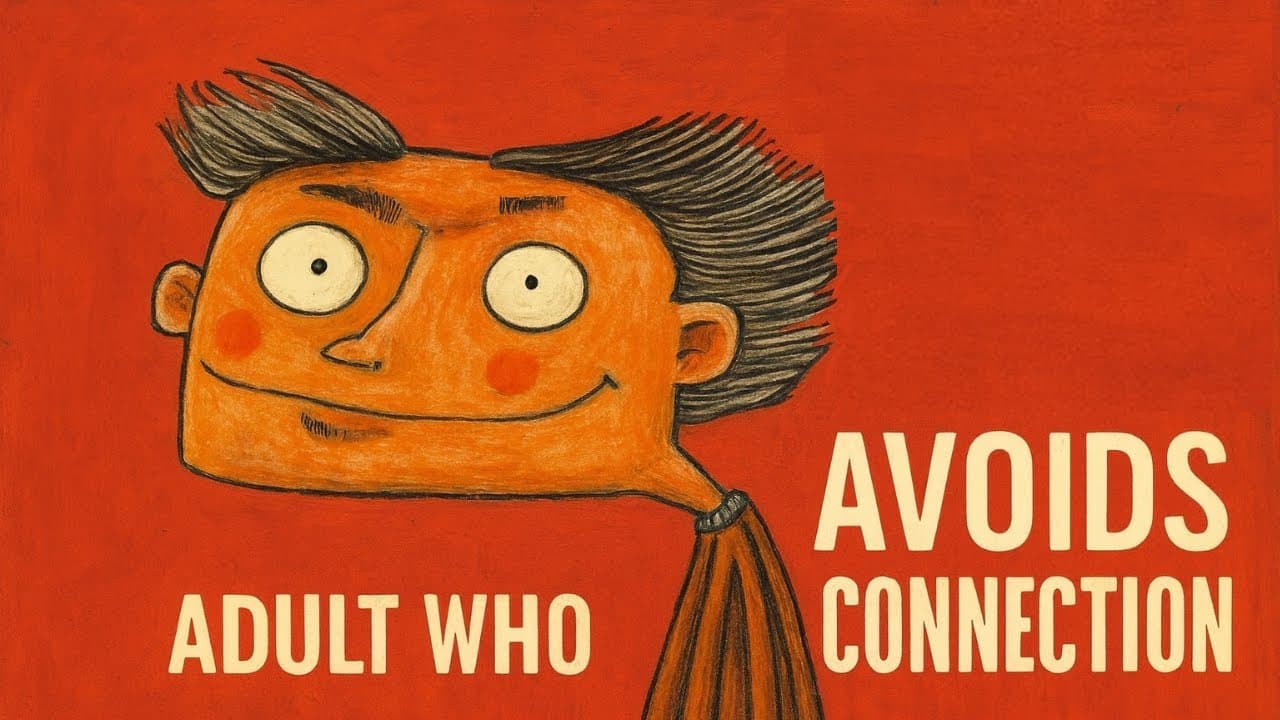
Adults who avoid connection often do so not from apathy but from a fear of vulnerability. This behavior usually stems from early life experiences where emotional closeness felt unsafe or unpredictable. The key to overcoming this avoidance is understanding its roots and gradually allowing oneself to experience connection in a safe and genuine way.
Transcript
When someone says something kind or understanding or attentive and instead of feeling warm, instead of letting it sink in, you feel something tighten inside your chest. You pull back. You change the subject. You smile and pretend everything is fine. And later, when you're alone, you tell yourself it was nothing. You were just busy. You just needed ... Read More
Key Insights
- Avoidance of connection is often rooted in early life experiences where emotional closeness felt unsafe.
- Adults who avoid connection typically have a deep desire for intimacy but fear vulnerability.
- This avoidance is not due to a lack of care but rather an overwhelming sense of feeling too much.
- Emotional over-stimulation and self-protection are common themes in those who avoid connection.
- Avoidance is a learned survival response, not a conscious choice, and is deeply ingrained in behavior.
- Healing begins with self-reflection, self-compassion, and self-trust, allowing for gradual openness.
- Adults who avoid connection often excel in other areas of life, appearing strong and balanced externally.
- The journey to overcoming avoidance involves understanding that connection is not a threat but a possibility.
Install to Summarize YouTube Videos and Get Transcripts
Explore YouTube Video Summarizer or Get YouTube Transcript Extractor
Questions & Answers
Q: Why do some adults avoid emotional connection?
Some adults avoid emotional connection due to early life experiences where emotional closeness felt unsafe or unpredictable. This avoidance is a protective mechanism, not a lack of desire for connection. It stems from a fear of vulnerability and being truly seen, leading to a pattern of maintaining distance to avoid potential emotional pain.
Q: What are common behaviors of adults who avoid connection?
Adults who avoid connection often deflect compliments, refuse help, and downplay their emotions with phrases like 'I'm fine.' They maintain distance in relationships to protect themselves from vulnerability, often appearing independent and composed externally while internally experiencing a quiet ache and longing for connection.
Q: How does early life experience affect adult connection avoidance?
Early life experiences where emotional safety was inconsistent or unpredictable can lead to connection avoidance in adulthood. Individuals may have learned that closeness comes with a cost, leading to a lifelong habit of maintaining distance to protect themselves from potential emotional harm and vulnerability.
Q: What role does emotional over-stimulation play in connection avoidance?
Emotional over-stimulation plays a significant role in connection avoidance as individuals who feel emotions intensely may find closeness overwhelming. Their nervous system becomes alert quickly, leading them to seek distance as a calming mechanism to manage their emotional experiences and protect themselves from feeling overwhelmed.
Q: How can adults who avoid connection begin to heal?
Healing begins with self-reflection, self-compassion, and self-trust. Adults who avoid connection can start by allowing themselves to experience connection in small, manageable ways. Meeting someone patient and consistent can help them gradually open up, realizing that connection is not a threat but a possibility for genuine relationships.
Q: What is the paradox of avoidance in adults seeking connection?
The paradox of avoidance is that adults who avoid connection often have a deep desire for intimacy but fear the vulnerability it requires. They protect themselves by maintaining distance, even though they long for closeness. This avoidance is not about lacking emotional ability but about lacking permission to express their true emotions.
Q: How does avoidance manifest in daily life for adults?
Avoidance manifests in daily life through subtle behaviors like deflecting compliments, refusing help, and maintaining emotional distance in relationships. These adults often second-guess sharing positive experiences and convince themselves to deal with pain alone, fearing that closeness will lead to emotional chaos and misunderstanding.
Q: What is the ultimate goal for adults overcoming connection avoidance?
The ultimate goal for adults overcoming connection avoidance is to build a life where their true selves feel safe enough to emerge. This involves replacing self-protection with self-trust, allowing for genuine connections without fear. It means understanding that closeness does not require perfection and that they are worthy of being known and loved.
Summary & Key Takeaways
-
Avoidance of emotional connection in adults is often a protective mechanism developed from early life experiences where closeness felt unsafe. This behavior is not due to apathy but rather a fear of vulnerability and being truly seen. Understanding and addressing these fears can lead to healthier, more fulfilling relationships.
-
Adults who avoid connection often feel emotions intensely, leading to a pattern where distance feels calming. This avoidance is not about lacking emotional ability but lacking emotional permission to need, feel, and trust. The transformation begins with meeting someone patient and consistent, allowing for cautious openness.
-
Healing from avoidance involves recognizing that avoidance was an adaptation, not a flaw. It requires self-reflection and gradual experimentation with connection. Realizing that closeness does not require perfection allows individuals to embrace their humanity and build genuine connections without fear.
Read in Other Languages (beta)
Share This Summary 📚
Summarize YouTube Videos and Get Video Transcripts with 1-Click
Try YouTube Summary with ChatGPT & Claude or YouTube Transcript Generator
Explore More Summaries from Kee 📚




Summarize YouTube Videos and Get Video Transcripts with 1-Click
Try YouTube Summary with ChatGPT & Claude or YouTube Transcript Generator