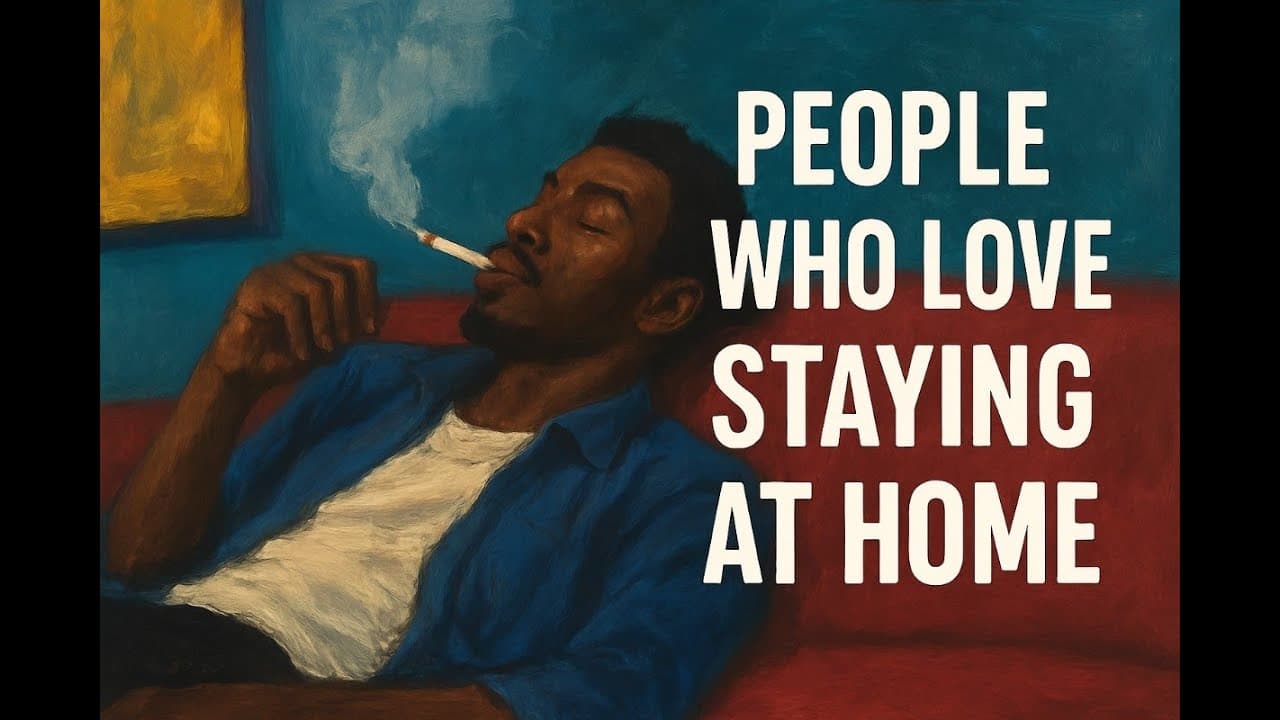
Why Do Some People Prefer Staying at Home?
TL;DR
Staying home can provide a low-threat, predictable environment where sensitive or introverted people recover from overstimulation, process emotions, and reconnect with their authentic identity. Intentional solitude may support creativity, clarity, emotional intelligence, and deeper relationships, but it should remain balanced with meaningful connection rather than becoming complete withdrawal.
Transcript
There's a certain kind of quiet that only exists when you're home. Not the quiet of boredom, not the kind that feels empty, but the quiet that feels like safety. It's that feeling when you hear the distant hum of the refrigerator, the soft click of a clock and realize that for once nobody needs you to be anywhere else. It's not loneliness, it's pea... Read More
Key Insights
- Home is a low-threat environment where familiar surroundings can reduce the perceived need to defend, perform, or manage other people's expectations. This sense of safety allows the body to relax, the social guard to drop, and previously restrained thoughts or emotions to surface.
- Sensitivity to external stimuli can make bright lights, loud sounds, crowds, and prolonged conversation feel overwhelming. For people who process these inputs intensely, returning home provides balance and nervous-system recovery rather than evidence that they dislike people or fear the outside world.
- Intentional solitude is a form of intimacy with oneself, not necessarily isolation. Quiet time lets a person remove the social mask, stop adjusting to different audiences, and reconnect with the unfiltered identity that can become fragmented through constant comparison, pressure, and performance.
- Predictable routines are tools for emotional regulation because familiarity reduces uncertainty and helps the mind relax. Small rituals, such as making the same morning coffee or lighting a candle, can communicate safety and transform an ordinary living space into a dependable place for recovery.
- Solitude supports creativity by giving thoughts room to unfold without interruption, judgment, or concern about how others might perceive them. In stillness, people can notice subtle details, form original connections, develop ideas, and hear an inner voice that becomes harder to detect in social noise.
- Comfort with being alone is associated in the transcript with reflection, emotional intelligence, and self-awareness. People can process feelings, observe thoughts, accept uncomfortable emotions, and develop an identity that depends less on peer pressure, external approval, or constant validation.
- A preference for staying home can coexist with deep relationships. Homebodies may avoid spending limited energy on superficial interactions and instead seek bonds defined by comfortable silence, genuine presence, and freedom from the pressure to entertain, impress, or continually fill the air with words.
- Solitude and withdrawal are not identical, and maintaining the distinction is essential. Restorative time at home prepares a person to reenter the world with greater calm, while excessive withdrawal can reduce necessary connection. Even strongly introverted people still need meaningful relationships and engagement.
Install to Summarize YouTube Videos and Get Transcripts
Explore YouTube Video Summarizer or Get YouTube Transcript Extractor
Questions & Answers
Q: Why do some people prefer staying at home?
Some people prefer staying home because it offers quiet, familiarity, predictability, and relief from constant social performance. Those who are highly sensitive to noise, bright light, crowds, or extended conversation may experience the outside world more intensely. Home gives their nervous system space to rest while helping them process emotions and reconnect with an authentic sense of self.
Q: Is loving solitude the same as being antisocial?
Loving solitude is not necessarily the same as being antisocial, lonely, afraid, or detached. The transcript presents intentional time alone as a way to recover from overstimulation, remove the social mask, and regain emotional balance. A person can enjoy being home while still valuing meaningful relationships, especially relationships where silence is comfortable and presence matters more than performance.
Q: How does staying home help with overstimulation?
Staying home can limit the bright lights, loud sounds, crowds, conversation, comparison, and pressure that sensitive people process intensely. Familiar surroundings reduce the demand to monitor others or maintain a socially acceptable version of oneself. In this quieter setting, the nervous system can rest, thoughts can become clearer, and held-back emotions can emerge for reflection and processing.
Q: How can solitude improve creativity and clarity?
Solitude gives thoughts time to develop without interruption, judgment, or the need to translate them into language designed for an audience. The transcript connects intentional time alone with reflection, originality, empathy, imagination, and clearer ideas. Quiet moments in a room, shower, or solitary walk allow subtle observations and internal connections to become noticeable when external noise no longer dominates attention.
Q: Why do homebodies sometimes feel guilty about staying in?
Homebodies may feel guilty because culture often celebrates visibility, busyness, productivity, travel, parties, and constant social activity. Social media can intensify this pressure by displaying highlight reels filled with trips, smiles, and gatherings. These images may create the impression that life is happening elsewhere, even though staying home can provide the peace, growth, and restoration a person genuinely needs.
Q: How do routines at home reduce anxiety?
Routines provide predictability, and the transcript says the brain finds predictability comforting because it reduces anxiety. Knowing where things are and repeating familiar rituals can help the mind relax. Actions such as making the same coffee, lighting a candle, arranging a comfortable room, or following a quiet rhythm repeatedly signal that the environment is familiar and safe.
Q: Can people who stay home have deep relationships?
People who prefer staying home can have deep relationships because they may conserve their social energy instead of spending it on superficial interactions. They often value bonds where two people can share silence without discomfort and remain present without performing. Their preference is for meaningful connection, emotional safety, and authenticity, not necessarily for avoiding everyone or rejecting companionship entirely.
Q: When does healthy solitude become unhealthy withdrawal?
Healthy solitude restores energy, supports reflection, and helps a person prepare to reenter the world with greater calm. Withdrawal becomes a concern when being home replaces necessary connection rather than balancing it. The transcript emphasizes that even highly introverted people need relationships, so the key distinction is whether solitude supports engagement and well-being or continually prevents meaningful human contact.
Summary & Key Takeaways
-
Home can function as a sanctuary for people who process external stimulation intensely. Familiar surroundings, predictable routines, and quiet rituals help the nervous system relax after noise, social pressure, and constant performance. Staying home, in this context, represents emotional decompression and self-care rather than laziness, fear, or rejection of life.
-
Solitude allows people to remove their social masks and observe their thoughts without interruption or judgment. This reflective space can produce clearer ideas, emotional processing, imagination, and self-awareness. People comfortable with their own company may rely less on approval because their identity is guided more strongly by internal values than by changing audiences.
-
A healthy preference for home does not eliminate the need for relationships. Homebodies may conserve energy for deeper bonds where silence feels comfortable and presence matters more than performance. The important distinction is between intentional solitude that restores a person and withdrawal that prevents connection, engagement, or a balanced relationship with the outside world.
Read in Other Languages (beta)
Share This Summary 📚
Summarize YouTube Videos and Get Video Transcripts with 1-Click
Try YouTube Summary with ChatGPT & Claude or YouTube Transcript Generator
Explore More Summaries from Kee 📚




Summarize YouTube Videos and Get Video Transcripts with 1-Click
Try YouTube Summary with ChatGPT & Claude or YouTube Transcript Generator