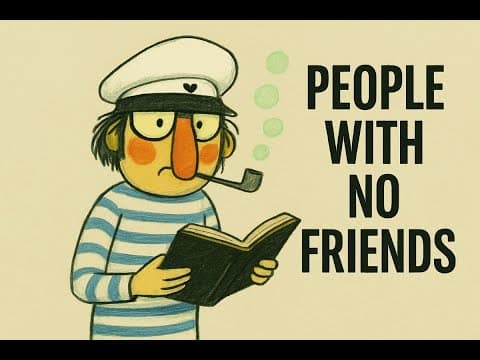
The Psychology of Why Some People Have No Friends
TL;DR
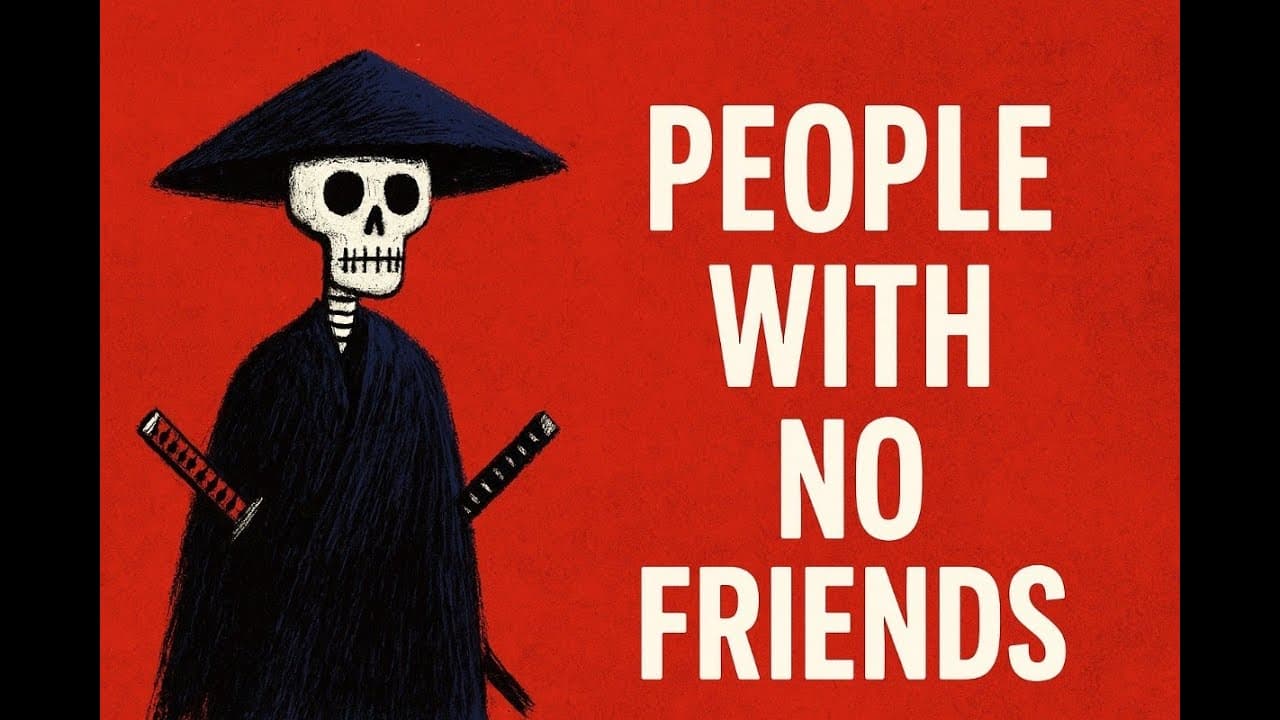
Some people have no friends because repeated disappointments, betrayals, and misunderstandings teach them that connection is unsafe, causing them to stop reaching out even when they still want intimacy. Prolonged isolation can also trigger brain regions associated with physical pain, lighten sleep, heighten social vigilance, and reinforce withdrawal. Read on to understand learned social helplessness and the hidden psychology behind apparent solitude.
Transcript
There's a certain kind of loneliness that doesn't always look like loneliness. It's quiet, invisible. It hides behind laughter, behind productivity, behind the phrase, "I'm just busy lately." But deep down, there's an ache that never quite goes away. It's not the loneliness of being physically alone. It's the loneliness of realizing that no one rea... Read More
Key Insights
- Loneliness of the friendless is often invisible, hiding behind laughter, productivity, and the phrase 'I'm just busy lately.' It is not about being physically alone but about realizing no one truly knows you.
- The brain interprets prolonged isolation as a threat, activating the same regions associated with physical pain. This raises heart rate, lightens sleep, and makes the mind scan for danger, because humans evolved to survive in tribes.
- Attention is not connection and validation is not intimacy. A person can be surrounded by thousands online yet feel utterly unseen, because there is a difference between being known and being understood.
- Learned social helplessness is when repeated failed attempts to connect cause someone to unconsciously stop trying. The brain associates reaching out with rejection, so guards stay up even around kind, understanding people.
- Chosen solitude heals while forced solitude hardens. One helps you reconnect with yourself; the other convinces you that you do not deserve to connect with anyone else, and many friendless people cannot tell which they are living in.
- Prolonged isolation can weaken empathy because emotional exchange goes unpracticed. Empathy works like a muscle, so people alone for long periods may become emotionally numb as the brain protects itself from unmet connection.
- Loneliness makes people hypervigilant to social cues, causing them to overanalyze texts and assume disinterest. This caution reads as distance, others pull back, and a self-fulfilling loop reinforces the very isolation they want to escape.
- Loneliness alters time perception, making minutes feel longer and days blend together. Without anyone to share moments, weekends and holidays lose meaning because those things only matter when they are shared with someone else.
Install to Summarize YouTube Videos and Get Transcripts
Explore YouTube Video Summarizer or Get YouTube Transcript Extractor
Questions & Answers
Q: Why do some people have no friends?
Many did not deliberately choose a friendless life. Repeated disappointments, such as being mocked after sharing something personal, having a secret used against them, or feeling misunderstood, can teach the brain that reaching out is unsafe, so they retreat for protection.
Q: What is learned social helplessness?
Learned social helplessness occurs when repeated failed attempts to connect cause someone to stop trying unconsciously. Their brain associates reaching out with rejection, so their guard may remain up even around kind, open, and understanding people.
Q: Why does loneliness hurt physically as well as emotionally?
After too long without social bonds, the brain can interpret isolation as a threat and activate regions associated with physical pain. Loneliness may also change heart rate, make sleep lighter, and cause the mind to scan for danger where none exists.
Q: Why do people without friends often appear completely fine?
Loneliness can hide behind laughter, productivity, work, creativity, and happy photos online. A person may build an outward version of themselves that can function without connection while privately feeling hollow or as though they are watching life from the outside.
Q: What is the difference between attention and genuine connection?
Attention is not connection, and validation is not intimacy. Someone can be surrounded by thousands of people online yet feel unseen because being noticed or known is different from being understood.
Q: How does loneliness create a cycle of further isolation?
Loneliness can make people hypervigilant to social cues, leading them to overanalyze messages and assume disinterest. Their caution may look like distance, prompting others to pull back and reinforcing the isolation they were trying to avoid.
Q: How can prolonged social isolation affect empathy?
Prolonged isolation can reduce empathy because emotional exchange goes unpracticed. People may become emotionally numb as the brain protects itself from the pain of unmet connection, even though they may still crave deep friendship.
Q: What is the difference between chosen and forced solitude?
Chosen solitude can provide peace, control, space, and an opportunity to reconnect with yourself. Forced or prolonged solitude can harden into the belief that you do not deserve connection, turning an initially healing experience into something haunting.
Summary & Key Takeaways
-
The loneliness of having no friends is quiet and invisible, hiding behind busyness and smiles. It is not the pain of being physically alone but the ache of feeling unknown, unseen, and existing without a witness who would notice if you disappeared.
-
Psychologically, going too long without social bonds makes the brain treat isolation as a threat, triggering physical pain regions, changing heart rate and sleep. Small disappointments and betrayals teach the brain that reaching out is unsafe, so people stop initiating and call it a preference for solitude.
-
Despite appearing fine, friendless people often crave deeper connection than anyone, analyzing and romanticizing it. Because they know what being unseen feels like, they notice others who are left out and often make the best friends, if only someone takes the time to see them first.
Read in Other Languages (beta)
Share This Summary 📚
Summarize YouTube Videos and Get Video Transcripts with 1-Click
Try YouTube Summary with ChatGPT & Claude or YouTube Transcript Generator
Explore More Summaries from Kee 📚
Summarize YouTube Videos and Get Video Transcripts with 1-Click
Try YouTube Summary with ChatGPT & Claude or YouTube Transcript Generator