How to Become Dangerously Self-Educated with AI and the ACTOR Framework
TL;DR
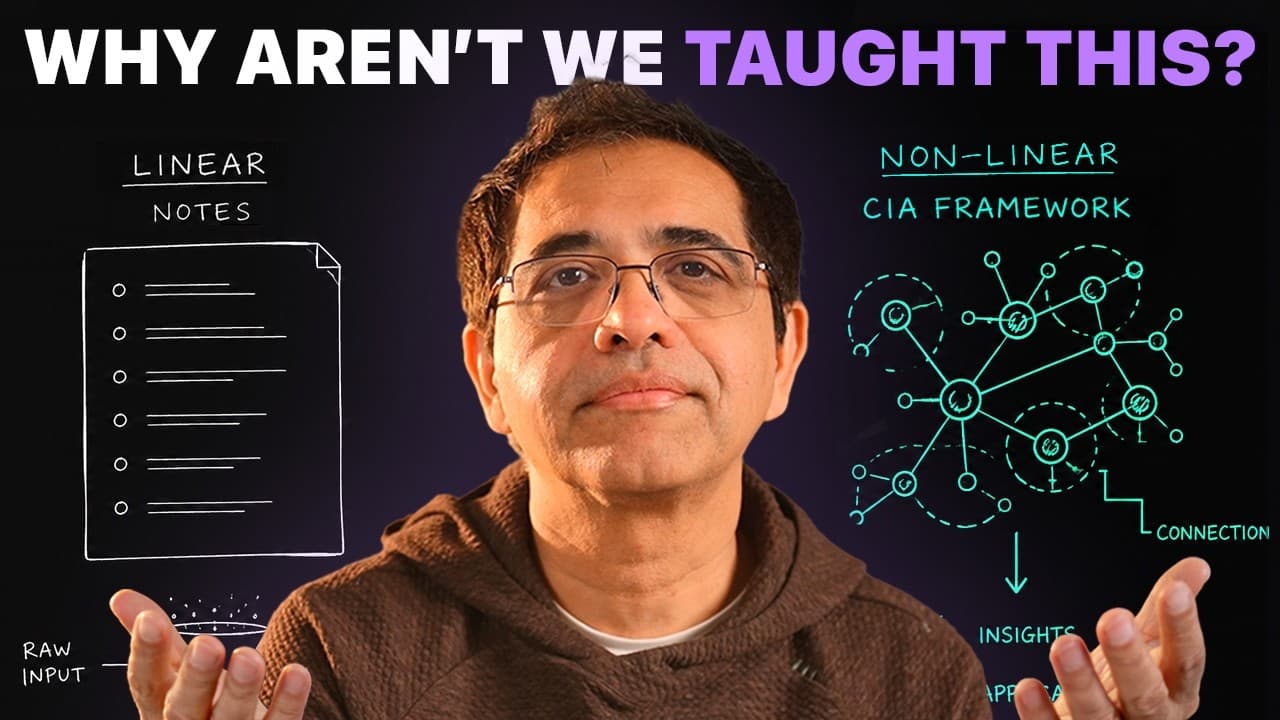
To become more effectively self-educated with AI, use the five-step ACTOR framework: Aim, Compress, Test, Own, and Run. It turns reading into active learning by helping you define a purpose, distill core ideas, challenge assumptions, make knowledge personal, and apply it. AI belongs within each move as a thinking partner, never as a shortcut. Read on to see how the framework avoids common learning traps.
Transcript
Count the last five books you finished. How many change how you think, decide, communicate, or succeed? If the answer is none, you're not alone. Most people read books and forget them. But the top 1% read to change something and to become dangerously smart. For those of you who are new here, I've been the CEO, board member, and investor in billion-... Read More
Key Insights
- Learning styles are largely a myth; preferred methods don't necessarily enhance retention.
- The illusion of fluency leads us to overestimate our understanding of clear explanations.
- The ACTOR framework helps transform reading from passive consumption to active engagement.
- AI summaries provide a false sense of understanding; active engagement with material is crucial.
- Aim involves setting a clear purpose before reading to guide focus and comprehension.
- Compress involves distilling a book into its core idea, akin to finding the trunk of a tree.
- Testing involves challenging assumptions and engaging with opposing viewpoints to deepen understanding.
- Owning knowledge requires personal connection and teaching the material to ensure retention.
Install to Summarize YouTube Videos and Get Transcripts
Explore YouTube Video Summarizer or Get YouTube Transcript Extractor
Questions & Answers
Q: How can you use AI for effective self-education?
Use AI as a thinking partner within each step of the ACTOR framework, not as a replacement for reading and reflection. It can help frame reading goals, generate questions, interpret difficult ideas, and challenge assumptions while you remain responsible for explaining, remembering, and applying what you learn.
Q: What is the ACTOR framework for reading and learning?
ACTOR consists of five moves: Aim, Compress, Test, Own, and Run. The framework helps readers establish a purpose, identify core ideas, question assumptions, connect knowledge personally, and put it into practice.
Q: What does Aim mean in the ACTOR framework?
Aim means deciding why you are reading before you begin. Write one sentence in the form, “I am reading this book because I need to XYZ,” or ask AI for three questions to carry into the material so you read with purpose.
Q: What does Compress mean in the ACTOR framework?
Compress means distilling a book into its core idea instead of trying to collect everything. The transcript compares knowledge to a tree: understand the trunk before gathering the leaves so you can carry forward what matters most.
Q: Why should AI summaries not replace reading?
An AI summary can create the feeling that you have read a book even though you have not wrestled with its core ideas. Genuine understanding requires being able to explain, remember, and use the material yourself.
Q: What is the illusion of fluency in learning?
The illusion of fluency is the false confidence that comes from encountering a clear explanation and assuming you fully understand it. In the Yale University study described, confidence about everyday objects such as bicycles, zippers, and toilets collapsed when people had to explain how they worked step by step.
Q: What reading traps prevent people from retaining books?
The transcript identifies three traps: the highlighter trap, the summary trap, and the completion trap. They occur when marking sentences is mistaken for memory, notes are never revisited, or finishing a book is confused with forming real understanding.
Q: Why are preferred learning styles described as a myth?
Researchers across four major universities found very little evidence that a preferred learning style improves learning and retention. Labels such as visual, auditory, or learning by doing can become self-imposed limitations instead of reliable guides to effective learning.
Summary & Key Takeaways
-
The ACTOR framework is designed to help individuals read more effectively by focusing on core ideas and practical application. It emphasizes the importance of setting a purpose, distilling key concepts, challenging assumptions, connecting personally, and applying knowledge. AI can support this process but should not replace active engagement.
-
Many people fall into traps such as the highlighter trap, summary trap, and completion trap, which hinder true understanding. The video highlights the importance of engaging with material critically and using AI as a thinking partner rather than a shortcut to knowledge.
-
Reading is not just about gathering information but about training for complexity and developing a personal point of view. The video encourages readers to move beyond passive consumption and to become active participants in the learning process, using the ACTOR framework to guide their journey.
Read in Other Languages (beta)
Share This Summary 📚
Summarize YouTube Videos and Get Video Transcripts with 1-Click
Try YouTube Summary with ChatGPT & Claude or YouTube Transcript Generator
Explore More Summaries from Sandeep Swadia | theMITmonk 📚


Summarize YouTube Videos and Get Video Transcripts with 1-Click
Try YouTube Summary with ChatGPT & Claude or YouTube Transcript Generator