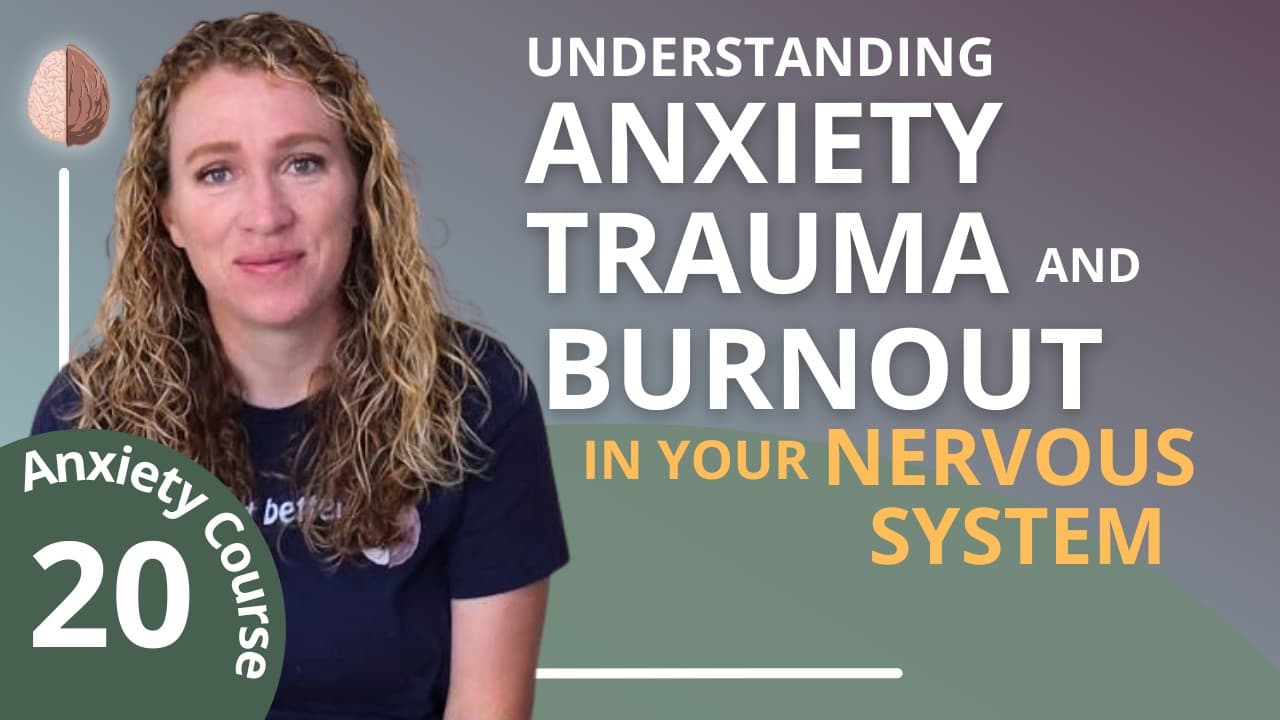
How to Break the Anxiety Cycle in Your Nervous System
TL;DR
Anxiety and burnout are linked to your nervous system, which can get stuck in states of hyperarousal or hypoarousal. Recognizing these states is the first step to change. Techniques to regulate your nervous system include awareness and engaging the parasympathetic response to restore balance.
Transcript
There are two ways that your nervous system plays a direct role in anxiety and depression. Your alerting, activating system, your autonomic nervous system, can get stuck on or stuck off. And most of the people who get stuck in these states, they don't realize it. They're trapped in these cycles, and they just feel chronically anxious or chronic... Read More
Key Insights
- The nervous system plays a direct role in anxiety and depression by getting stuck in hyperarousal or hypoarousal states.
- Polyvagal theory identifies three states of the nervous system: safety, activation, and overwhelm/shutdown.
- A healthy nervous system is adaptive, able to respond to danger quickly, and return to a state of calm.
- Sympathetically dominant states, or hyperarousal, involve being stuck in a fight/flight/freeze response.
- Hypoarousal, or shutdown mode, is a protective response that can lead to burnout or depression.
- Trauma is the nervous system's way of recording threatening events, which can trigger future anxiety or shutdown responses.
- Regulating the nervous system involves awareness of its states and engaging the parasympathetic response.
- Self-care and problem-solving are essential in retraining the nervous system to overcome anxiety and trauma.
Install to Summarize YouTube Videos and Get Transcripts
Explore YouTube Video Summarizer or Get YouTube Transcript Extractor
Questions & Answers
Q: How does the nervous system contribute to anxiety and depression?
The nervous system contributes to anxiety and depression by getting stuck in states of hyperarousal (fight/flight/freeze response) or hypoarousal (shutdown mode). These states can lead to chronic anxiety, exhaustion, or depression, as the system is unable to return to a state of calm and safety.
Q: What are the three states of the nervous system according to polyvagal theory?
According to polyvagal theory, the nervous system has three states: safety (ventral vagal or parasympathetic response), activation (sympathetic response or fight/flight/freeze), and overwhelm/shutdown (dorsal vagal, a more primitive parasympathetic state). These states determine how the body reacts to stress and danger.
Q: What does a healthy nervous system look like?
A healthy nervous system is adaptive and can quickly respond to real or immediate danger with a fight/flight/freeze response, then restore a sense of safety. It allows for a broad range of emotions and can return to calm after stress, supporting relaxation, sleep, and healing.
Q: What is sympathetic dominance in the nervous system?
Sympathetic dominance, or nervous system hyperarousal, occurs when the fight/flight/freeze response is highly active and stuck on. This state leads to heightened sensitivity to threats, increased anxiety, and difficulty in relaxing or concentrating, often resulting from trauma or chronic stress.
Q: How does hypoarousal manifest in the nervous system?
Hypoarousal, or shutdown mode, is a protective response that can lead to burnout or depression. It involves low energy, slow metabolism, and impaired cognitive functions, resulting from chronic stress or overwhelming events without adequate support or resources.
Q: What role does trauma play in the nervous system?
Trauma acts as a deep learning system in the nervous system, recording threatening events to create quick reactions. These stored responses can trigger anxiety or shutdowns in the presence of similar stimuli, even when the threat is no longer present.
Q: How can the nervous system be regulated to overcome anxiety?
Regulating the nervous system involves becoming aware of its states and consciously engaging the parasympathetic response. Techniques include self-care, problem-solving, and grounding skills, which help restore balance and flexibility, allowing for relaxation and enjoyment of life.
Q: What are essential steps for retraining the nervous system?
Essential steps for retraining the nervous system include self-care to restore physical resources, activation through movement, and creating sustainable problem-solving approaches. These steps help return the body to a state of safety and prevent overwhelming stress responses.
Summary & Key Takeaways
-
Anxiety and burnout can result from the nervous system being stuck in hyperarousal or hypoarousal states. Recognizing these states is crucial for change. Techniques to regulate your nervous system include awareness and engaging the parasympathetic response to restore balance.
-
Understanding polyvagal theory helps identify the nervous system's three states: safety, activation, and overwhelm/shutdown. A healthy nervous system is adaptive, responding to danger quickly and returning to calm.
-
Trauma is stored in the nervous system as a learned response to threats, leading to anxiety or shutdowns. Regulating the nervous system through self-care and problem-solving can help overcome these patterns.
Read in Other Languages (beta)
Share This Summary 📚
Summarize YouTube Videos and Get Video Transcripts with 1-Click
Try YouTube Summary with ChatGPT & Claude or YouTube Transcript Generator
Explore More Summaries from Therapy in a Nutshell 📚





Summarize YouTube Videos and Get Video Transcripts with 1-Click
Try YouTube Summary with ChatGPT & Claude or YouTube Transcript Generator