How Can Reading and Writing Support Mental Health?
TL;DR
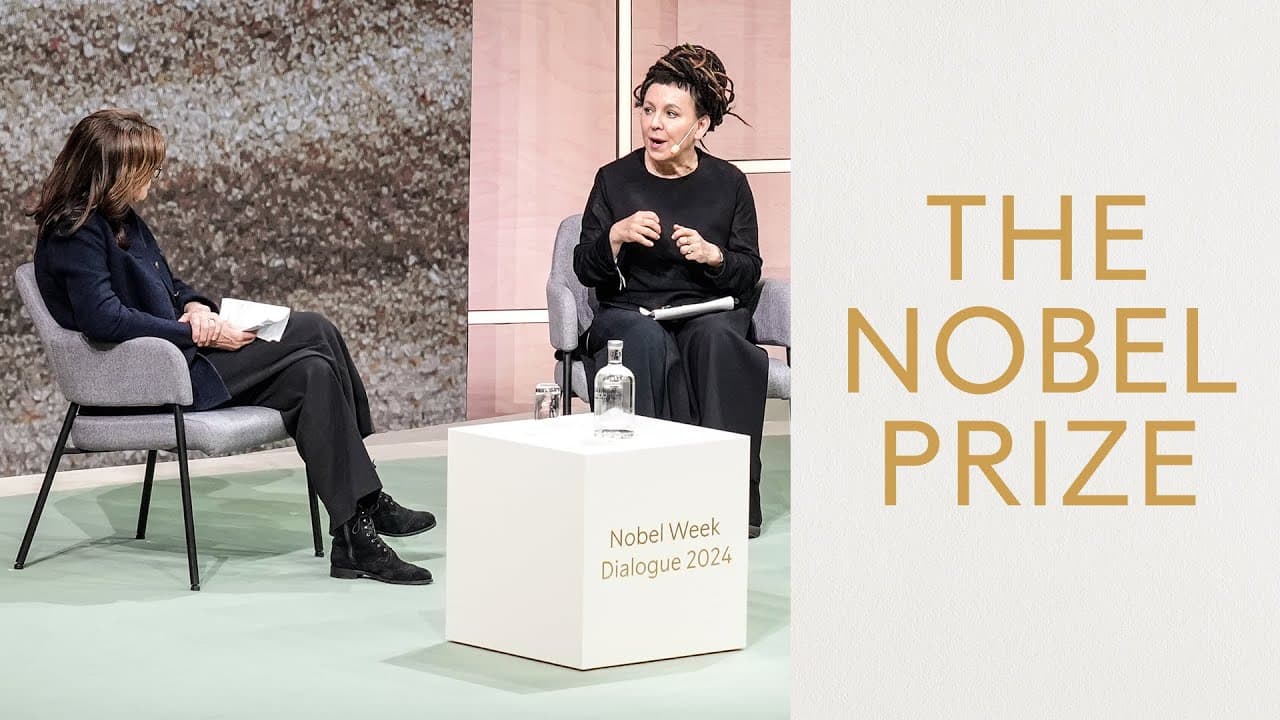
Reading and writing can support mental health by organizing scattered experience into coherent narratives and connecting people with perspectives, emotions, and worlds beyond their own lives. Olga Tokarczuk links contemporary distress to anxiety, unexpressed mourning, helplessness, and distraction, while arguing that relationships with people, nature, and meaningful stories are central to psychological stability.
Transcript
First of all, um before the first question, I would like to uh confess that uh uh this is only my profession from the very far past. I don't work as a psychotherapist anymore. I devoted myself not to facts but to imagination and all my job is just inventing things which are not real. So uh I still I'm not sure if I would be good source for for info... Read More
Key Insights
- Contemporary mental distress is shaped by anxiety, unexpressed mourning, helplessness, and distraction. Tokarczuk presents these as four major pressures arising from wars, rapid change, environmental loss, unsuccessful attempts at action, and a culture that continually fragments attention.
- Unexpressed mourning is a response to continuing losses in nature. People recognize that animal species and other parts of the natural world are disappearing, yet this grief is rarely acknowledged or processed properly, leaving society in what Tokarczuk describes as a state of constant mourning.
- Helplessness can develop into aggression when people believe that protests, letters, and other attempted interventions are futile. Tokarczuk connects this psychological movement to hostility directed toward people who may actually be quite similar to those expressing the aggression.
- Distraction prevents experience from developing as a meaningful process with a beginning, culmination, and resolution. Entertainment and information may repeatedly capture attention, but fragmented consumption can leave people continually hungry because the material never becomes an integrated or satisfying whole.
- Mental stability is relational because well-being depends on rich connections with other people and the environment. Tokarczuk argues that disconnection from human relationships and nature leaves individuals attached primarily to a distracted digital world filled with information they cannot mentally complete.
- Fragmented information lacks a frame that can turn separate facts into understandable patterns. A screen may place news of war beside a shampoo advertisement, creating unrelated windows that the mind struggles to connect even though it urgently seeks explanation and order.
- Human diversity is valuable because every individual carries something fragile, important, and potentially useful for humanity's future. Tokarczuk compares humanity to a hive whose many different parts preserve a wide range of possibilities across society.
- Literature supports psychological well-being by creating order and expanding connection. Writing organizes a distracted mind through narrative, while reading develops empathy, introduces inaccessible worlds, and helps people understand emotions and perspectives they may never personally experience.
Install to Summarize YouTube Videos and Get Transcripts
Explore YouTube Video Summarizer or Get YouTube Transcript Extractor
Questions & Answers
Q: How can reading support mental health?
Reading can support mental health by connecting a person with other people, cultivating empathy, and revealing worlds they may never encounter directly. It also introduces emotions they may not have experienced themselves. Because a narrative gathers experience into an intelligible form, reading can counter the fragmentation created by disconnected streams of information and help the mind sustain attention and understanding.
Q: How can writing help organize a distracted mind?
Writing can make a person more peaceful by turning scattered impressions and facts into an ordered narrative. Tokarczuk describes narrative as a focused structure that gathers material together, unlike a world of many open or half-open informational windows. Inventing stories therefore provides concentration, sequence, and coherence, allowing a distracted mind to arrange experience into something more understandable.
Q: What are the four major pressures on mental well-being?
Tokarczuk identifies anxiety, mourning, helplessness, and distraction as four major pressures on mental well-being. Anxiety is connected to wars, instability, climate change, and rapid change. Mourning arises from continuing losses in nature. Helplessness follows when attempted action seems futile, while distraction comes from a culture of fragmented information and attention without satisfying resolution.
Q: Why does Tokarczuk connect mental instability with disconnection?
Tokarczuk connects mental instability with disconnection because psychological well-being depends on relationships with other people and with the natural environment. When those relationships weaken, individuals can become attached mainly to a distracted world mediated through phones and continual information. The resulting data cannot easily be completed, framed, or understood, leaving the mind without the patterns and explanations it needs.
Q: Why can fragmented digital information feel unsatisfying?
Fragmented digital information can feel unsatisfying because it presents unrelated subjects in adjacent windows without a larger frame. News of war may appear beside an advertisement for shampoo, yet the mind cannot form these fragments into a coherent process. Tokarczuk compares this experience to endless eating that provides no nourishment, creating continual hunger rather than understanding or resolution.
Q: How can helplessness become aggression?
Helplessness can become aggression when people repeatedly attempt to influence events but conclude that their protests, signed letters, or other actions have no effect. Tokarczuk says psychologists often associate helplessness with aggression. She applies this idea to cancel culture, interpreting some hostility as aggression redirected toward people who are relatively similar rather than toward the larger forces producing powerlessness.
Q: Can literature function as a form of activism?
Literature can function as a form of activism by changing how readers perceive other people, animals, society, and the world. Tokarczuk does not describe herself as a conventional activist because she is uncomfortable in crowds and does not consider herself an effective organizer. Instead, she practices activism through writing that touches vivid issues without becoming directly didactic.
Q: Why does Tokarczuk seek unusual narrators in fiction?
Tokarczuk seeks unusual narrators because imagining the world from the perspective of a fish, bee, or tree could enlarge human consciousness and awareness. People ordinarily perceive reality through their own limited senses, which can feel like a prison. Writing from another viewpoint offers a way to approach unfamiliar realities and reflect on the strange mirror created by human perception.
Summary & Key Takeaways
-
Tokarczuk describes contemporary psychological distress through four connected conditions: anxiety caused by instability and rapid change, mourning for environmental losses, helplessness when attempted action appears futile, and persistent distraction. She argues that these pressures create a broader crisis of mental well-being that cannot be captured fully by the single word depression.
-
Mental stability depends on relationships rather than merely an isolated inner condition. Disconnection from other people and nature leaves individuals immersed in fragmented streams of information that provide no coherent frame. The mind seeks patterns and explanations, but unrelated digital windows make it difficult to organize experience into an understandable whole.
-
Reading and writing offer ways to restore order, attention, connection, and empathy. Writing gathers scattered facts into a narrative, while reading connects a person with others and reveals unfamiliar worlds and emotions. Tokarczuk also sees imaginative literature as a form of activism because it can change perspectives without becoming directly didactic.
Read in Other Languages (beta)
Share This Summary 📚
Summarize YouTube Videos and Get Video Transcripts with 1-Click
Try YouTube Summary with ChatGPT & Claude or YouTube Transcript Generator
Explore More Summaries from Nobel Prize 📚


Summarize YouTube Videos and Get Video Transcripts with 1-Click
Try YouTube Summary with ChatGPT & Claude or YouTube Transcript Generator