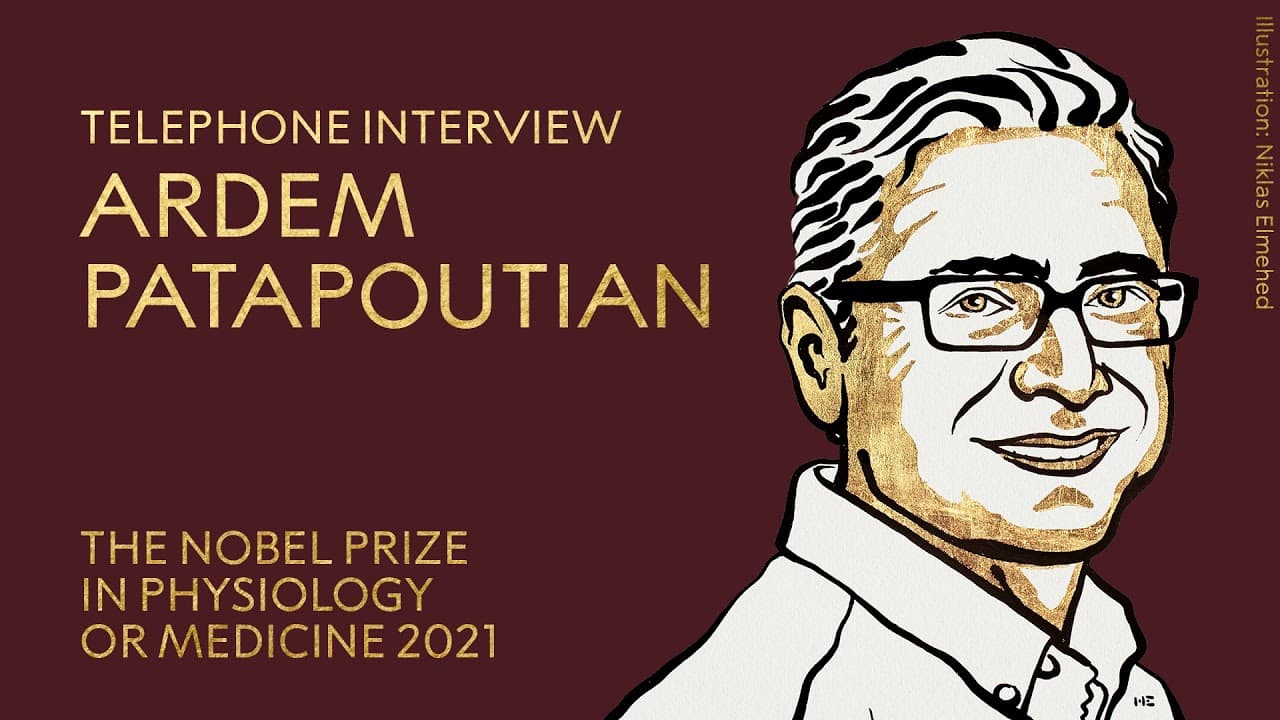
Ardem Patapoutian: "In science, many times, things we take for granted are of high interest"
Transcript
Read and summarize the transcript of this video on Glasp Reader (beta).
Install to Summarize YouTube Videos and Get Transcripts
Explore YouTube Video Summarizer or Get YouTube Transcript Extractor
Summary
This conversation is between Adam Pataputian, who won the Nobel Prize, and a representative from nobelprize.org. They discuss various aspects of his achievement and research on pressure receptors. They also touch upon the importance of sensory touch and the potential applications of his discoveries.
Questions & Answers
Q: What was it like getting the call from Thomas Pillman?
Getting the call from Thomas Pillman was a unique experience for Adam Pataputian. However, he didn't receive the call himself as he had his phone on "do not disturb" mode. Instead, he learned about the news from his 92-year-old father, who somehow managed to reach him with the information.
Q: How did you discover the pressure receptors?
Adam Pataputian explains that as researchers in the field of sensing touch and pain, they were aware of the existence of these receptors. These receptors were known to function differently than other cells that communicate chemically. Identifying these receptors was a challenging task, but it was an important and often overlooked aspect of human physiology.
Q: What is the significance of sense of proprioception?
The sense of proprioception, which allows us to perceive the position of our limbs in relation to our body, is often taken for granted. However, it is crucial for performing essential tasks such as walking and standing. Without proprioception, these activities would be impossible. Understanding this sense opens up new possibilities for research and advancements in physiological understanding.
Q: Other than touch, what are the other functions controlled by pressure receptors?
Pressure receptors play a significant role in more than just the sense of touch. They also have control over blood pressure regulation and proprioception. Additionally, Adam Pataputian's research has revealed unexpected connections between pressure sensing and other physiological processes. For example, they found that red blood cells can sense pressure and adjust their volume, and this ability has implications for protection against malaria. They also discovered that pressure-sensing proteins in immune cells regulate iron levels in the blood.
Q: What is the secret to your successful research environment?
Adam Pataputian attributes the success of his research to several factors. Firstly, the people around him and the collaborative environment they create play a significant role. Additionally, focusing on big questions that can be answered given the present tools and technology is crucial. Timing and having access to the necessary resources and techniques are vital for answering those questions.
Takeaways
This conversation sheds light on Adam Pataputian's groundbreaking research on pressure receptors and their significance in human physiology. The understanding and manipulation of these receptors have the potential to revolutionize various fields, including sensory touch, blood pressure regulation, and immune cell function. The conversation also highlights the importance of collaborative research environments and focusing on important scientific questions.
Read in Other Languages (beta)
Share This Summary 📚
Summarize YouTube Videos and Get Video Transcripts with 1-Click
Try YouTube Summary with ChatGPT & Claude or YouTube Transcript Generator
Explore More Summaries from Nobel Prize Conversations 📚



Summarize YouTube Videos and Get Video Transcripts with 1-Click
Try YouTube Summary with ChatGPT & Claude or YouTube Transcript Generator