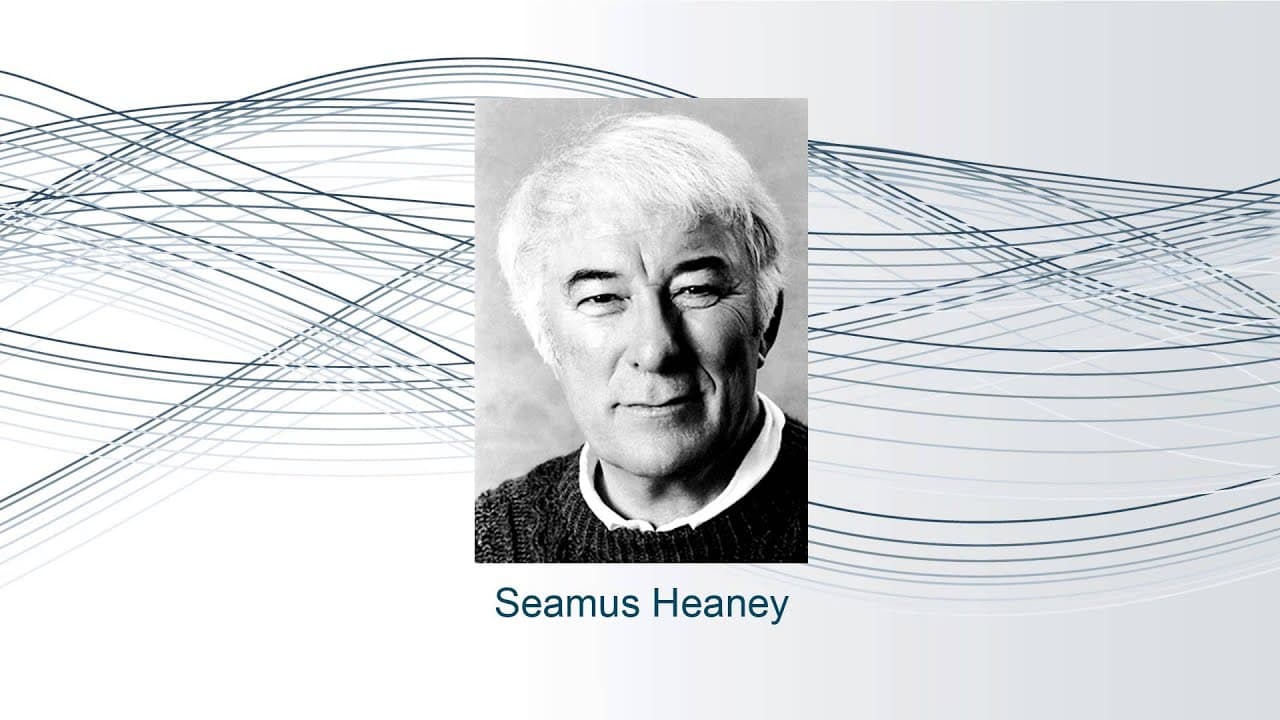
Nobel Lecture by Seamus Heaney
TL;DR
Poetry creates an order that remains faithful both to external reality and to the inner laws of the poet. Seamus Heaney credits it with connecting childhood experience to adult understanding, resisting political simplification, and restoring a fluid relationship between the mind’s center and circumference. Its value lies in being truthful to life while answering ethical, aesthetic, moral, and political pressures.
Transcript
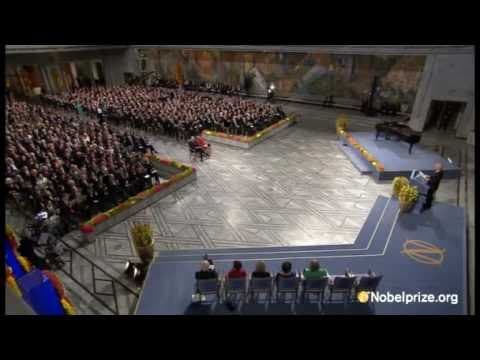
Ladies and Gentlemen, When I first encountered the name of the city of Stockholm, I little thought that I would ever visit it, never mind end up being welcomed to it as a guest of the Swedish Academy and the Nobel Foundation. At the time I am thinking of, such an outcome was not just beyond expectation: it was simply beyond conception. In the ninet... Read More
Key Insights
- Poetry is an order that can remain true to external reality while also respecting the inner laws of the poet’s being. Heaney presents this double fidelity as the source of poetry’s ability to connect perception, memory, intelligence, and affection.
- Childhood listening is the foundation of Heaney’s imaginative journey. Domestic conversation, rain, animals, trains, news reports, Morse code, and foreign stations entered his awareness together, preparing him to recognize the layered and competing voices encountered in adult life.
- Language is a journey whose arrivals become stepping stones rather than final destinations. Heaney’s early encounters with unfamiliar European speech expanded his sense of the world even before he understood the words, linking geographical discovery with growing awareness of language’s possibilities.
- Poetry’s truth to life is both concrete and restorative. Heaney first valued direct representation, sensory accuracy, and moral realism, but he also came to credit poetry with creating a fluid relationship between the mind’s center and its wider circumference.
- Literary influence is presented through different forms of accuracy and intensity. Heaney associates Keats with language joined to sensation, Hopkins with rapture and ache, Frost and Chaucer with grounded precision, and Owen with moral sensitivity absorbing the shock of barbarism.
- Northern Ireland’s culture is described as vigilant, realistic, and suspicious of rhetorical flourish or extravagant aspiration. Internalizing these attitudes initially limited Heaney’s receptiveness to poetic opulence, inwardness, visionary association, and imaginative strangeness.
- Political violence is a pressure that can reduce public interest in poetry to demands for approved political positions. Heaney resisted granting poets special civic license, yet he also sought room for poetry to answer realities that political judgment alone could not contain.
- Consciousness is a site where competing discourses contend rather than a place of simple stability. Heaney lists ethical, aesthetic, moral, political, metrical, skeptical, cultural, topical, typical, and post-colonial promptings as parts of the poet’s nearly impossible task of adjudication.
Install to Summarize YouTube Videos and Get Transcripts
Explore YouTube Video Summarizer or Get YouTube Transcript Extractor
Questions & Answers
Q: Why does Seamus Heaney credit poetry?
Seamus Heaney credits poetry because it can create an order faithful to both external reality and the poet’s inner nature. He sees it as valuable in itself and as a form of help, capable of restoring a fluid relationship between the mind’s center and circumference. Poetry also connects stored childhood experience with mature understanding and remains truthful to life in multiple senses.
Q: How did Heaney’s childhood shape his understanding of poetry?
Heaney’s childhood trained him to receive many layers of experience at once. In a rural County Derry home, he heard rain, animals, mice, trains, adult conversation, radio news, foreign stations, and Morse code. These overlapping signals made him highly impressionable and later helped him understand consciousness as a meeting place for domestic, historical, political, linguistic, and imaginative voices.
Q: What does the water bucket symbolize in Heaney’s lecture?
The water bucket represents a mind that sensitively registers forces coming from beyond itself. When a passing train shook the earth, the water rippled delicately, concentrically, and silently. Heaney later uses those ripples as an image for poetic order, which responds to external impact while following its own inner laws and transforming stored experience into meaningful form.
Q: How did radio expand Heaney’s sense of the world?
Radio carried Heaney beyond the enclosed security of his childhood home. Its dial introduced him to foreign stations and names such as Leipzig, Oslo, Stuttgart, Warsaw, and Stockholm. Brief encounters with unfamiliar languages began his journey into the wideness of the world and language, even though he initially listened mainly for adventure stories rather than news or political understanding.
Q: What does Heaney mean by poetry’s truth to life?
Poetry’s truth to life includes accurate representation of the world, fidelity to sensation, moral seriousness, and responsiveness to inner experience. Heaney first favored poems that seemed direct and concrete, but his view expanded. He came to see poetry as capable of honoring reality while also creating restorative connections among memory, imagination, intelligence, affection, personal identity, and public circumstances.
Q: How did Northern Ireland influence Heaney’s poetic outlook?
Northern Ireland encouraged vigilance, realism, and suspicion toward rhetorical flourish or extravagant aspiration. Heaney internalized these attitudes and also developed defenses against them. Living amid political violence increased pressure to adopt positions acceptable to opposing groups, while his poetic consciousness had to weigh ethical, aesthetic, moral, political, cultural, metrical, and skeptical demands without reducing poetry to public allegiance.
Q: Why did Heaney struggle to credit poetry without apology?
Heaney faced ongoing political violence, public demands for clear positions, and his own refusal to grant poets more civic license than other citizens. Reports of bombings, internment, and political killing made his noncombatant position feel difficult to defend. He therefore sought an active escape from relativism and a basis for trusting poetry without claiming that poetic activity excused anyone from responsibility.
Q: What conflict does Heaney describe in the poem Exposure?
In the quoted passage from “Exposure,” Heaney weighs responsibility to the ear, the people, private criticism, friends, and hostile observers. He imagines heroic decisiveness but instead walks among damp leaves and rain, identifying himself as neither internee nor informer. The poem expresses uncertainty about artistic responsibility while preserving a longing for clarity, represented by each raindrop recalling diamond absolutes.
Summary
In this video, the speaker reflects on his journey from a small rural town in Ireland to being welcomed as a guest at the Swedish Academy and the Nobel Foundation in Stockholm. He discusses his childhood, growing up in a world insulated from the outside, and how his love for poetry and storytelling developed through listening to the radio. He credits poetry for allowing him to walk on air and for making possible a deep connection between the mind and the world. The speaker also reflects on the complexities of his adult predicament, navigating political violence in Northern Ireland and the expectations placed on poets in such turbulent times. He discusses the importance of truth and realism in poetry and the need for poetry to be both equal to and true to life. He concludes by expressing hope for a future where respect for all traditions leads to a more inclusive and harmonious world.
Questions & Answers
Q: How did the speaker's upbringing influence his understanding of the outside world?
The speaker grew up in a small town in rural Ireland, living a sheltered life insulated from the outside world. This intimate, creaturely existence made him susceptible and impressionable, but also pre-reflective and pre-literate. He experienced the world around him as if in a doze of hibernation, taking in everything that was happening but not fully understanding its significance.
Q: How did the radio shape the speaker's love for storytelling?
As a child, the speaker would listen to the radio and became captivated by the thrill of stories. He was drawn to detective serials and adventure tales, finding joy in the imaginative power of storytelling. The radio opened up a world beyond his immediate surroundings and introduced him to foreign languages and cultures. It sparked his interest in language and broadened his understanding of the wider world.
Q: How has the speaker's perception of poetry evolved over time?
Initially, the speaker sought concrete reliability in poetry, valuing poems that were direct representations of the world. As he grew older, he recognized that poetry could possess a moral down-to-earthness and accurately reflect the impact of external reality. He appreciated the war poetry of Wilfred Owen for its sensitivity to the barbarism of the twentieth century and the pure consequence of Elizabeth Bishop's style. The speaker realized that poetry could be both itself and a help, offering a restorative relationship between the mind's center and its circumference.
Q: How has the speaker's experience in Northern Ireland shaped his attitude towards poetry and political violence?
The speaker grew up in Northern Ireland during a time of ongoing political violence. He acknowledges the complexities of his adult predicament, where poetry is expected to align with political positions. Despite the brutality and divisiveness of the conflict, the speaker saw the potential for change and recognized the importance of poetry in bearing witness to what happens. He believes in poetry's ability to say what happens while providing a sense of hope and healing.
Q: How does the speaker view the role of poetry in times of crisis and conflict?
The speaker believes that poetry can offer solace and truth-telling during times of extreme crisis. He expresses the need for poetry to be equal to and true to life, reflecting both the horrors and the joys of existence. While recognizing the existence of violence and suffering, the speaker also emphasizes the importance of sweetness, trust, and a yearning for a better future. Poetry can hold both the darkness and the light, providing an essential counterbalance to the atrocities of the world.
Q: How does the speaker view the value of local traditions and cultural heritage?
The speaker recognizes the importance of local traditions and cultural heritage in shaping a sense of identity. While acknowledging the dangers of exclusivity and cultural chauvinism, he emphasizes the positive role that indigenous culture can play in inspiring respect for the validity of every tradition. He believes that a society that values and embraces diverse traditions can create a more inclusive and harmonious political space.
Q: What does the speaker believe is the enduring power of poetry?
The speaker sees the enduring power of poetry in its ability to touch the core of our sympathetic nature while acknowledging the unsympathetic nature of the world. He emphasizes the importance of poetic form in allowing for the simultaneous expression of both centrifugal and centripetal forces. Poetry has the power to persuade and remind us of our humanity, even in the face of overwhelming evidence of wrongness in the world.
Q: How does the speaker reconcile the contradictions of life and the human experience in his poetry?
The speaker acknowledges the contradictions inherent in life, including its beauty and savagery. He recognizes the need for truth-telling that can be hard and retributive, while also holding space for sweetness, trust, and yearning. The poem "Come build in the empty house of the stare" serves as an example of a poem that satisfies these contradictory needs, acknowledging the harsh realities of war while also celebrating the power of empathy, sympathy, and compassion.
Q: How does the speaker view the role of poets and writers in society?
The speaker believes that poets and writers have the power to shape and transform the world. He suggests that their work can have a profound impact on cultural and political realities. While recognizing the limitations of individual poets to effect immediate change, the speaker emphasizes the importance of their voices in challenging the status quo, bearing witness to history, and pointing to new possibilities.
Q: What is the speaker's hope for the future?
The speaker expresses hope for a future where respect for all traditions leads to a more inclusive and harmonious world. He believes in the possibility of creating institutions that allow for agile give-and-take, encounter, and contending. The speaker hopes for a future where the language of enemies and allies can be replaced with a less binary and more inclusive vocabulary. He is optimistic that change is possible and that a more equitable and just society can emerge.
Takeaways
The speaker emphasizes the power of poetry to reflect and confront the realities of the world. He believes that poetry can offer solace, truth-telling, and a sense of hope in times of crisis and conflict. The speaker recognizes the significance of local traditions and cultural heritage, while also emphasizing the importance of inclusivity and respect for all traditions. He views poets and writers as having the ability to shape and transform society, challenging the status quo and pointing to new possibilities. The speaker expresses hope for a future where respect and understanding prevail, leading to a more harmonious and equitable world.
Summary & Key Takeaways
-
Seamus Heaney recalls a rural childhood in County Derry, where domestic voices, natural sounds, passing trains, and distant radio broadcasts mingled together. Hearing names such as Stockholm on the wireless introduced him to foreign places and languages, beginning a journey into the wideness of the world and of language.
-
Heaney credits poetry with ordering experience while respecting both external reality and the poet’s inner nature. He compares this poetic order to silent ripples spreading across water when a train shook his childhood home. Poetry connects what people store while growing up with what they may eventually understand as adults.
-
Northern Ireland’s political violence confronted Heaney with demands for definite public positions, while poetry exposed him to competing ethical, aesthetic, moral, political, cultural, and metrical promptings. He sought a way to credit poetry without apology, maintaining his noncombatant position while resisting both relativism and reductive political expectations.
Read in Other Languages (beta)
Share This Summary 📚
Summarize YouTube Videos and Get Video Transcripts with 1-Click
Try YouTube Summary with ChatGPT & Claude or YouTube Transcript Generator
Explore More Summaries from Nobel Prize 📚
Summarize YouTube Videos and Get Video Transcripts with 1-Click
Try YouTube Summary with ChatGPT & Claude or YouTube Transcript Generator