The 2019 Nobel Prize in Physics - The universe’s structure and history
Transcript
Read and summarize the transcript of this video on Glasp Reader (beta).
Install to Summarize YouTube Videos and Get Transcripts
Explore YouTube Video Summarizer or Get YouTube Transcript Extractor
Summary
This video explores the complexity of the universe and our understanding of its origin and expansion through scientific discoveries. It discusses the Big Bang, the cosmic background radiation, the formation of atoms and galaxies, the dark ages, the emergence of stars and planets, and the mysterious dark energy.
Questions & Answers
Q: How did the universe begin and what did the expansion form?
The universe began with the Big Bang, which occurred approximately 13.8 billion years ago. This expansion formed time, space, and matter as we know them.
Q: What was the state of the universe at the time of the Big Bang?
At the time of the Big Bang, the universe was extremely hot and consisted of a thick, impenetrable, glowing gas with elementary particles such as electrons, quarks, and photons.
Q: What radiation was left behind after the Big Bang?
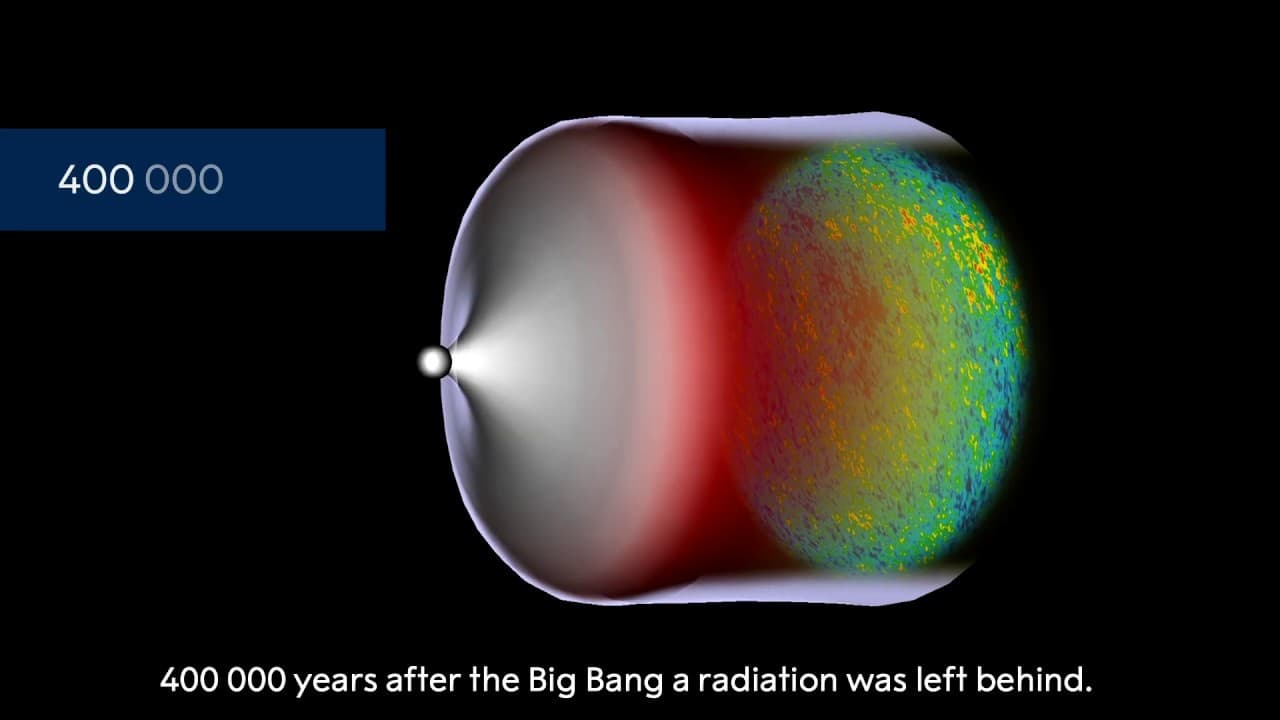
Approximately 400,000 years after the Big Bang, radiation was left behind. James Peebles was awarded the 2019 Nobel Prize in Physics for his calculations and studies on the properties of this radiation, which we now refer to as the cosmic background radiation.
Q: Are we still able to detect the remnants of the cosmic background radiation?
Yes, today we are still able to detect the remnants of the cosmic background radiation, which provides valuable insights into the early stages of the universe.
Q: How did atoms form after the initial expansion?
As the hot matter cooled, electrons, neutrons, and protons attempted to form atoms. However, photons continuously collided with the atoms and hindered their formation. Nevertheless, as the matter cooled further, more and more atoms were able to form.
Q: What caused the formation of unequal structures in the universe?
Soundwaves started to affect the porridge-like consistency of the universe, leading to the formation of diffuse and unequal structures. Gravity, together with dark matter, played a significant role in this process.
Q: What happened during the dark ages of the universe?
During the dark ages, no stars had formed yet in the newly formed galaxies, hence the absence of visible light. However, gravity caused these galaxies to rotate around each other and form larger clusters, mainly consisting of hydrogen gas held together by gravity.
Q: How were stars and planets formed in the universe?
Approximately 400 million years after the dark ages, hydrogen atoms in the galaxies were squeezed together by gravity, leading to fusion and the formation of helium. This fusion reaction released large quantities of energy, causing the gas to glow and giving birth to the universe's first stars. In these galaxies, planets also began to form.
Q: What change in the universe's expansion occurred about four billion years ago?
About four billion years ago, scientists observed that the expansion of the universe started to accelerate. However, the cause of this acceleration, known as dark energy, remains a mystery in the field of physics.
Q: What are the composition percentages of the universe?
According to James Peebles's research, the universe consists of approximately five percent matter as we know it, twenty-six percent dark matter, and sixty-nine percent dark energy.
Takeaways
In summary, the video provides a fascinating exploration of the origins and evolution of the universe. Through scientific discoveries, we have learned about the Big Bang, the cosmic background radiation, the formation of atoms and galaxies, the dark ages, the emergence of stars and planets, and the perplexing phenomenon known as dark energy. The video highlights how our understanding of the universe is gradually expanding, yet there are still many mysteries to be solved, particularly surrounding the nature of dark matter and dark energy.
Read in Other Languages (beta)
Share This Summary 📚
Summarize YouTube Videos and Get Video Transcripts with 1-Click
Try YouTube Summary with ChatGPT & Claude or YouTube Transcript Generator
Explore More Summaries from Nobel Prize 📚



Summarize YouTube Videos and Get Video Transcripts with 1-Click
Try YouTube Summary with ChatGPT & Claude or YouTube Transcript Generator