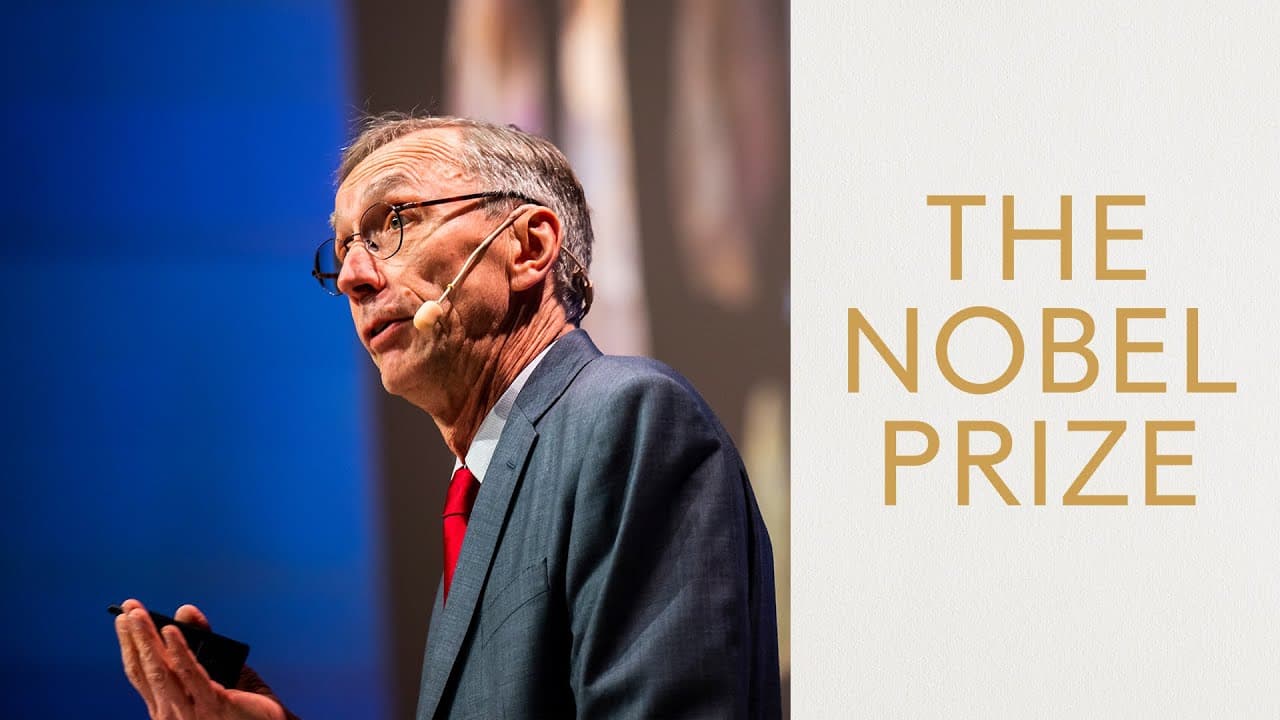
Nobel Prize lecture: Svante Pääbo, Nobel Prize in Physiology or Medicine 2022
TL;DR
Ancient DNA reveals that Neanderthals and Denisovans interbred with Homo sapiens, leaving archaic genetic variants in present-day humans of Eurasian ancestry. Svante Pääbo made this research possible by developing careful methods for recovering highly degraded, chemically modified, and contaminated DNA, then using high-throughput sequencing and computational analysis to reconstruct extinct hominin genomes.
Transcript
Nobel laureates distinguished guests ladies and gentlemen it's a great pleasure and privilege for me to welcome you all to the 2022 Nobel lecture in physiology or medicine my name is Ola petrotherson I'm the president of korelitska instituted during the Nobel week we celebrate science and we Rejoice at the unique contributions of some exceptional i... Read More
Key Insights
- Ancient DNA is difficult to analyze because it can be massively contaminated, chemically modified, and degraded into small fragments. Pääbo recognized these problems while studying Egyptian mummy samples and responded by developing rigorous methods for recovering and authenticating genetic material from historical and extinct organisms.
- Method development is the foundation of reliable ancient DNA research. Pääbo persisted after early contamination problems and established careful practices that became the basis for how laboratories around the world study genetic material preserved in old specimens.
- Extinct non-human mammals are useful for refining ancient DNA techniques because their genetic material is less likely to be confused with DNA from people who handled the specimens. Pääbo used these animals to develop methods before focusing extensively on ancient human relatives.
- PCR made it easier to analyze small amounts of ancient DNA, but it also introduced new problems that researchers had to solve. The technique increased analytical power while making Pääbo's critical attention to contamination and experimental detail even more important.
- High-throughput sequencing enabled the ambitious reconstruction of the Neanderthal nuclear genome. Pääbo adapted emerging massively parallel sequencing technologies and assembled collaborators with computational expertise to process the large quantity of genetic data these methods produced.
- Denisovans were identified as an unknown hominin through genetic data alone. The discovery demonstrated that DNA recovered from ancient remains could reveal a previously unrecognized human relative even when traditional evidence had not already established that group.
- Neanderthals and Denisovans interbred with Homo sapiens, according to Pääbo's genomic research. As a result, present-day humans of Eurasian ancestry carry archaic-derived DNA that can now be studied for its possible effects on human physiology and medicine.
- Extinct hominin genomes provide a much closer reference point for human evolution than chimpanzee genomes. Comparing modern human DNA with Neanderthal and Denisovan genomes gives researchers new ways to investigate evolutionary changes and identify clues about what makes modern humans distinctive.
Install to Summarize YouTube Videos and Get Transcripts
Explore YouTube Video Summarizer or Get YouTube Transcript Extractor
Questions & Answers
Q: How can scientists recover DNA from extinct hominins?
Scientists can extract genetic material from ancient specimens, but the recovered DNA requires exceptionally careful treatment because it is often contaminated by other DNA, chemically modified, and broken into small fragments. Pääbo developed methods to address these limitations, refined them with extinct non-human mammals, and later combined PCR, high-throughput sequencing, and computational analysis to reconstruct extinct hominin genomes.
Q: Why is ancient DNA contamination a serious problem?
Ancient DNA contamination is serious because genetic material from people or other sources can become mixed with the small, damaged fragments recovered from historical specimens. Pääbo encountered massive contamination in DNA extracted from Egyptian mummy samples. He therefore emphasized critical experimental procedures and initially studied extinct non-human mammals, whose DNA was easier to distinguish from DNA introduced by human specimen handlers.
Q: What did Svante Pääbo discover about Neanderthals?
Pääbo successfully sequenced Neanderthal mitochondrial DNA and later led the ambitious effort to reconstruct the Neanderthal nuclear genome. His research provided a close genetic reference for studying modern human evolution. It also showed that Neanderthals interbred with Homo sapiens, helping establish that some present-day humans carry genetic variants derived from extinct hominins.
Q: How were Denisovans discovered through genetic evidence?
Denisovans were recognized as a previously unknown hominin through genetic data rather than through an already established classification based on other evidence. Pääbo and his team later produced a high-coverage Denisovan genome. This work expanded the set of close extinct relatives available for comparison with modern humans and supported research into interbreeding among human groups.
Q: Why are Neanderthal and Denisovan genomes important?
Neanderthal and Denisovan genomes give researchers much closer reference points for understanding human evolution than comparisons with chimpanzees alone. These genomes help scientists identify inherited archaic variants, investigate interbreeding with Homo sapiens, study possible implications for physiology and medicine, and search for genetic changes that may provide clues about what makes modern humans uniquely human.
Q: How did new sequencing technology advance ancient DNA research?
Emerging massively parallel, high-throughput sequencing methods made the reconstruction of ancient nuclear genomes more feasible. Pääbo adapted these powerful technologies to the scientific questions he wanted to answer, including the sequencing of the Neanderthal genome. The resulting quantity of data also required a larger team and increasing contributions from collaborators with computational expertise.
Q: What does archaic DNA reveal about present-day humans?
Archaic DNA reveals that human evolution included interbreeding rather than complete separation between Homo sapiens and extinct relatives. Pääbo showed that Neanderthals and Denisovans interbred with Homo sapiens and that present-day humans of Eurasian ancestry carry archaic-derived DNA. Studying the functions of these inherited variants is now an active research area with medical implications.
Q: What made Svante Pääbo's research approach successful?
Pääbo's approach combined broad academic interests, persistence, careful methods, technological adaptation, and collaboration. His knowledge of Egyptology helped inspire early work on mummy DNA, while molecular biology provided experimental tools. When contamination and degradation created obstacles, he pursued extensive method development, adopted powerful sequencing techniques, and recruited colleagues with the computational skills needed to analyze complex genomic data.
Summary
This video is the 2022 Nobel lecture in physiology or medicine, given by Professor Svante Pääbo, the Nobel laureate for his discoveries concerning the genomes of extinct hominins and human evolution. He discusses his journey in the field of ancient DNA research, including studying DNA from Egyptian mummies and Neanderthal and Denisovan genomes. He explains the contributions of Neanderthals and Denisovans to the genetic makeup of modern humans and discusses the implications of these findings for understanding human evolution and various aspects of human biology.
Questions & Answers
Q: What is the background of Professor Svante Pääbo's research?
Professor Svante Pääbo started his research career in the field of immunology, studying how the immune system recognizes infections. However, he became interested in ancient DNA and began exploring methods to extract DNA from historical specimens, such as Egyptian mummies. His diverse academic interests and his collaboration with other experts in the field allowed him to develop groundbreaking techniques for ancient DNA research.
Q: What were some of the challenges in studying ancient DNA?
Studying ancient DNA poses several technical challenges. The first challenge is the low amount of DNA present in ancient specimens, often on the order of thousands or millions of times less than in fresh tissues. In addition, ancient DNA is chemically modified and highly degraded, making it difficult to obtain long fragments of DNA. There is also a significant amount of contamination from microbial DNA, which needs to be distinguished from the target DNA. These challenges require extensive methods development to overcome.
Q: What were the major findings of Professor Svante Pääbo's research on Neanderthal genomes?
Through the sequencing of Neanderthal genomes, Professor Svante Pääbo and his team discovered that Neanderthals and modern humans share a common ancestor, and modern humans outside of Africa have inherited about 1-2% of their DNA from Neanderthals. This suggests that modern humans interbred with Neanderthals when they encountered each other, likely in the Middle East. It was also discovered that Neanderthals and Denisovans, another group of archaic hominins, interbred with each other as well as with modern humans. These findings provide insights into our genetic history and the evolutionary relationships between different human species.
Q: How did interbreeding with Neanderthals and Denisovans impact modern humans?
The interbreeding between modern humans and Neanderthals and Denisovans has had a lasting impact on the genetic makeup of modern humans. The introduction of archaic DNA into the modern human gene pool has influenced our physiology and health. For example, certain Neanderthal DNA variants have been associated with pain sensitivity and risk factors for preterm birth and severe disease. The ability to study these archaic genomes allows researchers to better understand the genetic basis of various traits and diseases in modern humans.
Q: How did Professor Svante Pääbo and his team study the function of Neanderthal DNA variants?
By comparing Neanderthal genomes to modern human genomes, Professor Svante Pääbo and his team were able to identify genetic variants that are specific to Neanderthals. They then studied the effects of these variants on specific genes and their associated biological functions. For example, they found that a Neanderthal variant of an ion channel gene is associated with increased pain sensitivity in modern humans. They also found that a Neanderthal variant of the progesterone receptor gene is associated with preterm birth and miscarriages. By understanding the functional impact of these genetic variants, researchers can gain insights into the biology of both Neanderthals and modern humans.
Q: What have we learned about the evolutionary relationships between modern humans, Neanderthals, and Denisovans?
Through the analysis of ancient DNA, it has been revealed that Neanderthals and Denisovans were closely related to each other and to modern humans. They shared a common ancestor in Africa and diverged into separate populations that evolved in different parts of Eurasia. Modern humans, on the other hand, evolved in Africa and later migrated out of Africa, encountering and interbreeding with Neanderthals and Denisovans along the way. The interbreeding between these different human species contributed to the genetic diversity of modern humans and shaped our evolutionary history.
Q: How did the interbreeding between different human species impact the genetic makeup of modern humans?
The interbreeding between different human species resulted in the transfer of genetic material between them, leading to the presence of archaic DNA in modern humans. This archaic DNA can still be found in specific regions of the genomes of individuals today. The presence of archaic DNA has provided new insights into human evolution and has allowed researchers to study the genetic basis of various traits and diseases in modern humans. It has also allowed for the reconstruction of the genetic history of different human populations and their interactions with each other.
Q: How does the study of ancient DNA contribute to our understanding of human evolution?
The study of ancient DNA provides a direct window into the past, allowing researchers to reconstruct the genetic history of different human species and their interactions. By comparing ancient genomes to modern genomes, researchers can identify genetic changes that occurred throughout human evolution. This includes changes that are specific to certain human species and changes that are unique to modern humans. These findings help us understand how different genetic variants have arisen and how they have shaped human evolution and the traits we see in modern humans.
Q: What are some of the implications of studying ancient DNA for medical research?
The study of ancient DNA has important implications for medical research. By comparing ancient genomes to modern genomes, researchers can identify genetic variants that have been associated with specific traits, diseases, and health conditions. This can help researchers understand the genetic basis of these conditions and develop targeted therapies. Additionally, studying the genetic history of different human populations can provide insights into the genetic diversity of modern humans and how it contributes to differences in disease susceptibility and treatment response among different populations.
Q: How does the study of ancient DNA contribute to our understanding of human biology?
The study of ancient DNA allows researchers to investigate the genetic basis of various aspects of human biology. By comparing ancient genomes to modern genomes, researchers can identify genetic variants that are associated with specific traits or biological functions. This can help us understand the evolutionary forces that have shaped human biology and how genetic variants influence traits and disease susceptibility. By studying the genetic makeup of our closest relatives, such as Neanderthals and Denisovans, we can gain insights into what makes us uniquely human and how we have evolved over time.
Takeaways
In summary, Professor Svante Pääbo's research on ancient DNA has provided valuable insights into human evolution and the genetic history of our species. Through the sequencing of Neanderthal and Denisovan genomes, he has shown that modern humans interbred with these archaic hominin groups, leading to the presence of archaic DNA in modern human populations. This interbreeding has had a lasting impact on the genetic makeup of modern humans, influencing our physiology, health, and susceptibility to diseases. By studying the functional effects of Neanderthal DNA variants, researchers can better understand the biology of both Neanderthals and modern humans. The study of ancient DNA is a powerful tool that contributes to our understanding of human evolution, genetic diversity, and the genetic basis of various traits and diseases.
Summary & Key Takeaways
-
Svante Pääbo combined interests in medicine, molecular biology, and Egyptology to investigate DNA from historical specimens. Experiments with Egyptian mummy samples showed that ancient DNA could survive, but also exposed severe contamination, chemical modification, and fragmentation. These obstacles prompted the extensive development of methods that later supported ancient DNA laboratories around the world.
-
Pääbo strengthened his methods by studying extinct non-human mammals, whose DNA was less easily confused with human DNA introduced by specimen handlers. PCR helped researchers analyze very small amounts of genetic material, while also creating new contamination problems. His careful attention to experimental detail became central to the reliability of ancient DNA research.
-
Sequencing Neanderthal and Denisovan genomes created close genetic reference points for studying modern humans. The findings showed that both extinct groups interbred with Homo sapiens and contributed archaic DNA to living people of Eurasian ancestry. Researchers can now investigate how inherited variants affect physiology and what genetic changes may distinguish modern humans.
Read in Other Languages (beta)
Share This Summary 📚
Summarize YouTube Videos and Get Video Transcripts with 1-Click
Try YouTube Summary with ChatGPT & Claude or YouTube Transcript Generator
Explore More Summaries from Nobel Prize 📚
Summarize YouTube Videos and Get Video Transcripts with 1-Click
Try YouTube Summary with ChatGPT & Claude or YouTube Transcript Generator