How Does Sleep Loss Affect Insulin Sensitivity and Glucose Levels?
TL;DR
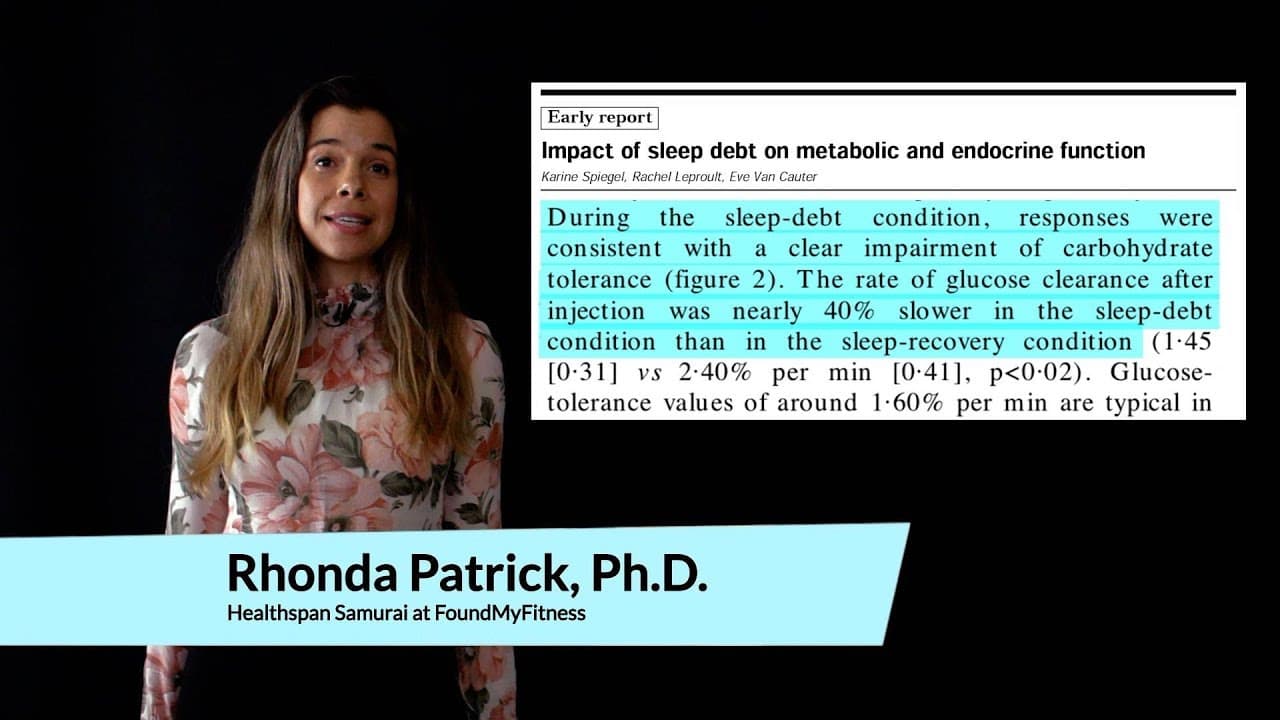
Sleep loss leads to acute insulin resistance, causing higher blood glucose levels and increased risk of metabolic disorders. Just two nights of restricted sleep can significantly reduce insulin response and glucose tolerance. To maintain healthy glucose management, prioritize good sleep and consider high-intensity exercise to mitigate some negative effects of sleep deprivation.
Transcript
dr. Rhonda Patrick here today we're going to talk about sleep and insulin sensitivity when most people think about insulin sensitivity and what regulates it they think about macro nutrient composition or calories or exercise or fasting people don't usually think about sleep when in fact sleep is a major determinant of insulin sensitivity in fact se... Read More
Key Insights
- 😪 Sleep plays a major role in insulin sensitivity and glucose regulation.
- 😪 Sleep restriction can lead to acute insulin resistance and higher blood glucose levels.
- 😪 Short sleep duration is associated with an increased risk of diabetes and metabolic disorders.
- 😪 Lack of sufficient sleep affects the sensitivity of beta cells in the pancreas and insulin receptors in cells throughout the body.
- 😪 Exercise, particularly high-intensity interval training, can help mitigate the negative effects of poor sleep on blood glucose regulation.
- 😪 Optimizing sleep and incorporating regular exercise are vital for maintaining healthy glucose management.
Install to Summarize YouTube Videos and Get Transcripts
Explore YouTube Video Summarizer or Get YouTube Transcript Extractor
Questions & Answers
Q: How does sleep restriction affect insulin sensitivity?
Sleep restriction, even for just a single night or two nights, can lead to acute insulin resistance by reducing insulin response and glucose tolerance in healthy individuals. This can result in higher blood glucose levels and an increased risk of metabolic disorders.
Q: What are the mechanisms behind the impact of sleep on glucose regulation?
Sleep restriction affects the absorption of glucose in the liver and muscles and disrupts the sensitivity of beta cells in the pancreas to glucose. This leads to decreased insulin production and less efficient glucose disposal in the body, causing elevated blood glucose levels.
Q: Can lack of sleep contribute to the development of diabetes?
Yes, epidemiological studies have found a significant association between short sleep duration and an increased risk of diabetes. Sleep restriction for as little as one week can disrupt blood sugar levels to a point that individuals may be classified as pre-diabetic by their doctors.
Q: Can exercise mitigate the negative effects of poor sleep on blood glucose regulation?
Yes, high-intensity interval training has been shown to ameliorate some of the negative effects of poor sleep on blood glucose regulation. Regular exercise can help improve insulin sensitivity and glucose disposal, reducing the potential impact of sleep deprivation on metabolic health.
Key Insights:
- Sleep plays a major role in insulin sensitivity and glucose regulation.
- Sleep restriction can lead to acute insulin resistance and higher blood glucose levels.
- Short sleep duration is associated with an increased risk of diabetes and metabolic disorders.
- Lack of sufficient sleep affects the sensitivity of beta cells in the pancreas and insulin receptors in cells throughout the body.
- Exercise, particularly high-intensity interval training, can help mitigate the negative effects of poor sleep on blood glucose regulation.
- Optimizing sleep and incorporating regular exercise are vital for maintaining healthy glucose management.
- Sleep duration and quality should be considered alongside other factors, such as diet and exercise, when addressing insulin sensitivity and metabolic health.
Summary & Key Takeaways
-
Sleep deprivation can cause insulin resistance, leading to higher blood glucose levels and an increased risk of metabolic disorders.
-
Studies have shown that just two nights of sleep restriction can significantly reduce insulin response and glucose tolerance in healthy individuals.
-
Sleep plays a crucial role in glucose regulation, affecting how the liver, muscles, and beta cells in the pancreas respond to and produce insulin.
Read in Other Languages (beta)
Share This Summary 📚
Summarize YouTube Videos and Get Video Transcripts with 1-Click
Try YouTube Summary with ChatGPT & Claude or YouTube Transcript Generator
Explore More Summaries from FoundMyFitness 📚





Summarize YouTube Videos and Get Video Transcripts with 1-Click
Try YouTube Summary with ChatGPT & Claude or YouTube Transcript Generator