How Secure Is 256-Bit Encryption Against Breaking?
TL;DR
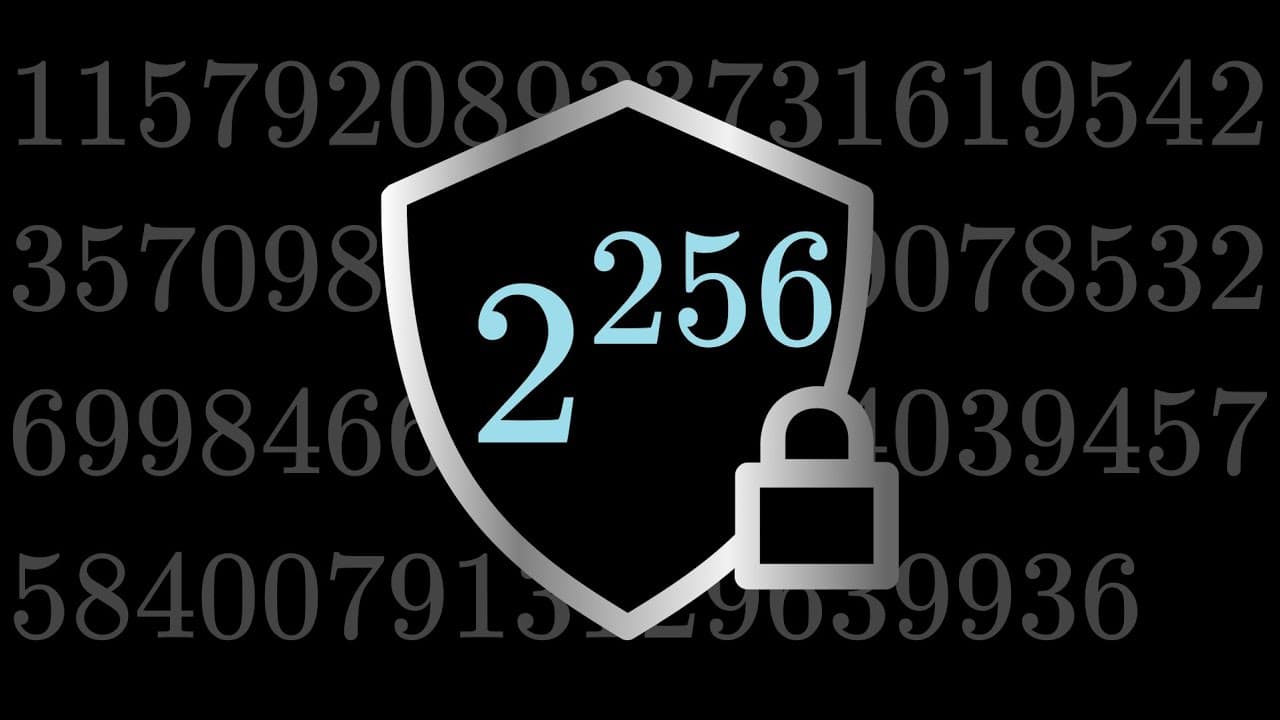
Breaking 256-bit encryption requires an average of 2 to the power of 256 guesses, an astronomically large number, making it practically impossible. Even with massive computational power, like 4 billion GPU-packed machines, the chance of successfully guessing the right combination remains minuscule at 1 in 4 billion.
Transcript
In the main video on cryptocurrencies, I made two references to situations where in order to break a given piece of security, you would have to guess a specific string of 256 bits. One of these was in the context of digital signatures, and the other in the context of a cryptographic hash function. For example, if you want to find a message whose ... Read More
Key Insights
- 🫦 Breaking cryptographic security involves guessing a specific 256-bit string, which is practically impossible due to the immense number of possible combinations.
- 🏃 A GPU-packed computer can run a billion hashes per second, but even with billions of such machines, the chances of finding the correct guess are still minuscule.
- 🤙 Bitcoin mining utilizes specialized hardware called ASICs, which are much more efficient for hashing than GPUs.
- 🤩 The scale of cryptographic security is hard to comprehend, with comparisons made to Google's servers, the number of people on Earth, stars in the Milky Way, and the age of the universe.
- 💨 Achieving successful guesses in breaking cryptographic security requires computational power way beyond what currently exists in the world.
- 🖐️ Cryptographic security plays a vital role in the protection of digital transactions and information.
- ❓ The development of specialized hardware like ASICs highlights the continuous advancements in cryptocurrency mining technology.
Install to Summarize YouTube Videos and Get Transcripts
Explore YouTube Video Summarizer or Get YouTube Transcript Extractor
Questions & Answers
Q: How many guesses are needed to break cryptographic security with a 256-bit string?
Breaking a 256-bit cryptographic security requires an average of 2 to the power of 256 guesses, an unimaginably large number that is practically impossible to achieve.
Q: How efficient is a GPU-packed computer in running cryptographic hash functions?
A GPU-packed computer can run approximately 4 billion hashes per second, but even with billions of these machines combined, the chances of finding the correct guess are still extremely low.
Q: What is the significance of application-specific integrated circuits in Bitcoin mining?
Application-specific integrated circuits (ASICs) are specialized hardware designed solely for Bitcoin mining and can perform hashing much more efficiently than GPUs, resulting in significant speed and energy benefits.
Q: How does the scale of cryptographic security relate to the number of stars in the Milky Way?
If we imagine 4 billion copies of the Milky Way, each with its own personal kilo-Google and half the people having their own kilo-Google, it provides a visualization of the vast scale and improbable odds of breaking cryptographic security.
Key Insights:
- Breaking cryptographic security involves guessing a specific 256-bit string, which is practically impossible due to the immense number of possible combinations.
- A GPU-packed computer can run a billion hashes per second, but even with billions of such machines, the chances of finding the correct guess are still minuscule.
- Bitcoin mining utilizes specialized hardware called ASICs, which are much more efficient for hashing than GPUs.
- The scale of cryptographic security is hard to comprehend, with comparisons made to Google's servers, the number of people on Earth, stars in the Milky Way, and the age of the universe.
- Achieving successful guesses in breaking cryptographic security requires computational power way beyond what currently exists in the world.
- Cryptographic security plays a vital role in the protection of digital transactions and information.
- The development of specialized hardware like ASICs highlights the continuous advancements in cryptocurrency mining technology.
- Understanding the immense scale of cryptographic security helps appreciate the level of protection it provides for sensitive data.
Summary & Key Takeaways
-
Breaking cryptographic security involves guessing a specific string of 256 bits, requiring 2 to the power of 256 guesses on average.
-
A GPU-packed computer can run 4 billion hashes per second, but even with 4 billion machines, the chances of finding the correct guess are 1 in 4 billion.
-
Bitcoin mining utilizes specialized hardware called application-specific integrated circuits, which are about 1000 times more efficient than GPUs for hashing.
Read in Other Languages (beta)
Share This Summary 📚
Summarize YouTube Videos and Get Video Transcripts with 1-Click
Try YouTube Summary with ChatGPT & Claude or YouTube Transcript Generator
Explore More Summaries from 3Blue1Brown 📚





Summarize YouTube Videos and Get Video Transcripts with 1-Click
Try YouTube Summary with ChatGPT & Claude or YouTube Transcript Generator