How to structure Meta ad campaigns for scale
TL;DR
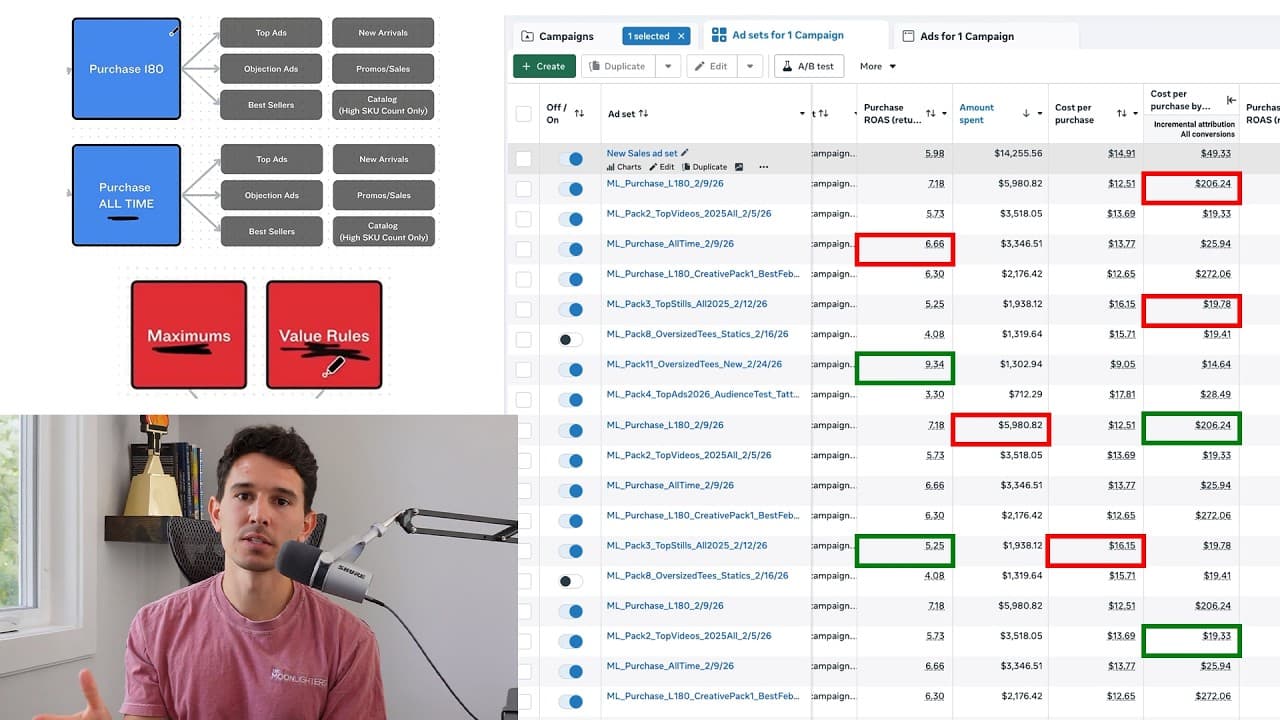
The system splits prospecting and retention to prevent existing customers from draining budgets. It uses a prospecting CBO made of packs that group avatars and concepts, with 7 day minimums to accelerate testing and scaling. Retention campaigns reuse learnings without harming new customer performance, enabling scalable growth.
Transcript
Most Facebook ad accounts are either way too simple running things like single campaign structures or far too complex using old school strategies like dozens of different campaigns all with different purposes. In this video, I'm going to take you through my exact campaign structure that we're using right now for over 100 businesses at The Moonlight... Read More
Key Insights
- The system is proven across more than 100 businesses and is based on over 500 million dollars in ad spend, making it battle tested and scalable.
- New customer prospecting is kept separate from retention to prevent existing customers from dominating the budget and inflating frequency.
- Packs are ad sets grouped by avatar and concept, enabling learnings to feed back to the ad set and simplify campaign decision making.
- Each new pack is launched with a 7 day minimum budget to force early spend and accelerate discovery of scalable creatives.
- Minimums are set to the target CPA and must never exceed 20 percent of the total budget, preserving the integrity of the CBO system.
- Grouping by avatar and concept helps the algorithm optimize without cross-contaminating learnings between packs.
- Frequency of ads to existing customers is monitored and kept lower by design, reducing fatigue risk while still leveraging retained audience.
- There is a strategic emphasis on testing new creatives in separate ad sets to preserve learning signals and avoid creative fatigue within high spend accounts
Install to Summarize YouTube Videos and Get Transcripts
Explore YouTube Video Summarizer or Get YouTube Transcript Extractor
Questions & Answers
Q: A real search query question about the video (e.g. 'How to...', 'What is...', 'Why does...', 'When should...'). Question 1
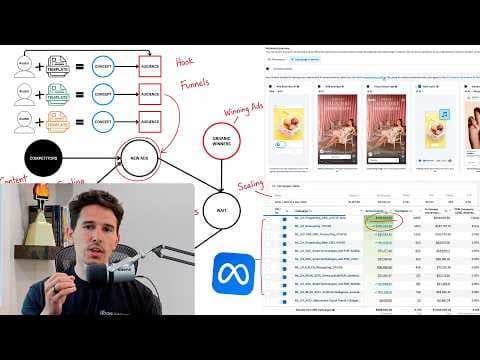
What is the new customer engine described in the video and how does it work? The new customer engine is a prospecting CBO composed of packs, which are ad sets grouped by the same avatar and concept. Each pack contains multiple ads, and learnings from these ads feed back to the ad set level. This structure helps the algorithm allocate budget efficiently by comparing grouped learnings across packs without mixing signals from different avatars or concepts.
Q: Question 2
Why does the speaker separate prospecting from retention campaigns, and what problem does this solve? The separation prevents existing customers from consuming too much of the budget and inflating frequency, which can waste spend. Prospecting targets new customers while retention campaigns focus on engaged and existing customers, ensuring messaging and budget allocation are optimized for each group and improving overall ROAS.
Q: Question 3
How does the 7 day minimum budget feature influence creative testing and scaling? The 7 day minimum forces spend on new packs quickly, giving each new creative a head start. This accelerates discovery of a viable creative that can scale, while controlling fatigue by not waiting for organic growth to push spending, thereby increasing overall profitability.
Q: Question 4
What rules govern minimum budgets and overall budget caps in this system? Minimum budgets are set to the target CPA per day for each new pack and must not exceed 20 percent of the total budget. This prevents any single pack from starving or over consuming the budget, maintaining the efficiency of campaign budget optimization.
Q: Question 5
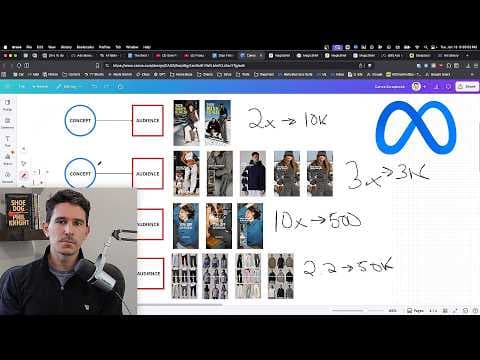
How are packs arranged and why is grouping by avatar and concept important? Packs are ad sets grouped by a single avatar and a single concept, with 3 to 8 ads inside. Grouping helps ensure learnings are specific to that avatar and concept, making it easier for the campaign to decide where to allocate budget and preventing cross-pack interference.
Q: Question 6
What is the role of existing customer frequency in the strategy and how is it monitored? The strategy aims to limit excessive exposure to existing customers by separating them into retention campaigns, where messaging is tailored and spend is managed to avoid overspending on this cohort. Frequency data are used to adjust allocations and keep retention effective without harming new customer performance.
Q: Question 7
How does the system manage learning signals across packs and why is this beneficial? Learning signals are kept within each pack and ad set, with ad-level learnings feeding into the pack-level performance. This separation prevents cross-talk between packs and allows the algorithm to optimize more predictably, making scaling decisions clearer and more controllable.
Q: Question 8
What is the overall benefit of using this campaign structure for agencies managing many clients? The structure scales with spend and complexity, supports over 100 businesses, and has been tested on more than 500 million dollars in ad spend. It preserves testing integrity, controls fatigue, separates new and existing audiences, and provides a clear path to higher ROAS as budgets grow.
Summary & Key Takeaways
-
This system is designed to scale with spend from 100 to over 100000 a day by using a structured, testable campaign layout that separates new and existing customers, thus controlling frequency and budget distribution.
-
It relies on campaign budget optimization with packs of ads centered on a single avatar and concept, allowing learnings to consolidate at the ad set level.
-
The approach uses a 7 day minimum budget per new pack to force initial spend and shorten the path to scaling while mitigating fatigue and plateau risk.
Read in Other Languages (beta)
Share This Summary 📚
Summarize YouTube Videos and Get Video Transcripts with 1-Click
Try YouTube Summary with ChatGPT & Claude or YouTube Transcript Generator
Explore More Summaries from Sam Piliero 📚



Summarize YouTube Videos and Get Video Transcripts with 1-Click
Try YouTube Summary with ChatGPT & Claude or YouTube Transcript Generator