What Events Defined the Cold War Era?
TL;DR
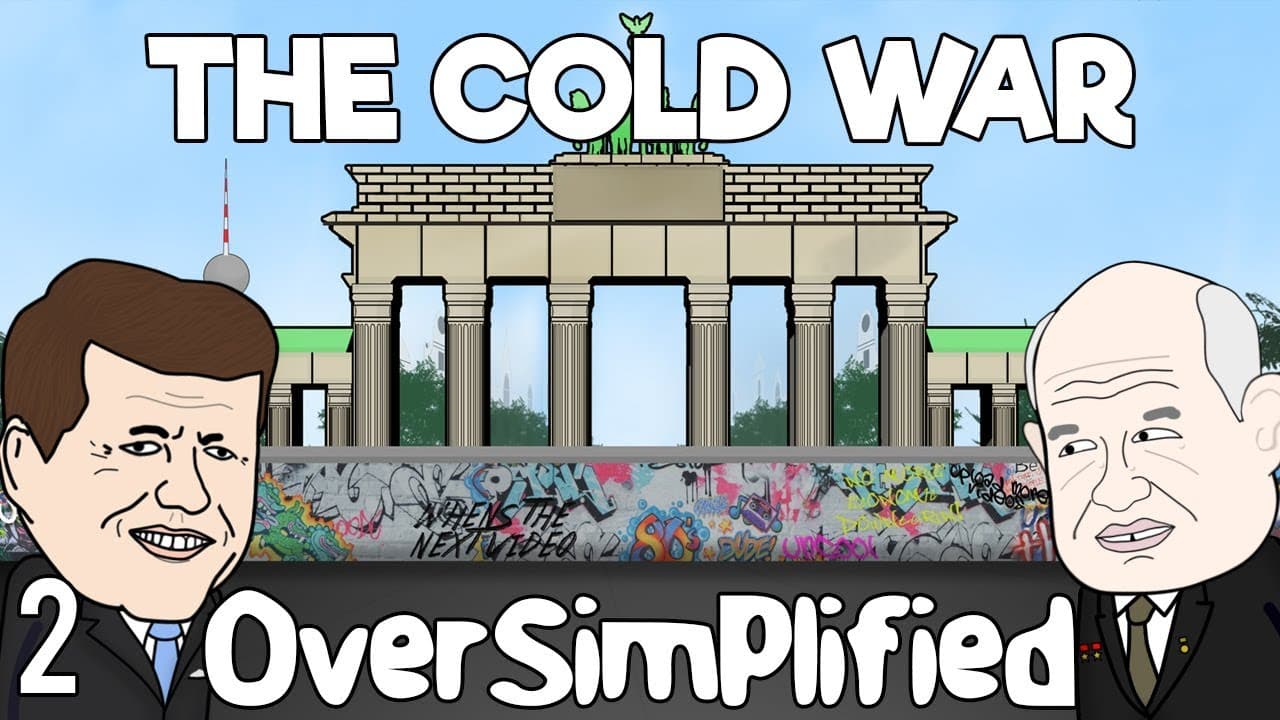
The Cold War was defined by events like the Cuban Missile Crisis, which brought the US and the Soviet Union to the brink of nuclear war, and the Vietnam War, where the US sought to contain communism. Key moments included the rise of proxy wars globally and concluded with Gorbachev's reforms, leading to the fall of the Berlin Wall and the eventual dissolution of the Soviet Union, marking the Cold War's end.
Transcript
This video was made possible by Skillshare, an online learning community where you can learn just about anything. Support my channel by signing up using the link below, and get your first two months for free. For anyone who thinks recent US history has never been crazy as it is right now, allow me to present to you the 1960s. Extreme cultural divis... Read More
Key Insights
- The 1960s were marked by significant cultural division, political assassinations, and the Cuban Missile Crisis, bringing the world close to nuclear war.
- Fidel Castro and Che Guevara's successful Cuban revolution led to US attempts to overthrow the communist regime, culminating in the failed Bay of Pigs Invasion.
- The Cuban Missile Crisis was a pivotal moment in the Cold War, with the US and Soviet Union coming close to nuclear conflict before reaching a resolution.
- The Vietnam War was a significant conflict during the Cold War, with the US trying to prevent the spread of communism in Southeast Asia.
- Proxy wars in the Middle East, Africa, and Latin America were fueled by superpower interventions, leading to significant human suffering.
- The 1970s saw a period of detente, with treaties like SALT aiming to limit nuclear weapons and improve US-Soviet relations.
- Mikhail Gorbachev's reforms in the 1980s, promoting openness and restructuring, played a crucial role in ending the Cold War.
- The fall of the Berlin Wall signaled the collapse of communist regimes in the Eastern Bloc, leading to the dissolution of the Soviet Union.
Install to Summarize YouTube Videos and Get Transcripts
Explore YouTube Video Summarizer or Get YouTube Transcript Extractor
Questions & Answers
Q: What was the significance of the Cuban Missile Crisis?
The Cuban Missile Crisis was a critical event during the Cold War where the US discovered Soviet nuclear missiles in Cuba, leading to a tense standoff. The crisis brought the world to the brink of nuclear war, but ultimately resulted in a peaceful resolution with the removal of the missiles, highlighting the dangers of nuclear brinkmanship.
Q: How did the Vietnam War impact the Cold War?
The Vietnam War was a major conflict during the Cold War, representing the US attempt to prevent the spread of communism in Southeast Asia. It was a costly and divisive war, leading to significant loss of life and resources, and ultimately contributing to a shift in US foreign policy towards detente and reducing direct military engagements.
Q: What role did proxy wars play in the Cold War?
Proxy wars were a significant aspect of the Cold War, with the US and Soviet Union supporting opposing sides in conflicts around the world. These wars, in regions like the Middle East, Africa, and Latin America, intensified local conflicts and caused widespread human suffering, as they were fueled by superpower interventions aiming to spread or contain communism.
Q: What was the impact of Gorbachev's reforms on the Soviet Union?
Gorbachev's reforms, known as glasnost (openness) and perestroika (restructuring), aimed to revitalize the Soviet Union by increasing transparency and economic efficiency. These reforms led to greater freedom of expression and political change, ultimately contributing to the collapse of communist regimes in the Eastern Bloc and the dissolution of the Soviet Union itself.
Q: How did the fall of the Berlin Wall affect Europe?
The fall of the Berlin Wall in 1989 was a symbolic end to the division of East and West Germany and the broader Cold War divide in Europe. It led to the reunification of Germany and inspired democratic movements across the Eastern Bloc, resulting in the collapse of communist governments and the integration of Eastern European countries into a more unified Europe.
Q: What was the significance of the SALT agreements?
The Strategic Arms Limitation Talks (SALT) agreements were significant as they marked a move towards arms control and reducing the nuclear arsenals of the US and Soviet Union. These treaties helped ease Cold War tensions, fostered better relations between the superpowers, and were a crucial step towards preventing nuclear conflict during a period of detente.
Q: How did the Cold War influence American society in the 1960s and 70s?
The Cold War profoundly influenced American society, with the fear of communism leading to policies like McCarthyism and widespread anti-communist sentiment. The Vietnam War sparked significant protest movements, contributing to cultural shifts and political changes. The era also saw advancements in technology and space exploration driven by the competition with the Soviet Union.
Q: What were the consequences of the US's involvement in Latin America during the Cold War?
US involvement in Latin America during the Cold War was marked by efforts to counteract the spread of socialism and communism, often supporting authoritarian regimes and interventions like the Bay of Pigs Invasion. These actions led to long-term political instability, human rights abuses, and anti-American sentiment in the region, with lasting impacts on US-Latin American relations.
Summary & Key Takeaways
-
The video covers the intense period of the Cold War, highlighting events like the Cuban Missile Crisis, Vietnam War, and the arms race between the US and Soviet Union.
-
It discusses the impact of proxy wars in various regions and the shift towards detente in the 1970s, aiming to reduce nuclear arsenals and improve relations.
-
The narrative concludes with Gorbachev's reforms, the fall of the Berlin Wall, and the eventual dissolution of the Soviet Union, marking the end of the Cold War.
Read in Other Languages (beta)
Share This Summary 📚
Summarize YouTube Videos and Get Video Transcripts with 1-Click
Try YouTube Summary with ChatGPT & Claude or YouTube Transcript Generator
Explore More Summaries from OverSimplified 📚



Summarize YouTube Videos and Get Video Transcripts with 1-Click
Try YouTube Summary with ChatGPT & Claude or YouTube Transcript Generator