What Caused the French Revolution and Its Key Events?
TL;DR
The French Revolution was ignited by severe financial crisis, social inequality, and King Louis XVI's weak leadership. Key events like the storming of the Bastille and the women's march on Versailles reflected the anger and desperation of the peasantry. Enlightenment ideas also fueled calls for reform, as the Third Estate sought to challenge the oppressive aristocracy and demand equality.
Transcript
This video was made possible by NordVPN. Get protected by clicking the link below. And get an amazing 75% off. That's only $2.99/month with an additional month free for a limited time. Also, new French Revolution Merch available now in the store, including King Louis and Marie Antoinette character pins, complete with detachable heads just like the ... Read More
Key Insights
- The French Revolution was partly driven by France's severe financial crisis, exacerbated by King Louis XVI's poor leadership and extravagant spending by the monarchy.
- The social inequality between the nobility and the peasantry, who made up 80% of the population, fueled discontent and calls for reform.
- The Age of Enlightenment prompted philosophical questioning of the monarchy's necessity and the fairness of the social hierarchy.
- The Estates General, summoned after 175 years, highlighted the imbalance of power as the Third Estate, representing the majority, was outvoted by the clergy and nobility.
- The storming of the Bastille symbolized the people's anger and marked a turning point towards revolution rather than reform.
- The National Assembly, formed by the Third Estate, pushed for equality and economic reform, leading to increased tensions with the monarchy.
- Marie Antoinette's lavish lifestyle and perceived indifference to the poor's suffering earned her the nickname 'Madame Deficit,' further eroding the monarchy's popularity.
- The women's march on Versailles demonstrated the people's desperation and forced King Louis XVI to acknowledge their grievances, moving the royal family to Paris.
Install to Summarize YouTube Videos and Get Transcripts
Explore YouTube Video Summarizer or Get YouTube Transcript Extractor
Questions & Answers
Q: What role did King Louis XVI play in the financial crisis?
King Louis XVI's poor leadership contributed to France's financial crisis. He continued extravagant spending and took unwise financial decisions, such as funding the American Revolution, which further plunged France into debt. His inability to address the financial issues effectively led to increased discontent among the populace.
Q: How did the social structure contribute to the revolution?
The social structure, with its stark inequality, was a major factor in the revolution. The nobility and clergy enjoyed privileges and wealth while the Third Estate, comprising the majority of the population, bore the tax burden and faced poverty. This inequality prompted calls for reform and eventually revolution.
Q: What was the significance of the storming of the Bastille?
The storming of the Bastille on July 14, 1789, was a pivotal event symbolizing the people's revolt against royal tyranny. It marked the transition from reform to revolution, as the people armed themselves and took direct action against the monarchy, leading to widespread acceptance of revolutionary violence.
Q: Why was Marie Antoinette unpopular among the French people?
Marie Antoinette was unpopular due to her extravagant lifestyle and perceived indifference to the suffering of the poor. Her lavish spending during a financial crisis earned her the nickname 'Madame Deficit.' Her actions and attitudes were seen as emblematic of the monarchy's disconnect from the common people's struggles.
Q: What was the Estates General, and why was it significant?
The Estates General was an advisory body representing the three estates: clergy, nobility, and the Third Estate. It was significant because it highlighted the power imbalance, as the Third Estate, representing the majority, was consistently outvoted. This unfair system fueled discontent and pushed the Third Estate towards forming the National Assembly.
Q: What was the Tennis Court Oath?
The Tennis Court Oath was a pledge taken by members of the National Assembly on June 20, 1789, to continue meeting until the king agreed to their demands for equality and reform. It symbolized the Third Estate's determination to challenge the monarchy and push for a fairer political system.
Q: How did the Age of Enlightenment influence the revolution?
The Age of Enlightenment encouraged philosophical questioning of traditional authority and social structures. Thinkers began to challenge the legitimacy of the monarchy and the social hierarchy, inspiring revolutionary ideas that questioned whether the existing system truly served the people's interests and sparked calls for equality and reform.
Q: What was the impact of the women's march on Versailles?
The women's march on Versailles on October 5, 1789, demonstrated the people's desperation and anger over food shortages. It forced King Louis XVI to address their grievances directly and resulted in the royal family moving to Paris, reducing the physical and symbolic distance between the monarchy and the people, thereby increasing revolutionary pressure.
Summary & Key Takeaways
-
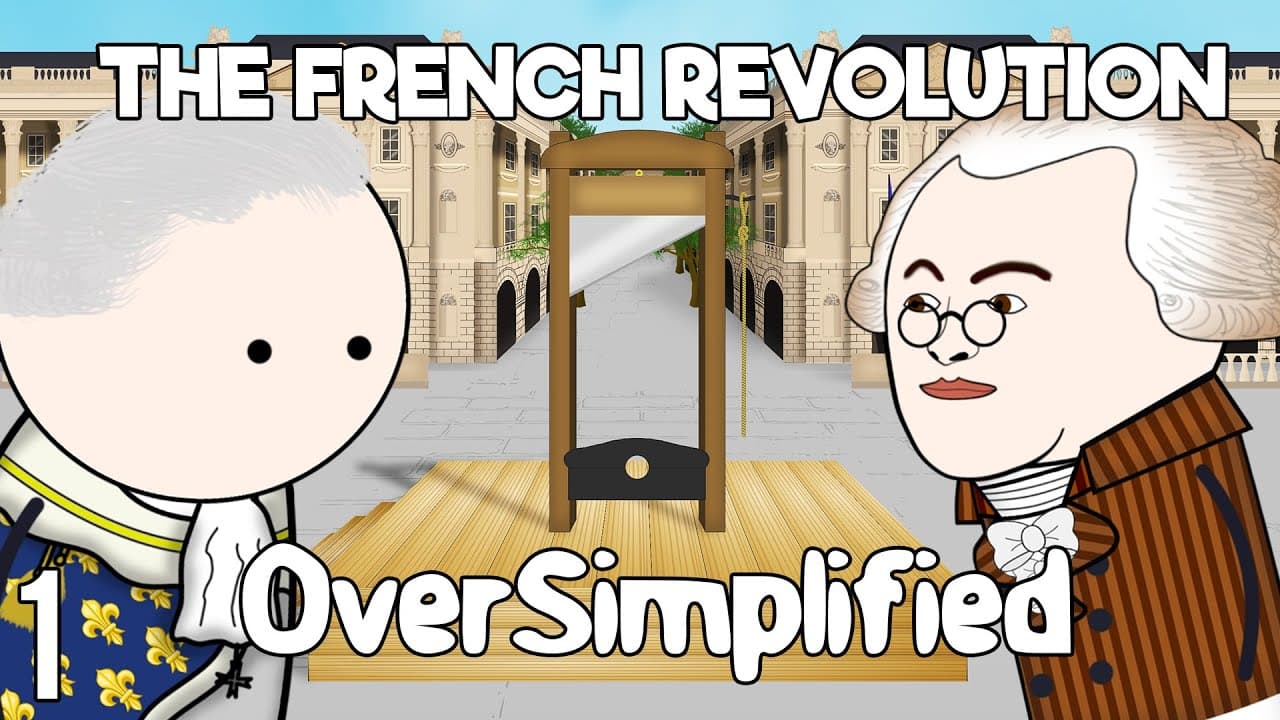
The video humorously depicts the French Revolution's origins, focusing on France's financial ruin and social inequality under King Louis XVI's rule.
-
Philosophical enlightenment and the unfair voting system in the Estates General fueled revolutionary sentiments among the Third Estate.
-
Key events like the storming of the Bastille and the women's march on Versailles highlighted the people's anger and desperation for change.
Read in Other Languages (beta)
Share This Summary 📚
Summarize YouTube Videos and Get Video Transcripts with 1-Click
Try YouTube Summary with ChatGPT & Claude or YouTube Transcript Generator
Explore More Summaries from OverSimplified 📚






Summarize YouTube Videos and Get Video Transcripts with 1-Click
Try YouTube Summary with ChatGPT & Claude or YouTube Transcript Generator