What Impact Did the Norman Conquest Have on English Language?
TL;DR
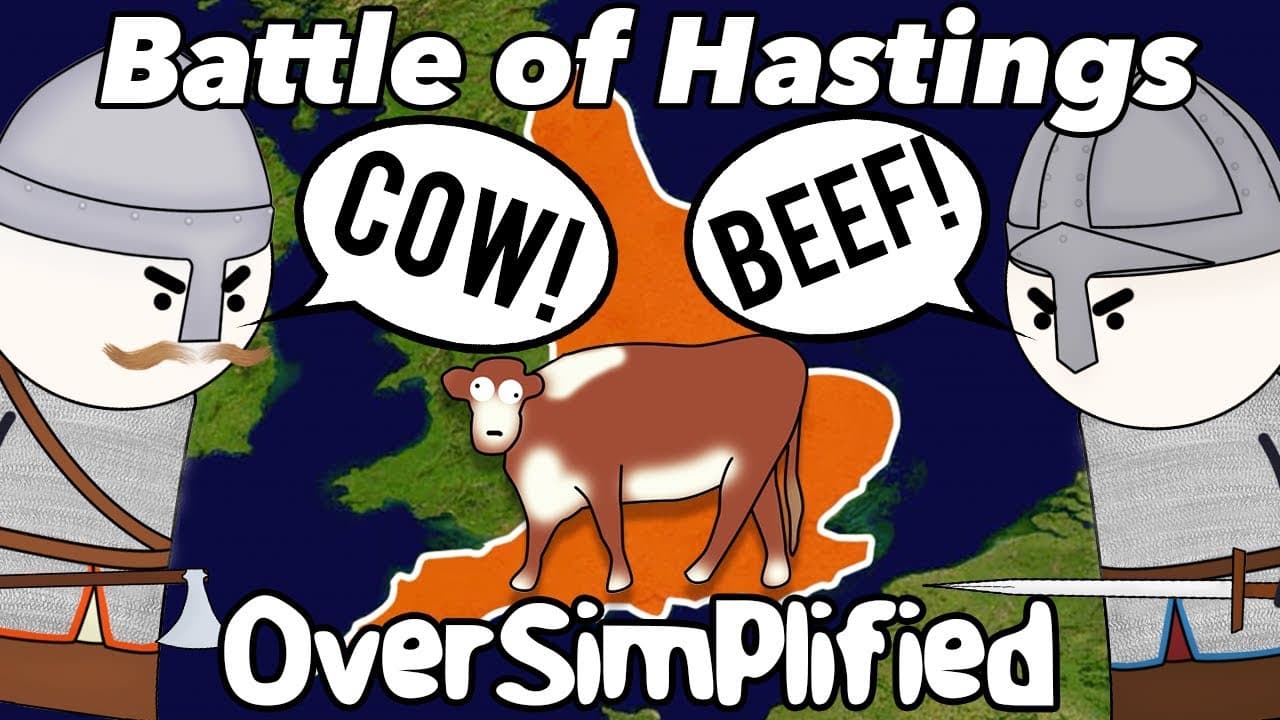
The Norman Conquest in 1066 caused a significant blending of Norman French and Old English, leading to a transformation in vocabulary and social hierarchy. Key English words related to power became derived from French, while everyday Anglo-Saxon terms were often seen as crude. This linguistic shift still influences modern English today.
Transcript
This video was made possible by Skillshare, an online learning community with over 17,000 classes on just about anything you can imagine. Keep watching until the end of the video to learn how you can get your first two months for free. England in the Middle Ages. The sun is shining, the birds are singing, the children are playing in the village squ... Read More
Key Insights
- The Viking invasions significantly impacted European territories, leading to the establishment of the Duchy of Normandy by the Vikings in northern France.
- Edward the Confessor's upbringing in Normandy influenced his reign, contributing to tensions over succession upon his death without an heir.
- Harold Godwinson's rapid coronation after Edward's death led to conflicts with William of Normandy and Harald Hardrada of Norway, who both claimed the English throne.
- The Battle of Stamford Bridge marked the end of the Viking era in England, as Harold Godwinson defeated Harald Hardrada's forces.
- Harold Godwinson's army was exhausted after defeating the Vikings, which weakened their defense against William's subsequent invasion.
- The Battle of Hastings was a pivotal moment in 1066, where William's tactical maneuvers led to the defeat of Harold's forces and his eventual coronation as King of England.
- The Norman Conquest introduced significant cultural and linguistic changes, merging Norman French with Old English, which influenced modern English vocabulary and social hierarchy.
- William's reign involved quelling numerous rebellions and restructuring English society, replacing Anglo-Saxon nobility with Norman rulers and building castles to consolidate power.
Install to Summarize YouTube Videos and Get Transcripts
Explore YouTube Video Summarizer or Get YouTube Transcript Extractor
Questions & Answers
Q: What role did the Vikings play in the events leading up to the Norman Conquest?
The Vikings were instrumental in shaping the political landscape of Europe during the Middle Ages. Their raids and settlements led to the establishment of the Duchy of Normandy, where they assimilated into French culture. The Viking influence persisted in England, with various invasions and settlements contributing to the complex dynamics between Anglo-Saxons and Normans.
Q: How did Edward the Confessor's background affect the succession crisis in England?
Edward the Confessor spent much of his life in Normandy, which influenced his reign and relationships with Norman nobility. His lack of a direct heir and Norman ties created a succession crisis upon his death, as multiple claimants, including Harold Godwinson and William of Normandy, vied for the English throne, leading to significant conflict.
Q: What was the significance of the Battle of Hastings?
The Battle of Hastings in 1066 was a decisive conflict that determined the future of the English throne. William of Normandy's victory over Harold Godwinson's forces marked the end of Anglo-Saxon rule and the beginning of Norman dominance in England. This battle was pivotal in shaping the cultural and political landscape of medieval England.
Q: How did the Norman Conquest impact the English language?
The Norman Conquest introduced a significant influx of Norman French vocabulary into the English language, particularly in areas related to governance, law, and nobility. This linguistic blend led to the development of Middle English, influencing modern English vocabulary and contributing to the social stratification of language use based on class distinctions.
Q: What were the consequences of William's rule for the Anglo-Saxon nobility?
William's rule resulted in the displacement of the Anglo-Saxon nobility, as he replaced them with Norman lords loyal to him. This restructuring of the social hierarchy consolidated Norman power and control over England, leading to the construction of castles and fortifications to maintain dominance and suppress potential rebellions.
Q: Why was Harold Godwinson's army at a disadvantage during the Battle of Hastings?
Harold Godwinson's army was at a disadvantage during the Battle of Hastings due to exhaustion from their rapid march south after defeating the Vikings at Stamford Bridge. This fatigue, combined with William's strategic use of cavalry and feigned retreats, weakened Harold's forces, ultimately leading to their defeat and his death in battle.
Q: How did William secure the Pope's support for his invasion of England?
William secured the Pope's support by arguing that Harold Godwinson had broken a sacred oath made over holy relics, promising the English throne to William. By framing Harold's actions as a violation of religious vows, William gained the Pope's blessing, which provided a moral justification for his invasion and bolstered his legitimacy as a claimant to the English throne.
Q: What strategies did William use to consolidate his power after becoming King of England?
After becoming King, William used a combination of military force, strategic marriages, and the construction of castles to consolidate his power. He quelled rebellions by burning villages and replacing Anglo-Saxon leaders with loyal Norman nobility. These actions ensured his control over England and facilitated the integration of Norman culture and governance into English society.
Summary & Key Takeaways
-
The video explores the historical events leading up to the Norman Conquest of England in 1066, highlighting the complex power struggles involving Vikings, Anglo-Saxons, and Normans. It details the influential figures and battles that determined the fate of the English throne.
-
Key battles such as Stamford Bridge and Hastings are discussed, emphasizing their strategic importance and the pivotal role they played in the transition of power from Anglo-Saxon to Norman rule. The video also touches on the cultural and linguistic shifts resulting from the conquest.
-
The influence of prominent figures like Edward the Confessor, Harold Godwinson, and William the Conqueror is analyzed, showcasing their motivations and actions that shaped the course of English history. The video concludes with the lasting impact of the Norman Conquest on English society.
Read in Other Languages (beta)
Share This Summary 📚
Summarize YouTube Videos and Get Video Transcripts with 1-Click
Try YouTube Summary with ChatGPT & Claude or YouTube Transcript Generator
Explore More Summaries from OverSimplified 📚




Summarize YouTube Videos and Get Video Transcripts with 1-Click
Try YouTube Summary with ChatGPT & Claude or YouTube Transcript Generator