How Did Hannibal Succeed in Italy?, The Second Punic War, OverSimplified Part 2
TL;DR
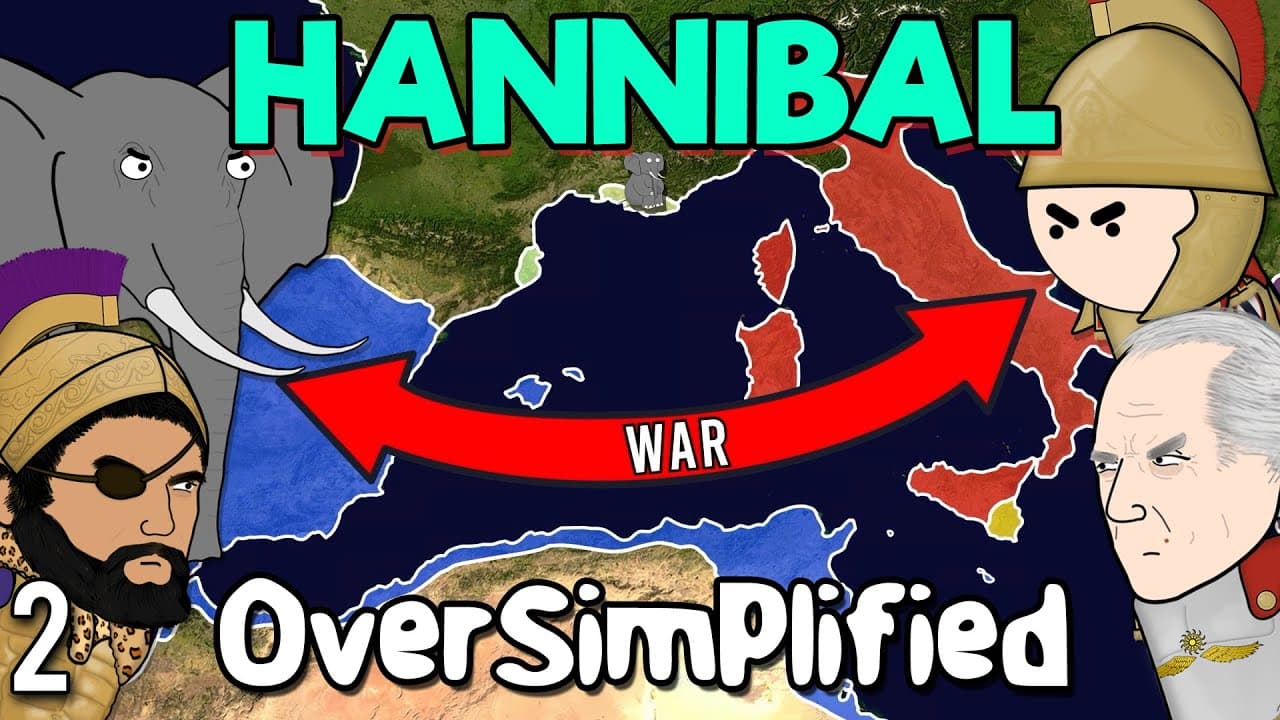
Hannibal succeeded in Italy by surprising Rome, exploiting its commanders’ weaknesses, and using cavalry, ambushes, terrain, deception, and encirclement to defeat larger forces. His victories at Ticinus, Trebia, Lake Trasimene, and Cannae damaged Roman confidence and encouraged allies to defect, while Rome eventually responded with the Fabian strategy. Read on to see how each tactic shaped the campaign.
Transcript
- [Narrator] This video was made possible by Incogni. Use code oversimplified in the link below for an exclusive 60% off an annual Incogni plan. Also, make sure to grab our Roman Consul Youtooz before it's too late. Don't make me mention it a third time, or I'll you know what. (ominous music) (dramatic music) Hannibal's army had survived its famous... Read More
Key Insights
- Hannibal's crossing of the Alps into Italy was a significant strategic move that caught the Romans off guard.
- The Battle of Ticinus highlighted Hannibal's use of Numidian cavalry to outmaneuver Roman forces.
- Hannibal's psychological tactics, such as inspiring his troops with gladiatorial metaphors, were crucial in maintaining morale.
- The Battle of Trebia showcased Hannibal's ability to exploit environmental conditions to his advantage.
- Hannibal's tactics at Lake Trasimene involved a successful ambush in foggy conditions, leading to a Roman defeat.
- The Fabian strategy, avoiding direct confrontation with Hannibal, was initially unpopular but eventually recognized as effective.
- The Battle of Cannae demonstrated Hannibal's mastery of encirclement tactics, leading to a devastating Roman loss.
- Hannibal's ability to turn Rome's allies against it was a key factor in his campaign's success.
Install to Summarize YouTube Videos and Get Transcripts
Explore YouTube Video Summarizer or Get YouTube Transcript Extractor
Questions & Answers
Q: What strategies led to Hannibal’s success in Italy during the Second Punic War?
Hannibal combined surprise, deception, psychological pressure, ambushes, and superior use of cavalry and terrain. He also studied Roman command practices and exploited weaknesses such as Consul Longus’s hotheaded nature. These methods helped him win major battles and persuade some of Rome’s allies to change sides.
Q: How did crossing the Alps help Hannibal’s campaign in Italy?
Crossing the Alps brought Hannibal’s surviving army into Italy and caught the Romans off guard. His unexpected arrival allowed him to begin fighting Rome on Italian soil before Rome fully understood the danger he posed.
Q: How did Hannibal win the Battle of Ticinus?
Hannibal’s lightning-fast Numidian cavalry completely outmatched the Romans, and Consul Scipio was wounded in the chaos. Although Ticinus was relatively small, its psychological impact was huge: Rome was humiliated, and Celts began flocking to Hannibal’s side.
Q: How did Hannibal exploit Roman leadership before the Battle of Trebia?
Hannibal had Celtic spies in the Roman camp and understood that the two consuls alternated command. He recognized Scipio’s caution and Longus’s eagerness to attack, then exploited Longus’s hotheaded nature. At Trebia, Hannibal also used a trap, environmental conditions, and concealed troops against the Romans.
Q: What tactics did Hannibal use at Lake Trasimene?
Hannibal used foggy conditions to conceal a successful ambush at Lake Trasimene. The surprise attack exploited the environment and resulted in another Roman defeat.
Q: Why was the Fabian strategy important against Hannibal?
The Fabian strategy avoided direct confrontation and aimed to wear down Hannibal’s forces over time. It was initially unpopular because many Romans preferred decisive, aggressive battles, but it was eventually recognized as effective.
Q: What made Hannibal’s tactics at the Battle of Cannae so effective?
At Cannae, Hannibal used encirclement tactics against a larger Roman force. His double envelopment produced a devastating Roman loss, damaged Roman morale, and helped encourage several of Rome’s allies to defect.
Q: How did Hannibal use psychological warfare in Italy?
Before fighting Rome in Italy, Hannibal staged a gladiatorial death match between captured Celt prisoners, with prizes and freedom for the winner. He told his soldiers it represented their own position: trapped in Italy, they had to fight and win. Later victories reinforced that message by humiliating Rome and attracting Celtic support.
Summary & Key Takeaways
-
Hannibal's campaign in Italy was marked by his strategic genius, using ambushes and deception to defeat larger Roman forces. His victories at Ticinus, Trebia, and Cannae were achieved by exploiting Roman weaknesses and using the environment to his advantage. Despite initial Roman underestimation, Hannibal's tactics forced Rome to adopt new strategies.
-
Hannibal's psychological warfare, including inspiring speeches and strategic ambushes, played a crucial role in maintaining the morale of his troops and undermining Roman confidence. His ability to turn Rome's allies against it further weakened Roman power and expanded his influence in Italy.
-
The Fabian strategy, though initially unpopular, proved effective in wearing down Hannibal's forces over time. Rome's eventual adaptation to Hannibal's tactics, coupled with their refusal to surrender, showcased their resilience and set the stage for future Roman military reforms and strategies.
Read in Other Languages (beta)
Share This Summary 📚
Summarize YouTube Videos and Get Video Transcripts with 1-Click
Try YouTube Summary with ChatGPT & Claude or YouTube Transcript Generator
Explore More Summaries from OverSimplified 📚






Summarize YouTube Videos and Get Video Transcripts with 1-Click
Try YouTube Summary with ChatGPT & Claude or YouTube Transcript Generator