How the US Defends Japan’s Yen and Debt Explained
TL;DR
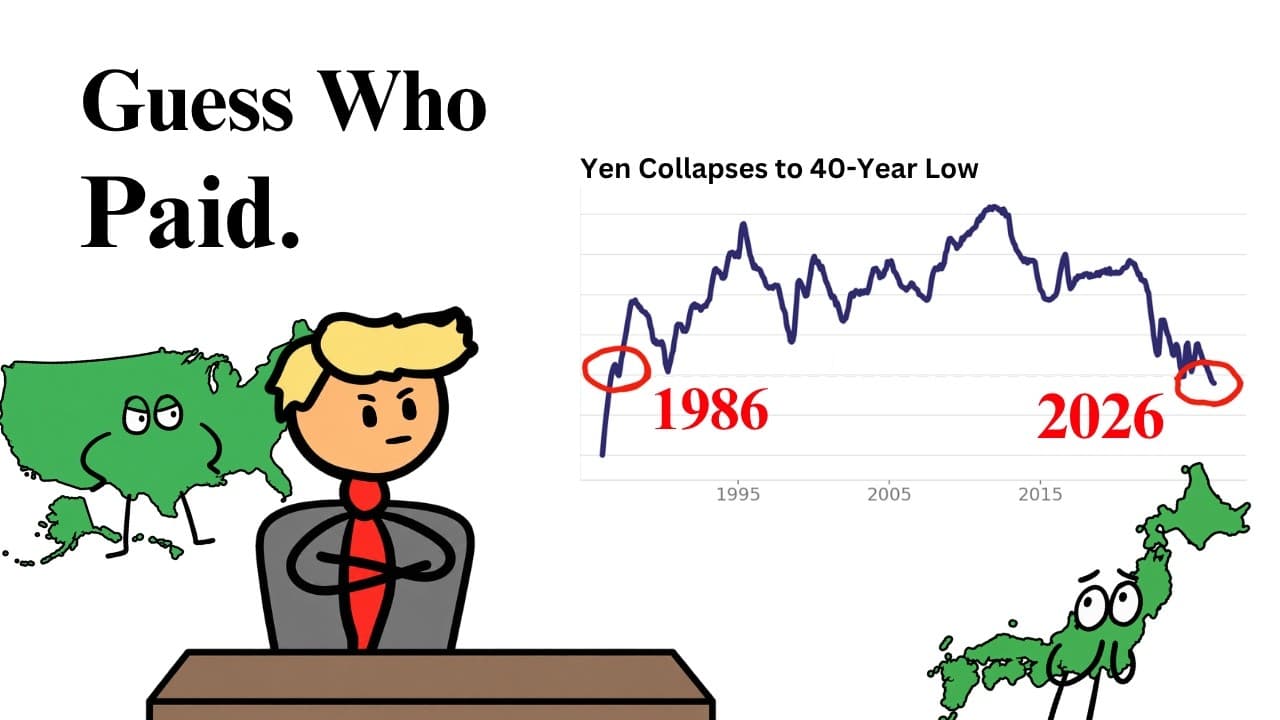
The United States used the Exchange Stabilization Fund to buy Japanese yen by selling euros, a move aimed at stabilizing the yen amid Japan’s debt and a widening rate gap. The action raised questions about accountability and long term consequences, including how it affects US borrowing costs and the global currency balance. The video explains the doom loop and why Japan cannot easily raise rates.
Transcript
The only evidence that America spent its own money holding up Japan's economy is a photograph of a handwritten to-do list. It was sitting in front of the Secretary of the Treasury of the United States with one line on it legible from across the room, "Buy Japanese yen, 5 to 10 billion dollars." The photo was taken at 11:33 in the morning on July 31... Read More
Key Insights
- The Exchange Stabilization Fund can spend without Congress under the Treasury, with only the president's signature.
- Japan faces a debt service challenge because its bond holdings and zero rate policy create a yen defense problem.
- The intervention used euros to buy yen, effectively selling European currency to support Japan's currency.
- The action broke decades of convention by the Treasury and surprised European officials.
- A currency defense can trigger an FX intervention feedback loop where efforts to stabilize backfire.
- Japan uses currency intervention while owning half of its own government bond market, creating a policy trap.
- A stronger dollar or wider rate gaps can undermine the yen defense and raise US borrowing costs.
- The analysis links US treasury actions to global currency dynamics and the broader risk environment.
Install to Summarize YouTube Videos and Get Transcripts
Explore YouTube Video Summarizer or Get YouTube Transcript Extractor
Questions & Answers
Q: How does the Exchange Stabilization Fund enable currency intervention without Congress?
The Exchange Stabilization Fund is described as a Treasury pot that can be used by the secretary with the president's signature, and its decisions are final with no required review by other government officers. This setup allows rapid, unilateral actions to influence currency markets, such as buying yen to counter volatility, without a formal congressional approval process. The mechanism is central to the video’s discussion of how a country can intervene in foreign exchange without legislative authorization.
Q: Why was Japan defending its currency a financial trap for its economy?
Japan’s defense of the yen is tied to its high debt relative to GDP and its long period of near zero borrowing costs. To hold the yen, Japan relies on buybacks and large-scale asset purchases, including owning a substantial portion of its bond market. When rates rise or the gap with the US widens, defending the currency can become prohibitively expensive, creating a trap where more intervention worsens debt dynamics and raises costs.
Q: What role did selling euros play in the yen defense described in the video?
According to the video, the US did not buy yen with dollars but sold euros from the Exchange Stabilization Fund to fund the purchase of yen. This relationship means America was effectively transferring European currency to support Japan, while Europe learned of the action after the trades completed. The move highlights the cross currency dynamics at play in FX interventions.
Q: What is the doom loop in the context of currency intervention?
The doom loop refers to the feedback mechanism where attempts to defend a currency lead to conditions that necessitate further intervention. In this case, selling bonds and depressing bond prices to push the yen higher can raise borrowing costs, worsen debt dynamics, and prompt more intervention, perpetuating a cycle that does not resolve the underlying weakness of the currency.
Q: Why can Japan not simply raise interest rates to fix its currency problem?
The video notes that Japan cannot easily raise rates because doing so would undermine a policy framework that has kept borrowing costs near zero and supported the government bond market. Raising rates increases debt servicing costs and could destabilize the balance sheet of the Bank of Japan, making the currency defense more expensive and potentially unsustainable.
Q: How did the US and Japan view the intervention in terms of policy coordination?
The transcript indicates a lack of direct coordination: the Treasury stated it does not coordinate with others on fund allocation, while European officials were informed after the fact. This suggests a unilateral approach to currency defense with limited cross border policy alignment, underscoring tensions in international monetary policy and the fragility of informal arrangements.
Q: What financial signals preceded the yen intervention, according to the video?
Key signals include a widening rate gap between US and Japanese borrowing costs and the yen nearing 40 year lows, combined with Japan holding a large share of its own debt. These conditions create pressure to intervene to stabilize the currency and protect debt sustainability, illustrating how macroeconomic indicators drive FX actions.
Q: What are the potential broader implications of this intervention for the US economy?
Interventions of this kind can affect US long term borrowing costs, as they alter global demand for US government debt. If a major lender chooses to sell holdings to defend its currency, it can raise yields and tighten financing conditions in the United States. The video frames this as a potential future risk for US financing conditions and global financial stability.
Summary & Key Takeaways
-
The video explains how the Exchange Stabilization Fund lets the Treasury spend without Congress, enabling currency intervention. It details the sequence of the yen defense, the use of euro assets, and the surprising unilateral nature of the operation. The result is a complex interaction that reshapes cross border debt dynamics.
-
It analyzes why Japan faces a debt driven trap, where keeping rates low supports debt but weakens the yen, forcing interventions that can backfire. The narrative highlights the feedback loop between currency actions and bond markets and why such moves are controversial and risky.
-
The piece concludes with implications for US borrowing costs and the potential for future foreign lender behavior, emphasizing data driven analysis and caution about the limits of currency interventions and policy coordination.
Read in Other Languages (beta)
Share This Summary 📚
Summarize YouTube Videos and Get Video Transcripts with 1-Click
Try YouTube Summary with ChatGPT & Claude or YouTube Transcript Generator
Explore More Summaries from Casual Finance 📚


Summarize YouTube Videos and Get Video Transcripts with 1-Click
Try YouTube Summary with ChatGPT & Claude or YouTube Transcript Generator