How to Find Peace by Living in the Present
TL;DR
Inner peace becomes accessible when attention moves away from regret about the past and anxiety about the future and returns to present experience. Notice your surroundings, observe mental noise without identifying with it, accept reality as it is, and respond to difficult situations by leaving, changing, or accepting them instead of feeding resentment and complaint.
Transcript
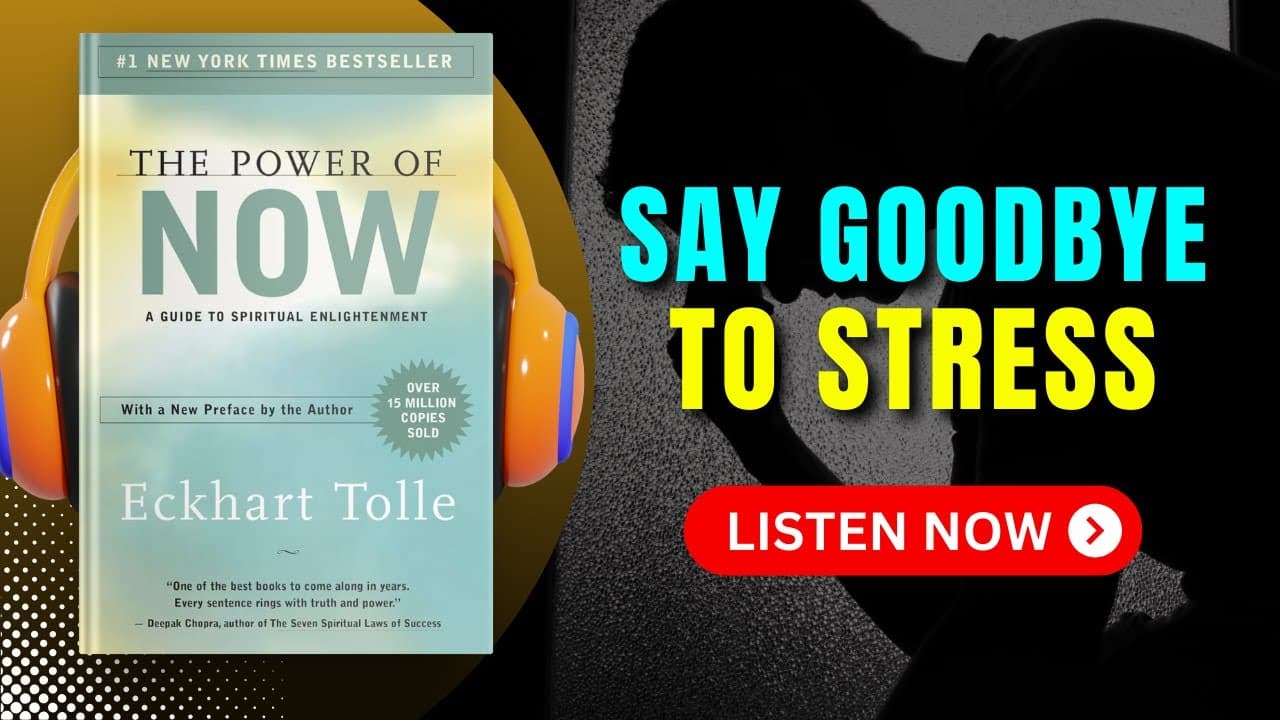
today we're diving deep into a book that challenges the very essence of our existence and how we perceive time and life itself imagine living every moment so fully that the past and future no longer dominate your mind imagine finding peace and fulfillment in the now this is what echar tole invites us to discover in The Power of Now in this audioboo... Read More
Key Insights
- The present moment is the only part of life that can be experienced directly. When attention is consumed by memories or anticipated events, people overlook their surroundings, miss ordinary sources of joy, and remain dissatisfied while waiting for a future opportunity to feel complete.
- You are not your mind, according to the central teaching presented in the summary. Thoughts can generate fear, regret, resentment, and endless anticipation, but recognizing mental noise makes it possible to stop treating every thought as an unquestionable description of reality.
- Inner peace is compared to gold hidden inside a box on which a beggar has unknowingly sat for years. The parable suggests that people repeatedly seek love, security, and happiness from the external world while failing to investigate the contentment already available within themselves.
- Psychological suffering is intensified by entanglement with the past and future. Regret colors interpretations of current circumstances, while imagined future problems create anxiety, causing people to describe the present as unbearable without examining how much of that judgment comes from thought.
- Present-moment awareness can be practiced through ordinary observation. Sitting beneath a tree, looking carefully through a window, breathing fresh air, or listening in silence can temporarily quiet mental preoccupation and reveal a sense of peace without requiring danger, excitement, or escape.
- Resentment is a strategy that prevents enjoyment of the present. Bitterness toward work, another person, or a difficult situation becomes an unnecessary burden, while direct communication and practical action provide alternatives to repeatedly complaining and strengthening negativity.
- A difficult situation offers three basic responses: leave it, change it, or accept it. Choosing one consciously restores a sense of agency, whereas inaction combined with resistance prolongs unhappiness and encourages the belief that fulfillment can arrive only at some later time.
- Gratitude is presented as an alternative to postponing happiness. Appreciating what is already available reduces the constant search for another meal, activity, achievement, place, or person that might finally make life feel satisfying and allows small joys to become visible now.
- Related book: The Power of Now
- Export your Kindle highlights to Glasp: How to Download Highlights and Notes from Kindle
- More videos about this book:
- More from this channel: Audiobook 101
- More videos with Eckhart Tolle:
Install to Summarize YouTube Videos and Get Transcripts
Explore YouTube Video Summarizer or Get YouTube Transcript Extractor
Questions & Answers
Q: How can I live more fully in the present moment?
Living more fully in the present begins with redirecting attention from memories and predictions to immediate experience. Observe a tree, feel the air, notice sunlight, listen to surrounding sounds, or follow a quiet moment without demanding anything from it. When thoughts about regret or worry appear, recognize them as mental activity and return attention to what is actually happening now.
Q: What does it mean to say that you are not your mind?
The statement means that thoughts do not have to define or control your identity and experience. The mind produces worries about the future, regrets about the past, resentment, and imagined requirements for happiness. By noticing this mental noise rather than becoming completely absorbed in it, a person can discover a quieter awareness and experience peace in the present.
Q: Why do thoughts about time create suffering?
Thoughts about time create suffering when the past dominates the present through regret or when the future becomes a source of constant anxiety. The transcript argues that people become so entangled in these thoughts that they fail to appreciate current life. Their judgment that nothing is good now may therefore reflect old pain or anticipated trouble rather than immediate reality alone.
Q: How can someone find happiness within themselves?
Finding happiness within requires looking inward instead of depending entirely on external love, security, excitement, or achievement. The beggar's hidden gold symbolizes peace, self-acceptance, and contentment already present beneath mental noise. A person begins uncovering that treasure by examining the sources of sorrow, accepting their true nature, and releasing attachment to past regret and future worry.
Q: What should I do when a situation makes me unhappy?
When a situation causes unhappiness, the summary offers three choices: leave it, change it, or accept it. Change may involve openly discussing a problem, stopping an irritating pattern, or removing something unnecessary from life. Acceptance means ending the internal struggle with what cannot presently be altered. Remaining inactive while continually resisting and complaining keeps the burden in place.
Q: Why do exciting activities make people feel present?
Activities such as car racing or mountain climbing can draw attention intensely into the immediate moment, temporarily reducing ordinary mental noise. However, the same quality of presence does not require a dramatic activity. Quietly observing a tree, sitting outside, breathing fresh air, or pausing in silence can also relax the mind and reveal peace within everyday experience.
Q: How does resentment interfere with inner peace?
Resentment keeps attention fixed on a disliked job, person, or circumstance and allows negative thoughts to accumulate. Carrying those thoughts is compared to holding an unnecessary weight. Inner peace becomes more accessible when a person addresses the problem directly, changes what can be changed, leaves when appropriate, or accepts reality instead of repeatedly feeding bitterness and complaint.
Q: Why does waiting for future happiness cause dissatisfaction?
Waiting for future happiness directs attention toward the next favorite food, thrilling experience, distant place, achievement, or person expected to provide completion. While anticipating those possibilities, people overlook the small joys already available today. Because satisfaction is continually postponed, the present feels insufficient. Gratitude and close attention to current experience interrupt that pattern and make contentment possible now.
Summary & Key Takeaways
-
The summary presents Eckhart Tolle's personal transformation from profound depression and distress to an unexpected experience of peace. After awakening to birdsong, sunlight, and the beauty of ordinary surroundings, he concluded that happiness exists within, but persistent thoughts about past regrets and future worries prevent people from recognizing it.
-
The story of a beggar sitting on a box filled with gold illustrates the search for fulfillment outside oneself. The hidden treasure represents inner peace, self-acceptance, contentment with one's true nature, and freedom from domination by past sorrow or future anxiety. Discovering it requires turning attention inward and becoming conscious.
-
Practical presence begins by noticing ordinary experiences, such as trees, fresh air, breathing, silence, and the immediate environment. When circumstances cause unhappiness, the proposed responses are to leave, change, or accept the situation. Releasing resentment, complaint, and inaction makes it easier to appreciate today's small joys and act constructively.
Read in Other Languages (beta)
Share This Summary 📚
Summarize YouTube Videos and Get Video Transcripts with 1-Click
Try YouTube Summary with ChatGPT & Claude or YouTube Transcript Generator
Explore More Summaries from Audiobook 101 📚




Summarize YouTube Videos and Get Video Transcripts with 1-Click
Try YouTube Summary with ChatGPT & Claude or YouTube Transcript Generator