How to Care Less and Focus on What Matters
TL;DR
Choose what deserves your attention instead of trying to avoid every failure, pain, or negative emotion. Happiness comes from solving worthwhile problems, accepting limitations, and enduring struggles that align with your values. Letting go of unrealistic expectations and the need to feel exceptional can reduce unnecessary stress and support a more meaningful life.
Transcript
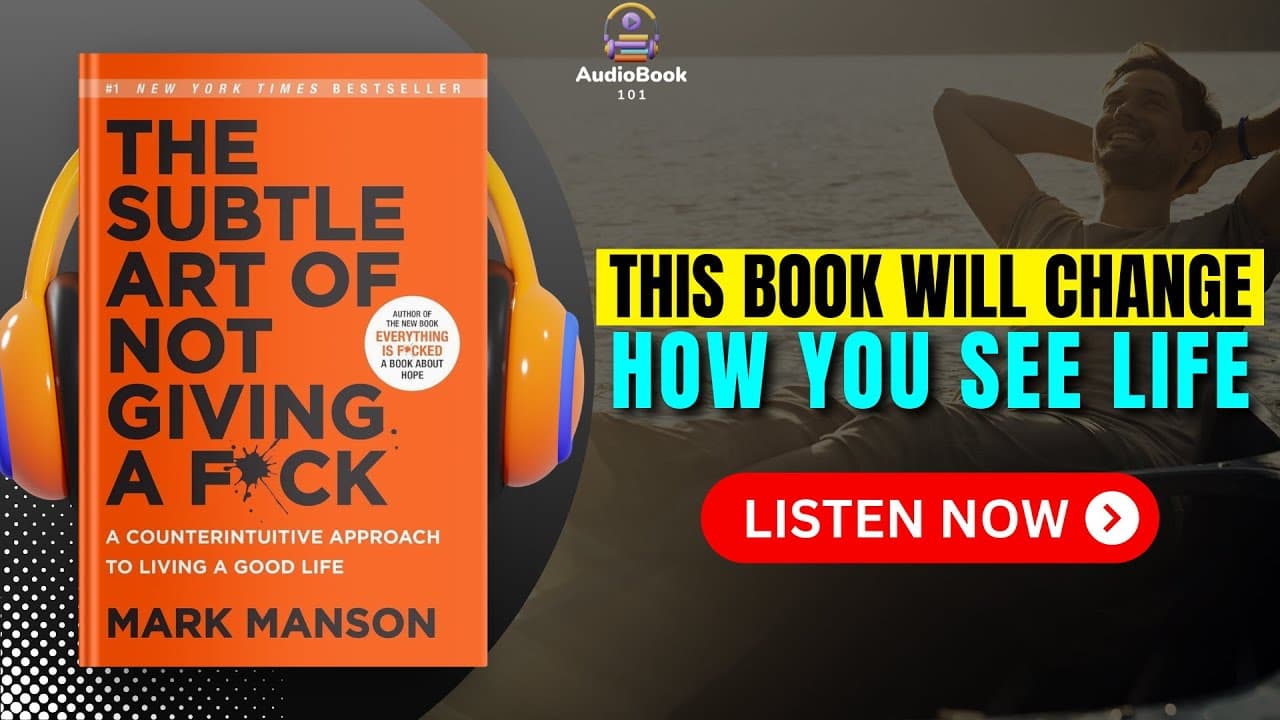
today I'm bringing you a book that doesn't sugarcoat life's realities it's raw honest and refreshingly different from your typical self-help book welcome to the summary of the subtle art of not giving a f by Mark Manson in a world where we are constantly told to chase happiness always be positive and strive for Success this book tells us the opposi... Read More
Key Insights
- Selective caring is the central principle of the book summary. It means directing attention toward people, problems, and goals that reflect personal values while releasing concern about irrelevant judgments, unrealistic expectations, and everyday noise that creates stress without improving life.
- The feedback loop from hell is a cycle in which people feel bad about their negative emotions. Anger about anger, sadness about loneliness, or shame about a temporary low mood intensifies the original feeling and makes ordinary discomfort seem like a personal failure.
- Accepting a negative experience can become a positive experience because acceptance removes the added struggle of demanding that life always feel good. Constantly chasing happiness can deepen dissatisfaction, while acknowledging pain and failure allows a person to respond calmly and continue acting.
- Not caring is different from indifference because it still requires commitment and action. The author’s response to his mother being swindled illustrates selective concern: he cared about protecting her and pursuing legal help, while refusing to be intimidated by the person responsible.
- Happiness is connected to solving problems rather than avoiding them. Difficulties are presented as an unavoidable part of life, and working through worthwhile problems produces change, resilience, and satisfaction that comfort alone cannot reliably provide.
- Emotions are signals that can guide behavior. Negative emotions indicate that something may need attention or correction, while positive emotions function as rewards for actions the brain interprets as beneficial, making emotional discomfort potentially useful rather than automatically harmful.
- The better life question is what kind of pain a person is willing to endure. Rewards require struggle, so choosing meaningful hardships gives suffering a purpose, while refusing to choose leaves a person vulnerable to pain imposed by circumstances.
- Ordinariness is not a barrier to improvement. Accepting that personal problems are shared by others and recognizing current weaknesses can counter entitlement, reduce swings between superiority and inferiority, and create motivation for practical action and growth.
- Related book: The Subtle Art of Not Giving a F*ck
- 📥 Export your Kindle highlights to Glasp: How to Download Highlights and Notes from Kindle
- More videos about this book:
- More from this channel: Audiobook 101
- 🎙️ More videos with Mark Manson:
Install to Summarize YouTube Videos and Get Transcripts
Explore YouTube Video Summarizer or Get YouTube Transcript Extractor
Questions & Answers
Q: How can I care less about things that do not matter?
Start by identifying which people, goals, and problems genuinely align with your values. Give those priorities your attention, effort, and willingness to face discomfort. Treat social pressure, unrealistic expectations, and minor judgments as noise that does not deserve equal concern. Caring less is selective commitment, not passivity, numbness, or withdrawal from every difficult situation.
Q: What does not giving a fuck actually mean?
It means remaining calm about unnecessary pressures while deliberately caring about what truly matters. It does not mean feeling nothing or refusing to act. A person may ignore irrelevant opinions yet strongly defend a loved one, address wrongdoing, or endure hardship for an important goal. The principle is to choose concerns rather than treating everything as equally important.
Q: Why can chasing happiness make people more miserable?
Constantly chasing happiness creates the expectation that negative feelings should never occur. When sadness, anger, or loneliness inevitably appears, a person may feel ashamed or defective for having those emotions. That reaction adds a second layer of suffering to the original discomfort. Accepting unpleasant experiences interrupts this cycle and makes constructive action easier.
Q: What is the feedback loop from hell?
The feedback loop from hell occurs when a negative emotion triggers another negative judgment about having that emotion. Someone becomes angry, then grows angrier because the anger feels uncontrollable. Another person feels lonely, becomes sad about the loneliness, and then overthinks the sadness. Acceptance helps break the loop by removing shame about normal emotional discomfort.
Q: How do problems contribute to happiness?
Problems contribute to happiness when people confront and solve them instead of trying to eliminate all difficulty. The process of responding to hardship creates change, strengthens the ability to survive, and produces satisfaction after progress. Since pain is unavoidable, the practical goal is not a problem-free life but a life containing worthwhile problems and meaningful solutions.
Q: What kind of struggle should a person choose?
A person should choose struggles connected to values and outcomes that matter enough to justify their cost. The important question is not merely what reward someone wants, but what pain, effort, failure, or uncertainty that person is willing to endure. Choosing hardship gives it direction, while demanding rewards without struggle creates unrealistic expectations and disappointment.
Q: Why is believing you are special potentially harmful?
Believing you are exceptional without evidence, effort, or self-awareness can encourage entitlement and fantasies of success without action. It can also cause a person to swing between feeling superior and feeling uniquely unfortunate. Recognizing that other people face similar problems reduces isolation, while accepting ordinary limitations creates a realistic foundation for improvement.
Q: How should people respond to failure and negative emotions?
People should treat failure and negative emotions as experiences that can provide information and motivate change. Failure can supply energy for another attempt, while emotional discomfort can signal that a problem needs attention. Trying to suppress every painful response may intensify it. Acceptance allows the person to examine the signal, choose a response, and keep moving.
Summary & Key Takeaways
-
Caring less does not mean becoming indifferent, inactive, or emotionless. It means refusing to waste energy on social pressure, minor discomfort, and circumstances that do not reflect your values. A meaningful life requires deciding what truly matters, then caring deeply enough about those priorities to accept conflict, uncertainty, and effort.
-
The pursuit of constant happiness can create misery because it treats every negative feeling as evidence that something is wrong. Pain, failure, and psychological discomfort can provide useful signals and encourage change. Happiness follows from confronting and solving problems, not from building a life in which difficulty and suffering never occur.
-
Believing that everyone must be extraordinary can produce entitlement, unrealistic expectations, and avoidance of personal flaws. Honest self-esteem requires recognizing weaknesses and taking action instead of merely imagining success. Accepting that many people share similar struggles reduces isolation, while acknowledging present limitations creates a practical reason to improve.
Read in Other Languages (beta)
Share This Summary 📚
Summarize YouTube Videos and Get Video Transcripts with 1-Click
Try YouTube Summary with ChatGPT & Claude or YouTube Transcript Generator
Explore More Summaries from Audiobook 101 📚

Summarize YouTube Videos and Get Video Transcripts with 1-Click
Try YouTube Summary with ChatGPT & Claude or YouTube Transcript Generator