How to Focus on What Truly Deserves Your Energy
TL;DR
Treat attention as a limited resource and direct it toward values, relationships, goals, and hardships that genuinely matter. Lasting peace does not require eliminating discomfort or controlling everything. It comes from accepting uncertainty, taking responsibility, setting boundaries, and choosing meaningful problems over comparison, approval seeking, distraction, and unnecessary worry.
Transcript
Imagine waking up every morning already carrying a backpack full of worries. You're worried about your career, your relationships, your finances, your health, your future, and sometimes even what complete strangers think about you. Before the day has truly begun, your mind is already exhausted. It jumps from one concern to another, trying to solve ... Read More
Key Insights
- Attention is a limited resource that determines where time, thought, and emotional energy go. Every notification, unnecessary argument, recurring worry, and comparison consumes part of that resource, while every meaningful achievement, close relationship, learned skill, and valued memory first requires focused attention.
- A meaningful life is built by choosing worthwhile hardships rather than trying to avoid every difficulty. Doctors, entrepreneurs, athletes, and parents accept different forms of sacrifice because those struggles support values and purposes they consider important.
- The attention economy works by competing for human focus through notifications, headlines, advertisements, novelty, uncertainty, and social approval. Technology becomes a problem when people stop consciously directing their attention and allow outside forces to determine what occupies their minds.
- The quality of emotional experience is shaped by repeated focus. Concentrating on threats can encourage anxiety, replaying mistakes can deepen regret, and constant comparison can produce envy, while deliberately noticing gratitude, opportunities, learning, and meaningful relationships can gradually change one’s emotional landscape.
- True confidence is the belief that failure can be followed by learning, adaptation, and continued effort. It does not require certainty, perfect decisions, or permanent success, because everyone experiences doubt, makes mistakes, and carries regrets.
- Peace is found by accepting that many events and outcomes cannot be controlled. This principle connects the Stoic focus on personal control, the Buddhist warning about attachment, and the psychological value of accepting discomfort rather than continually resisting it.
- Personal boundaries are strengthened by saying no to expectations, opinions, and demands that do not deserve limited energy. Refusing unnecessary burdens is not carelessness or selfishness. It is a deliberate choice to protect attention for responsibilities and relationships that reflect genuine values.
- Attention works like a spotlight because whatever it repeatedly illuminates appears larger and becomes part of one’s personal story. Searching only for unfairness supplies evidence of unfairness, while looking for growth can reveal possibilities that were already present but previously unnoticed.
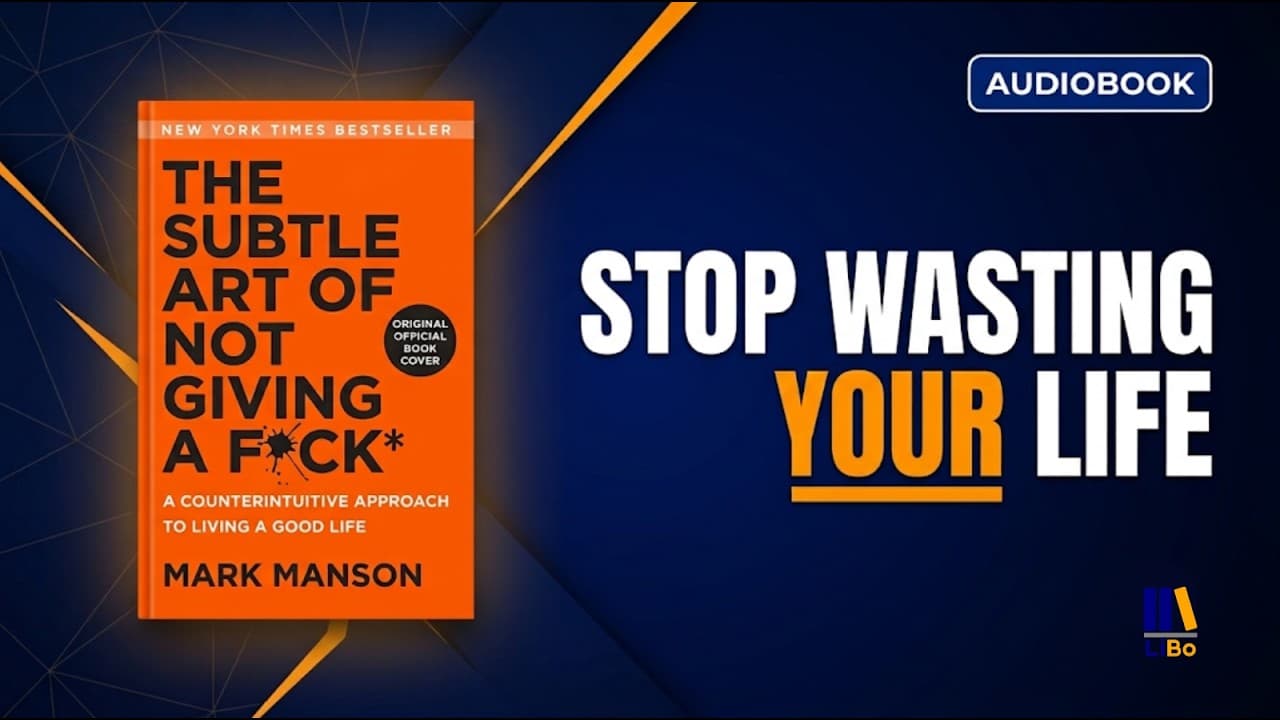
- Related book: The Subtle Art of Not Giving a F*ck
- 📥 Export your Kindle highlights to Glasp: How to Download Highlights and Notes from Kindle
- More videos about this book:
- More from this channel: LiBo
- 🎙️ More videos with Mark Manson:
Install to Summarize YouTube Videos and Get Transcripts
Explore YouTube Video Summarizer or Get YouTube Transcript Extractor
Questions & Answers
Q: How can I stop wasting attention on unimportant things?
Begin by treating attention as a limited daily resource that cannot be recovered once spent. Notice how much of it goes toward notifications, imagined problems, online arguments, comparisons, and opinions with no lasting value. Then ask which goals, relationships, responsibilities, and challenges reflect your values. Reduce unnecessary inputs and deliberately invest your focus in those meaningful priorities.
Q: Why is attention more valuable than money?
Attention is more valuable than money because money can be earned again, while lost time cannot be recovered, and attention determines where that time goes. Every important achievement, skill, relationship, and memory depends on focused attention. Spending it on constant worry, distraction, or comparison uses part of life’s limited account without advancing what genuinely matters.
Q: How does social media affect happiness and self-worth?
Social media can expose a person to luxury vacations, expensive cars, successful entrepreneurs, fitness influencers, perfect-looking families, and breaking news within minutes. Repeated exposure encourages comparison and can create a quiet sense of falling behind. The problem is not technology itself, but surrendering control over attention and allowing selected images of other people’s lives to define personal worth.
Q: Why does accepting discomfort improve resilience?
Accepting discomfort helps because life never stops producing problems, responsibilities, uncertainty, setbacks, and changing expectations. Trying to eliminate all discomfort creates an impossible standard. Resilience grows when a person acknowledges fear, doubt, failure, and limitation, then continues learning and adapting. The goal is not permanent comfort, but choosing difficulties that serve meaningful values and purposes.
Q: What does it mean to choose worthwhile struggles?
Choosing worthwhile struggles means accepting the difficulties connected to what you genuinely value. A doctor accepts demanding study to help save lives, an athlete trains through exhaustion and setbacks, an entrepreneur risks comfort and certainty to build something meaningful, and a parent sacrifices convenience for family. The struggle remains real, but its connection to purpose changes its significance.
Q: How can I build confidence after failure?
Confidence after failure begins with rejecting the belief that confident people never doubt themselves or make poor decisions. True confidence is trusting that you can learn, adapt, and continue after something goes wrong. Failure can provide lessons that success does not, especially when you accept responsibility, question your beliefs, and turn the experience into informed action rather than denial.
Q: Why can saying no be an important personal strength?
Saying no protects limited time, energy, and peace of mind from expectations that do not match your values. People often agree to demands while internally wanting to refuse, then become overwhelmed or trapped by obligations. A thoughtful no is not indifference or abandonment of responsibility. It is a boundary that preserves attention for commitments and relationships that genuinely deserve it.
Q: How can I focus on what is within my control?
Separate your decisions, effort, responses, and use of attention from events, opinions, and outcomes you cannot command. Peace grows when you stop trying to control everything around you and accept that some matters were never yours to manage. This does not mean giving up. It means directing action toward meaningful choices while releasing unproductive worry about uncontrollable circumstances.
Summary & Key Takeaways
-
Attention is more valuable than money because it directs limited time and cannot be recovered once spent. Notifications, advertisements, comparisons, worries, and arguments constantly compete for it. A more meaningful life begins by consciously deciding what deserves focus instead of letting strangers, technology, fear, or social expectations make that decision.
-
A meaningful life does not eliminate hardship. It requires choosing hardships that align with personal values, much like doctors accept demanding study, athletes endure difficult training, entrepreneurs risk certainty, and parents sacrifice comfort for family. Happiness and purpose grow through worthwhile problems, not through the permanent avoidance of discomfort or responsibility.
-
Peace, confidence, and courage depend on accepting reality rather than performing constant positivity. Confidence means trusting your ability to learn after failure, courage means acting despite fear, and peace means releasing attempts to control what was never controllable. Intentional focus replaces approval seeking, comparison, perfectionism, and distraction with self-respect and meaningful progress.
Read in Other Languages (beta)
Share This Summary 📚
Summarize YouTube Videos and Get Video Transcripts with 1-Click
Try YouTube Summary with ChatGPT & Claude or YouTube Transcript Generator